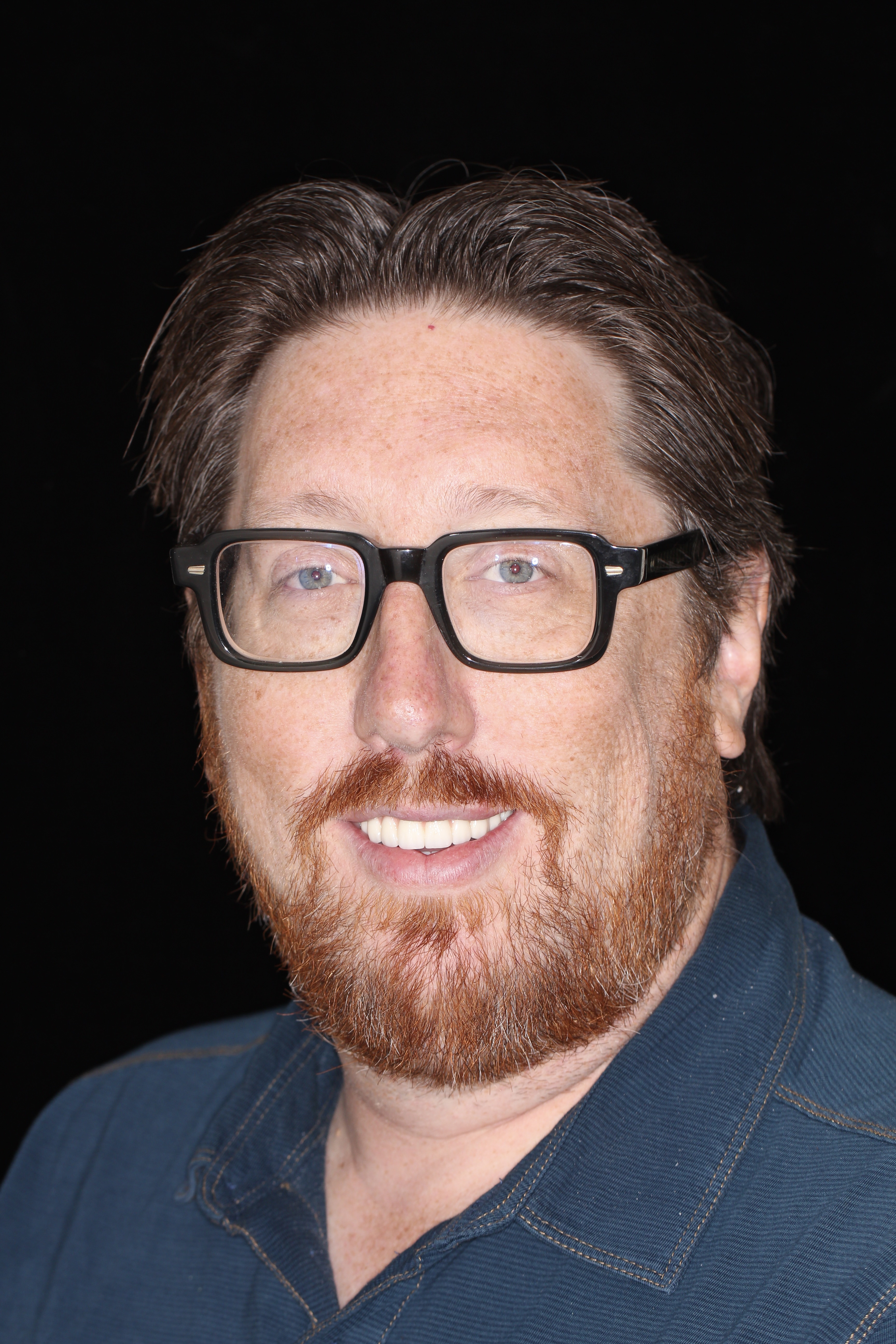
Full-Arch Implants for Gum Disease, Root Decay, and a Skeletal Open Bite
Years of faithful gum care could not hold back what his jaws had set in motion. His full mouth reconstruction, with full-arch implants in monolithic zirconia, was designed around the way his face had grown.
The Challenge
Todd, 49, had done everything asked of him. For years he kept a cleaning every three months to manage gum disease and bone loss. Then a routine visit turned up something new. “I went in for my cleaning, and my hygienist was shocked,” he told me. “She brought in my dentist, and I was told that I suddenly had multiple areas of decay.” His dentist referred him to me for a comprehensive treatment plan.
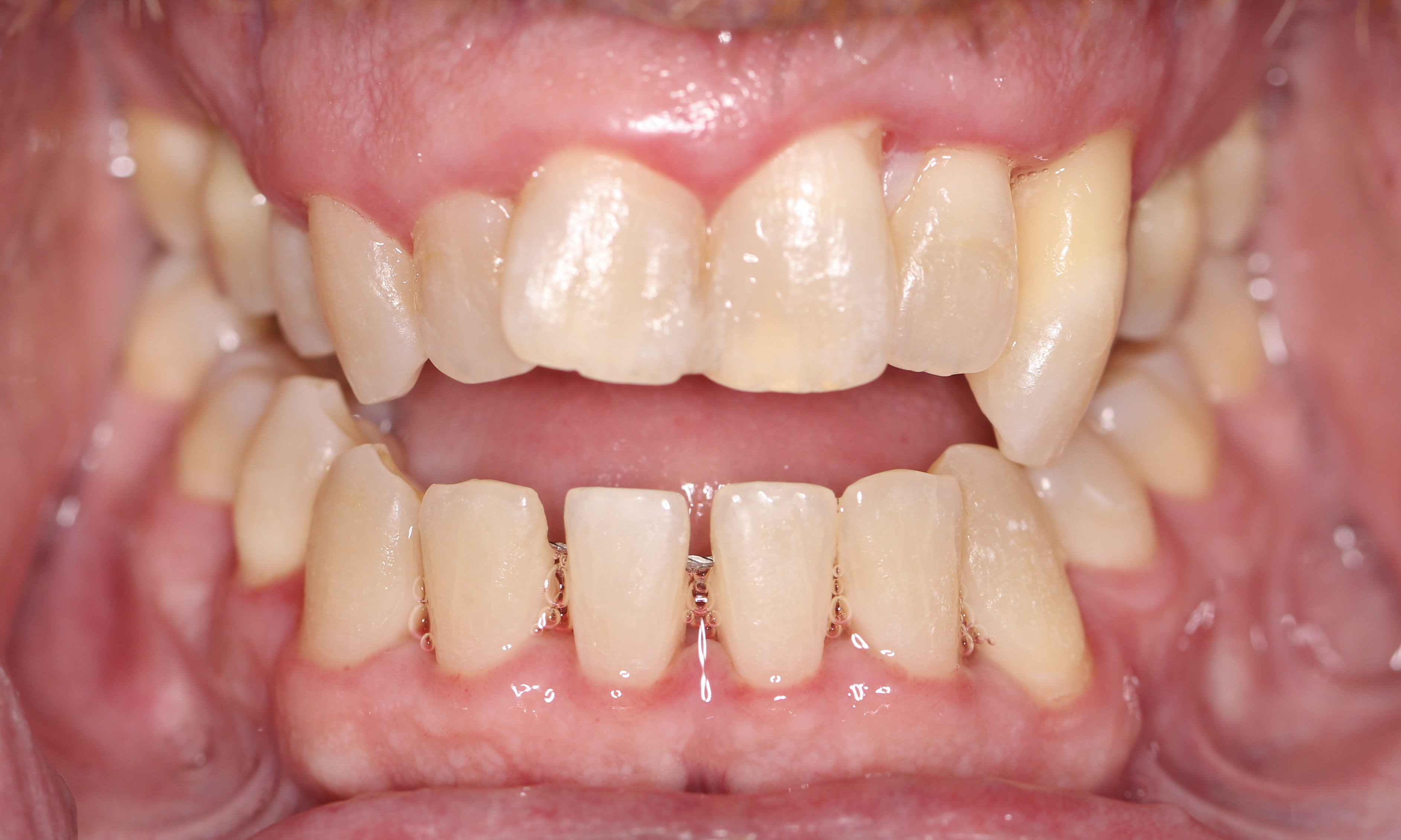
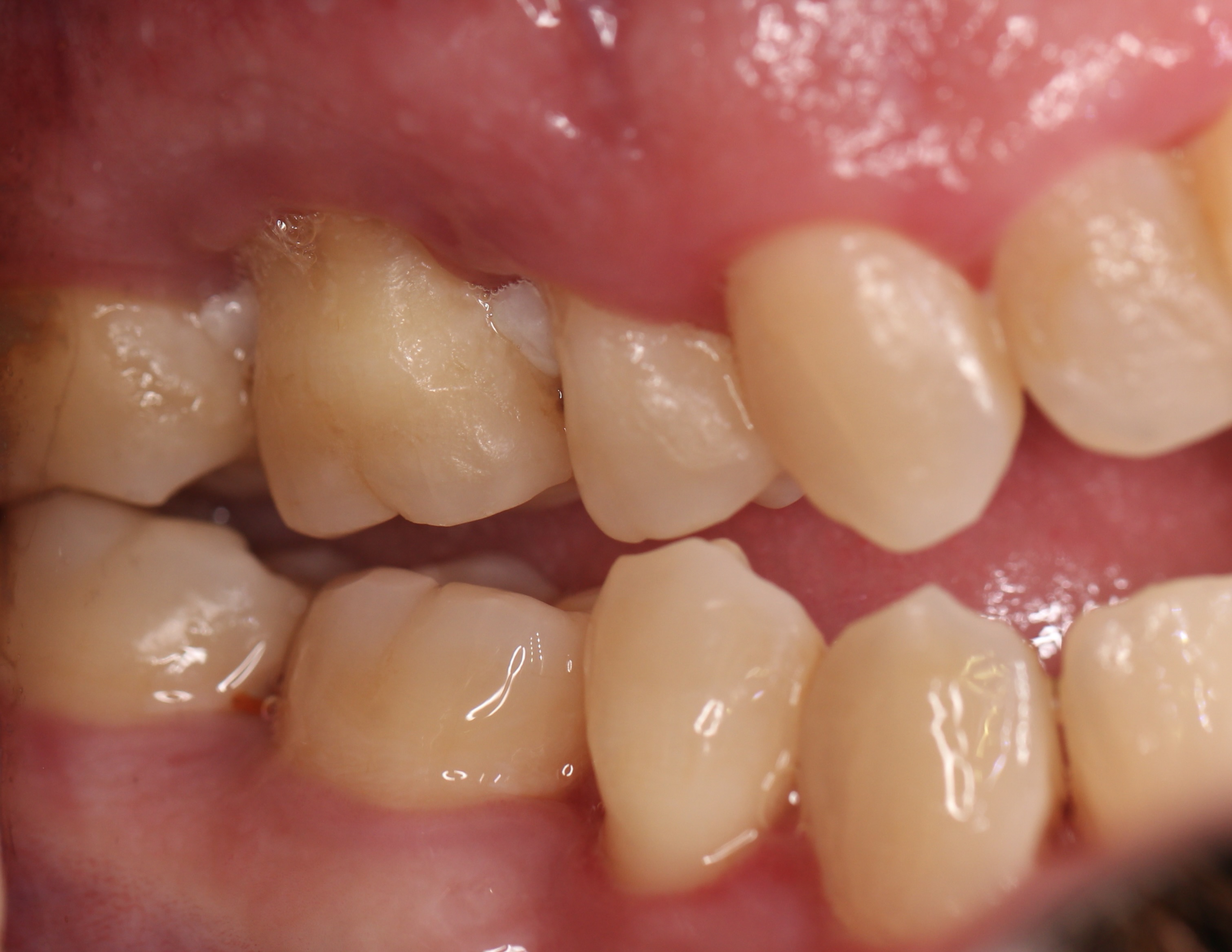
My evaluation included a CT scan, digital impressions, photographs, and a full series of X-rays. Gum disease had taken much of the bone around his teeth, and decay was spreading along the exposed roots and between the teeth. Many of his teeth could no longer be restored predictably.
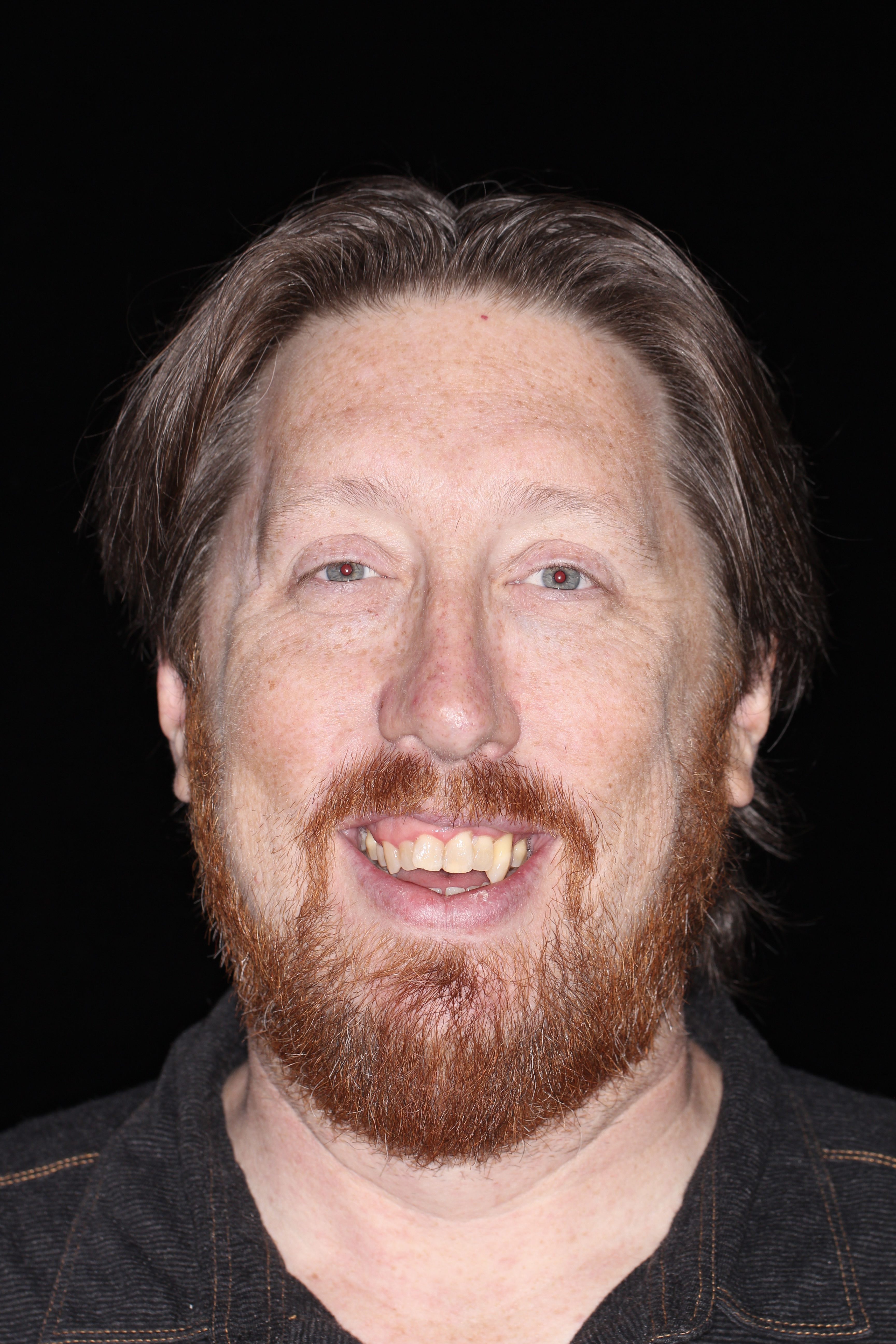
Beneath the gum disease was a skeletal story. Todd's jaws had overgrown vertically, and that overgrowth shaped everything that followed: a skeletal anterior open bite, a narrow upper arch leading to a posterior crossbite, and a supraerupted canine. His X-ray carries another mark of that pattern, a notch along the lower border of the jaw just in front of the angle, which research associates with vertical facial growth.
The same growth left his lips unable to close comfortably at rest, and you can see how dry they are in his photographs. Lips that stay apart leave the mouth dry, and saliva is one of the main defenses the gums and roots have. Mouth breathing has been linked to more gum inflammation and to a more acidic, caries-prone mouth. In my view, that dryness helps explain why his gums and roots broke down despite years of faithful maintenance.
This was never a hygiene problem. The way his jaws had grown shaped his bite, his lip seal, and the environment his teeth lived in. Gum disease and root decay followed.
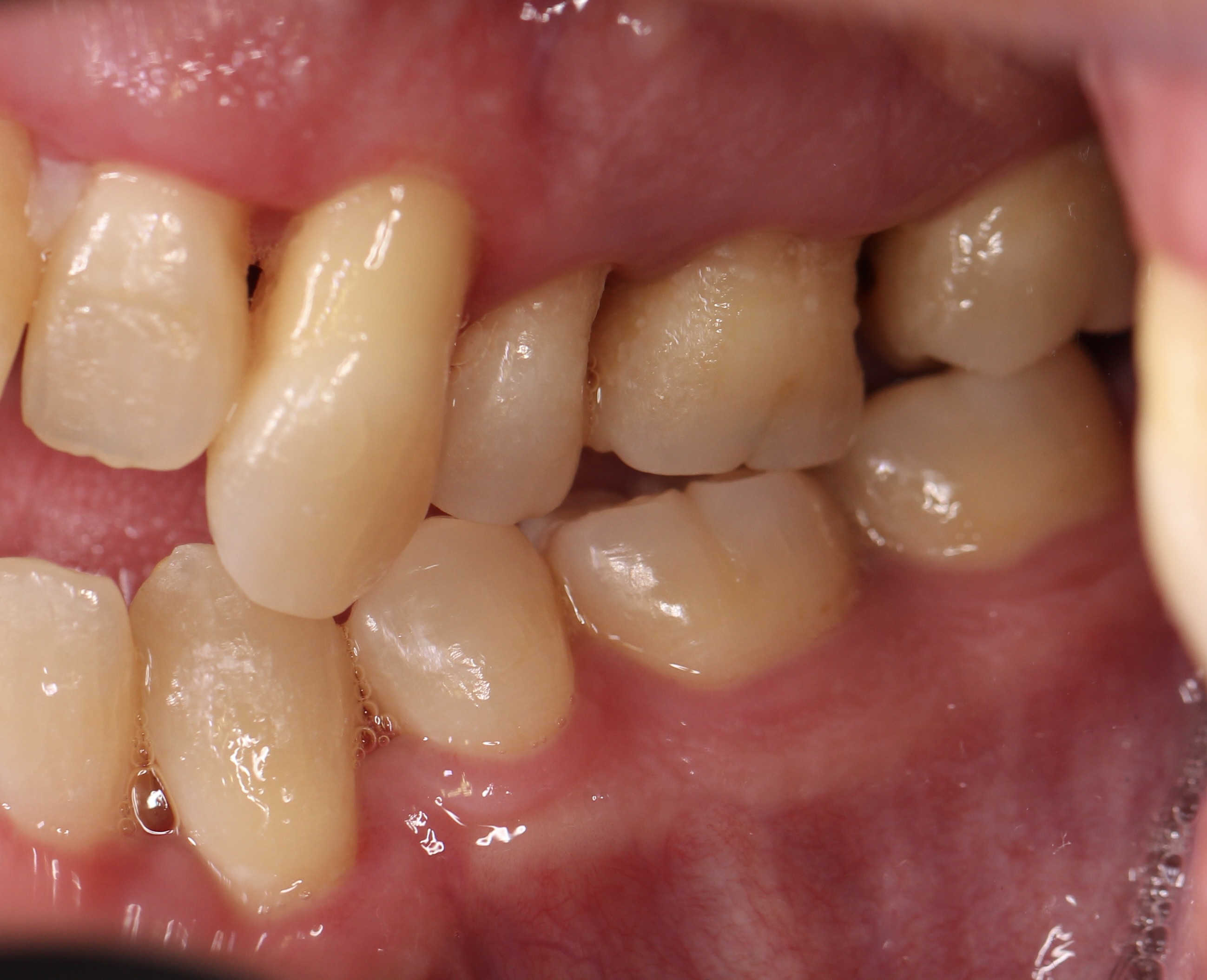
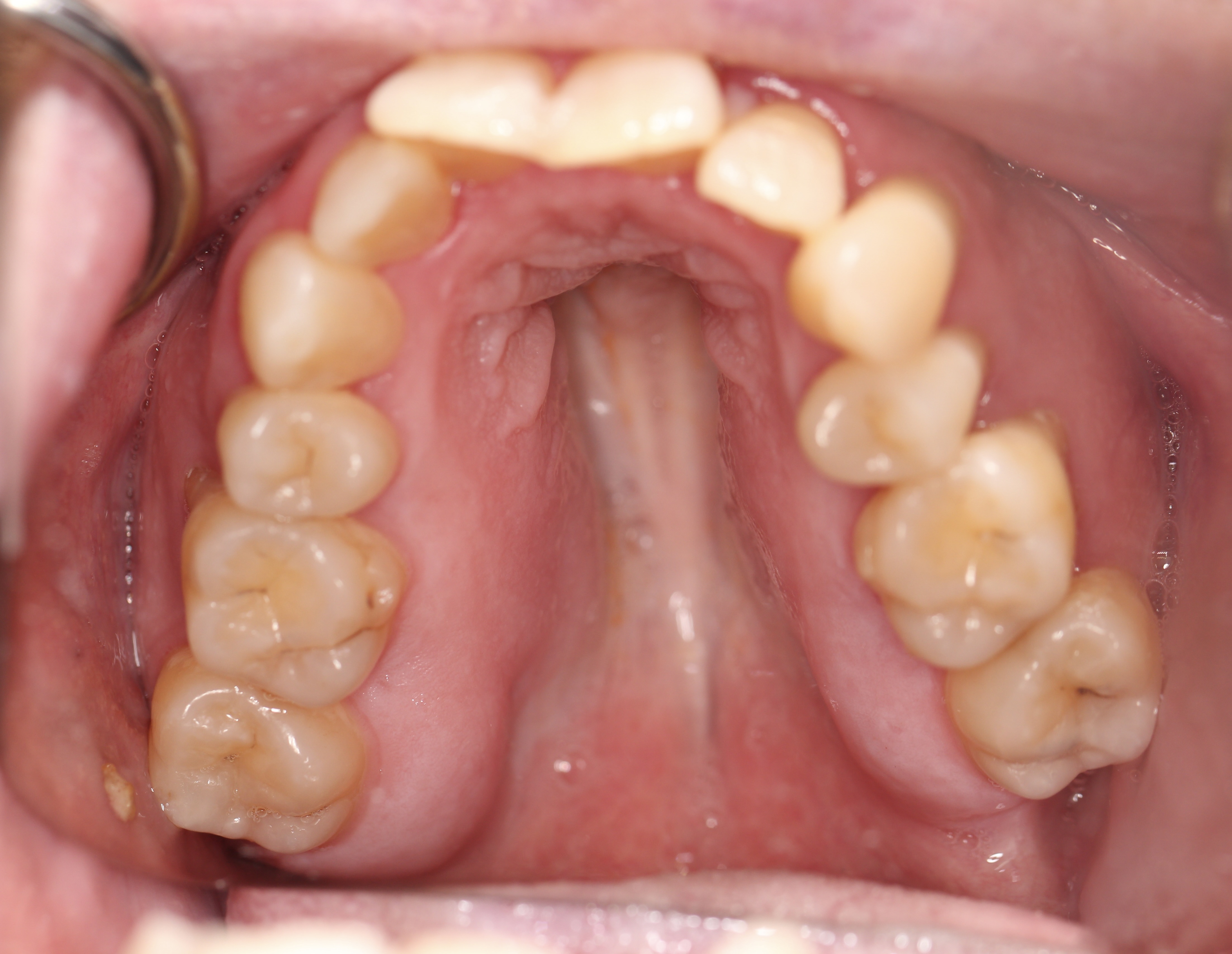
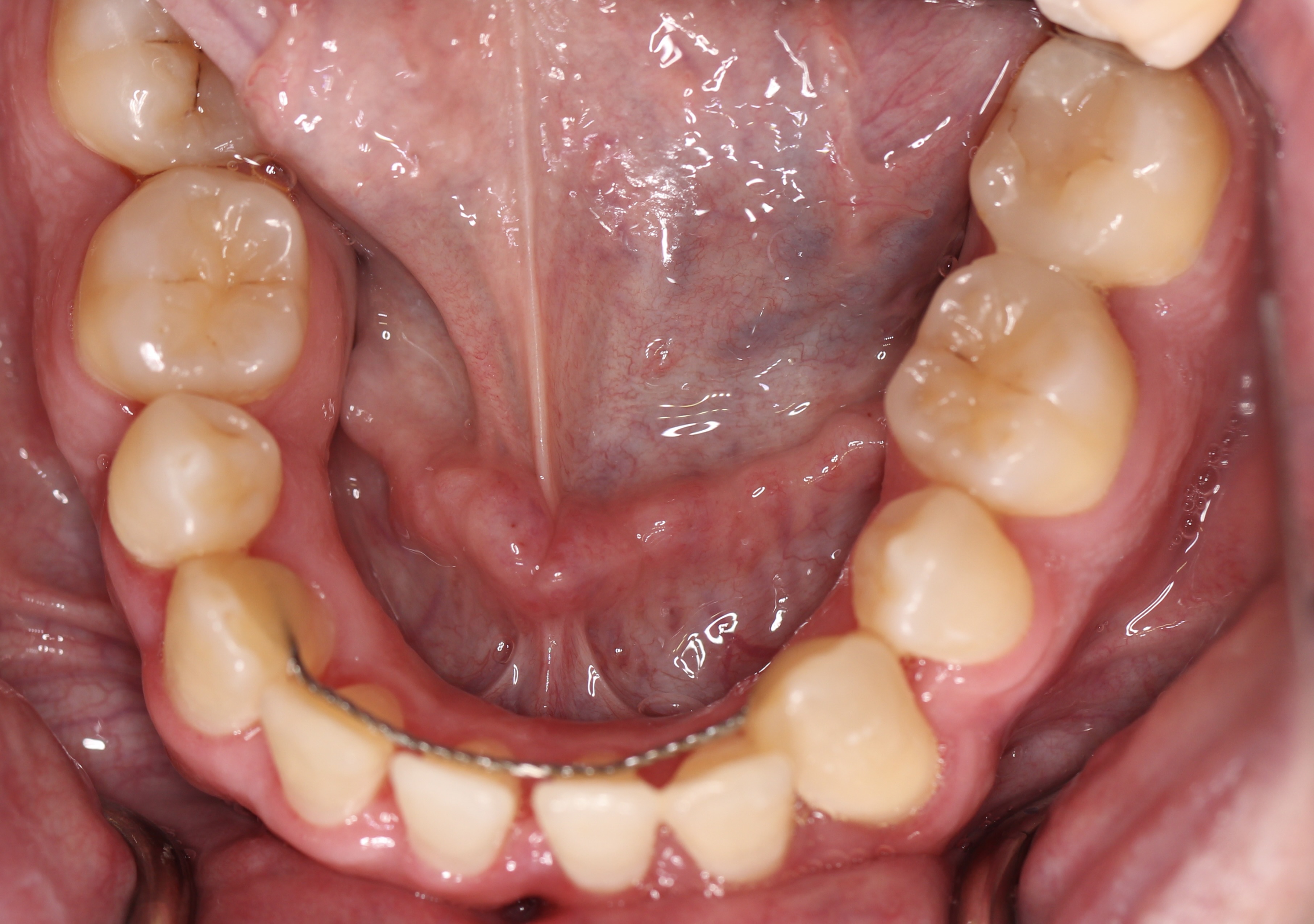
How I Planned It
His treatment began with his smile, not his implants. I designed his new smile with a digital wax-up at a new facial and bite height, widened his narrow upper arch out of crossbite, and brought his front teeth together so they could finally guide his jaw. The implant positions followed that design, placed to support the wider arch and to give him occlusion where he had none in front.
On the day of surgery, a surgical colleague removed his remaining teeth and placed six implants in his upper jaw and five in his lower jaw, according to the design. Todd left with fixed provisional teeth. Over the next four months, as the implants healed, he adapted to his new bite height. His jaw muscles settled into it, his speech found its new rhythm, and his breathing pattern changed with it. He told me he could breathe better.

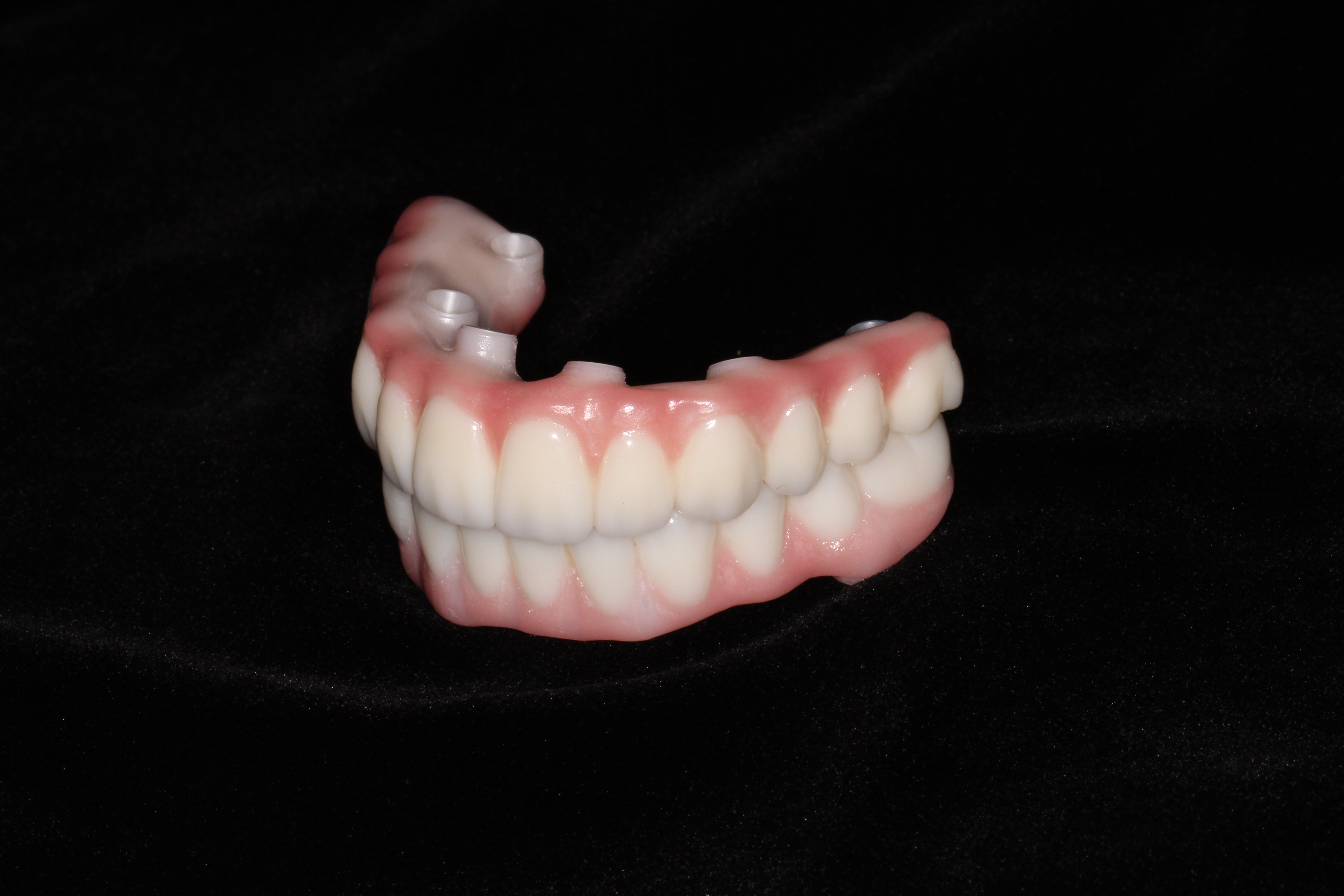
Once the implants had healed, I recorded their positions with intraoral scanning and photogrammetry and took new photographs. From these records I made a prototype to fine-tune his occlusion, speech, and esthetics, and above all the way his front teeth guide his jaw. An open bite offers no anterior guidance to work with. It has to be built, and the prototype is where we refined it.
The Result
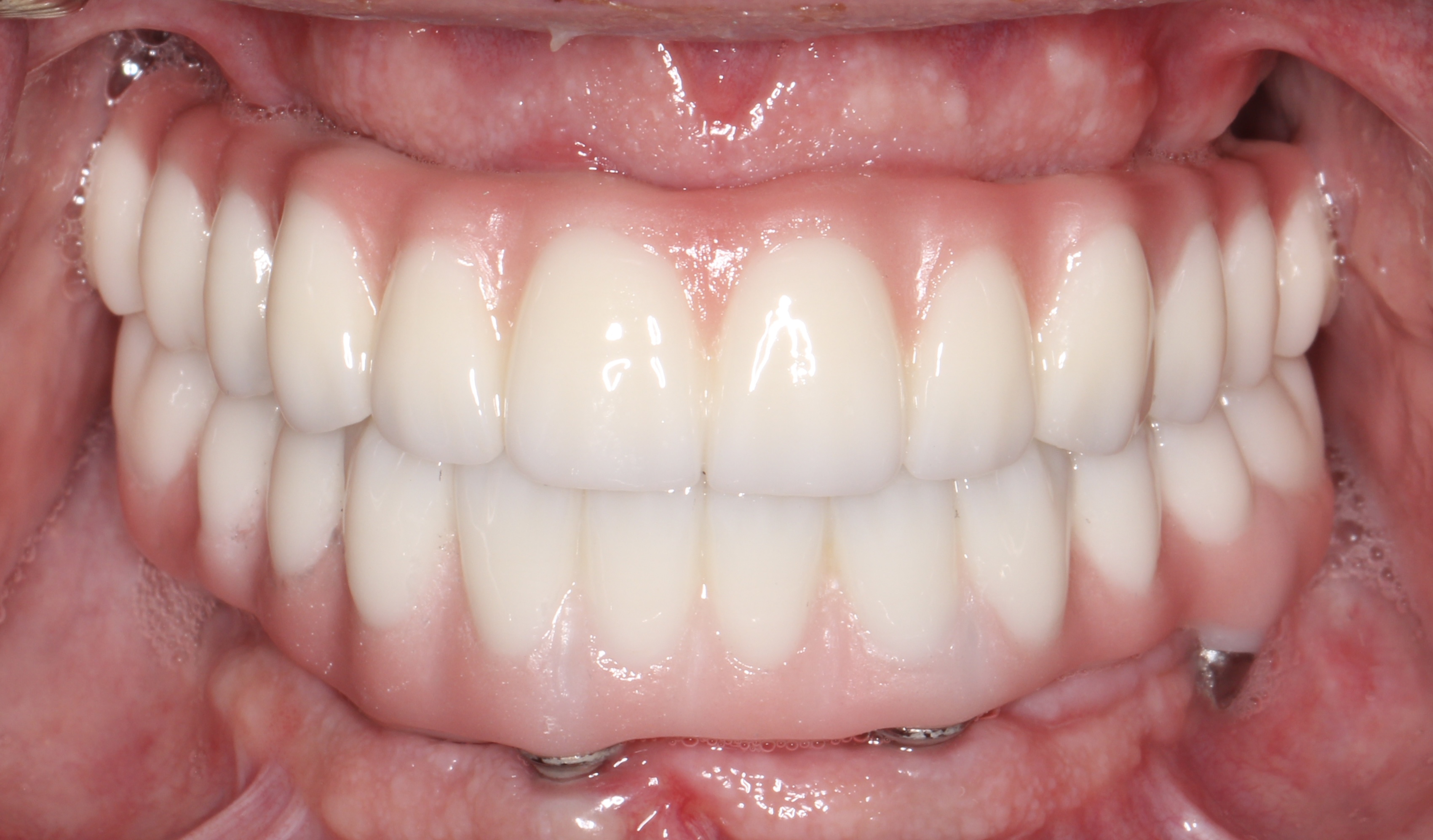
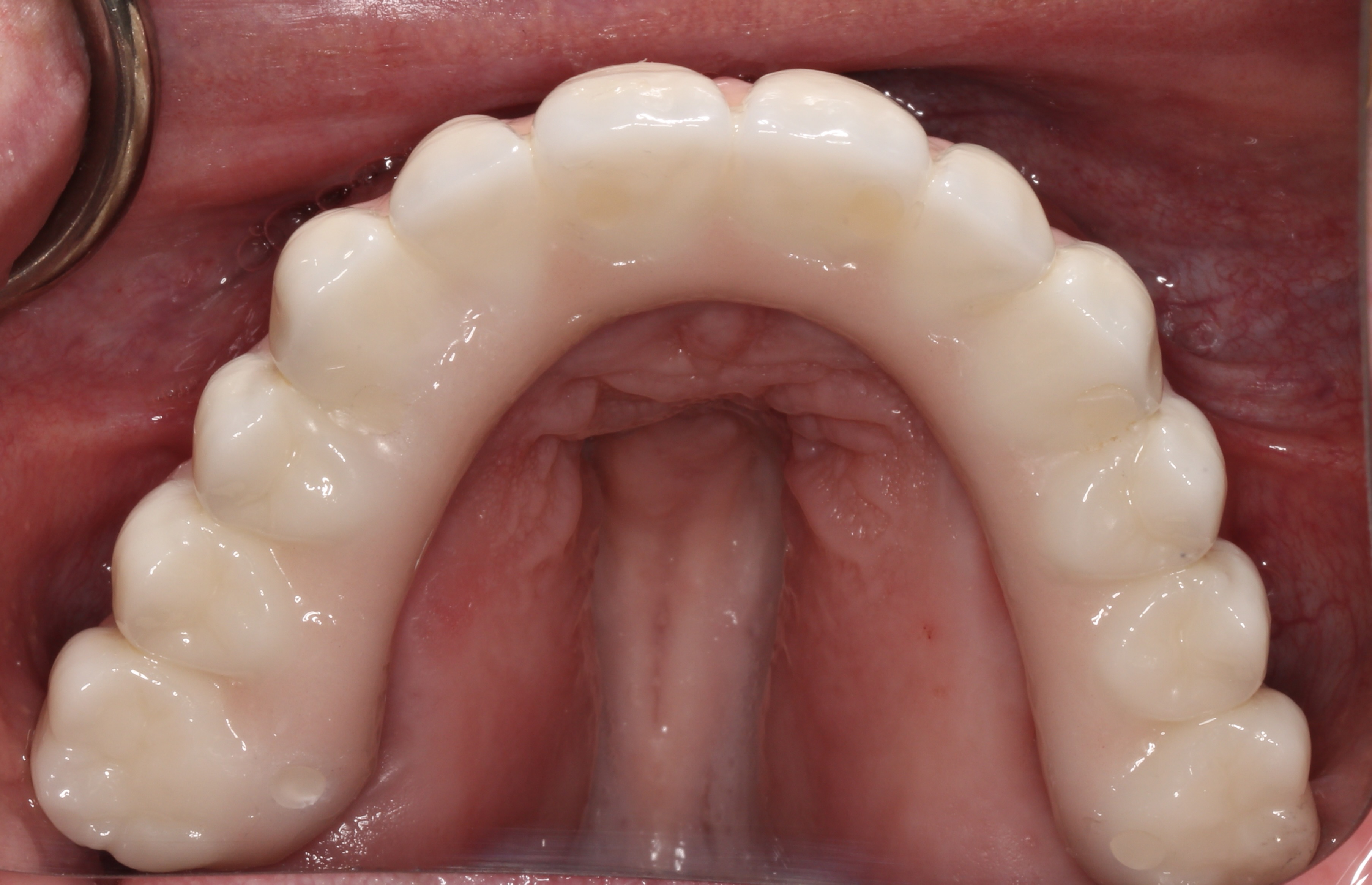
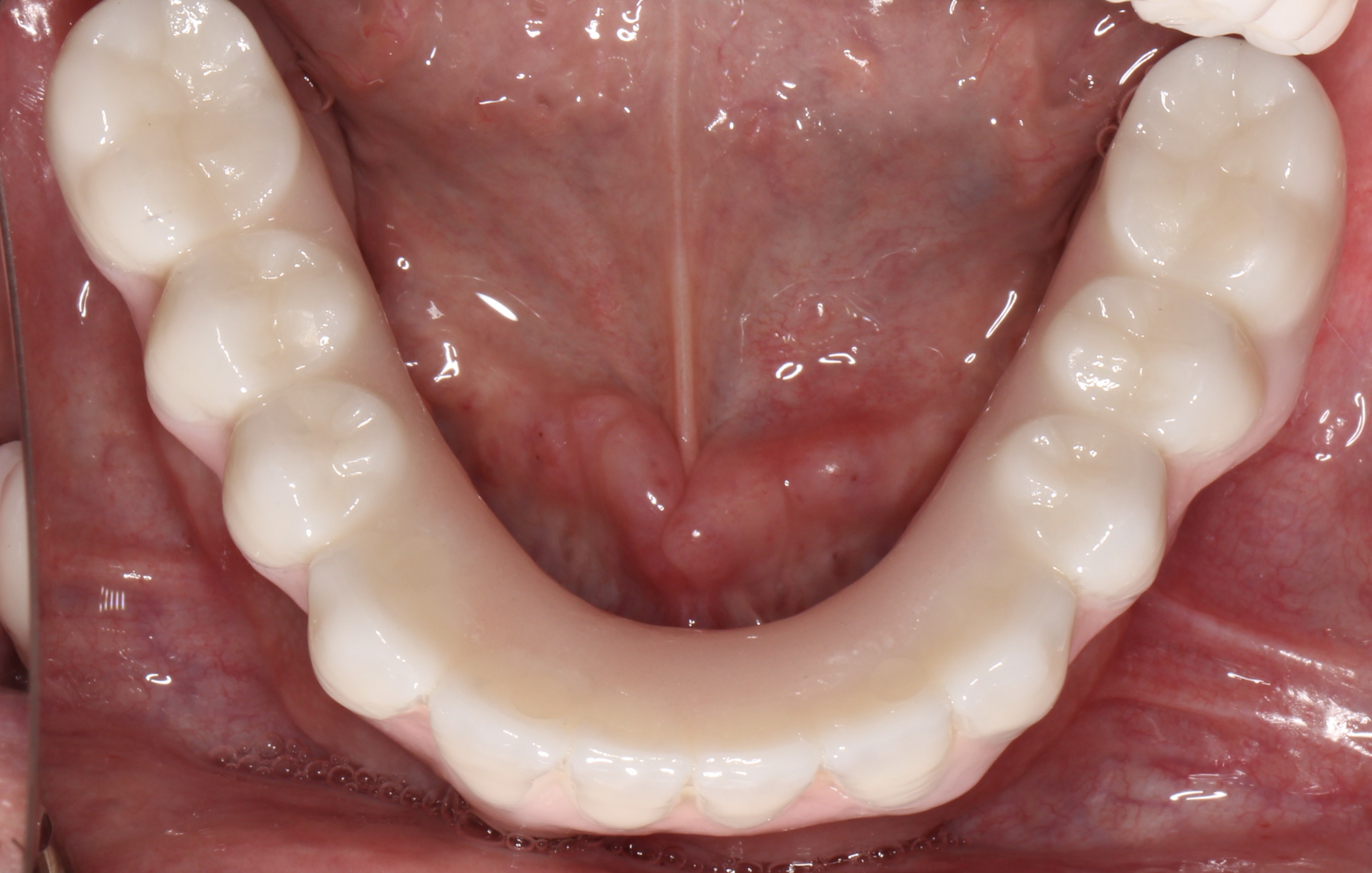
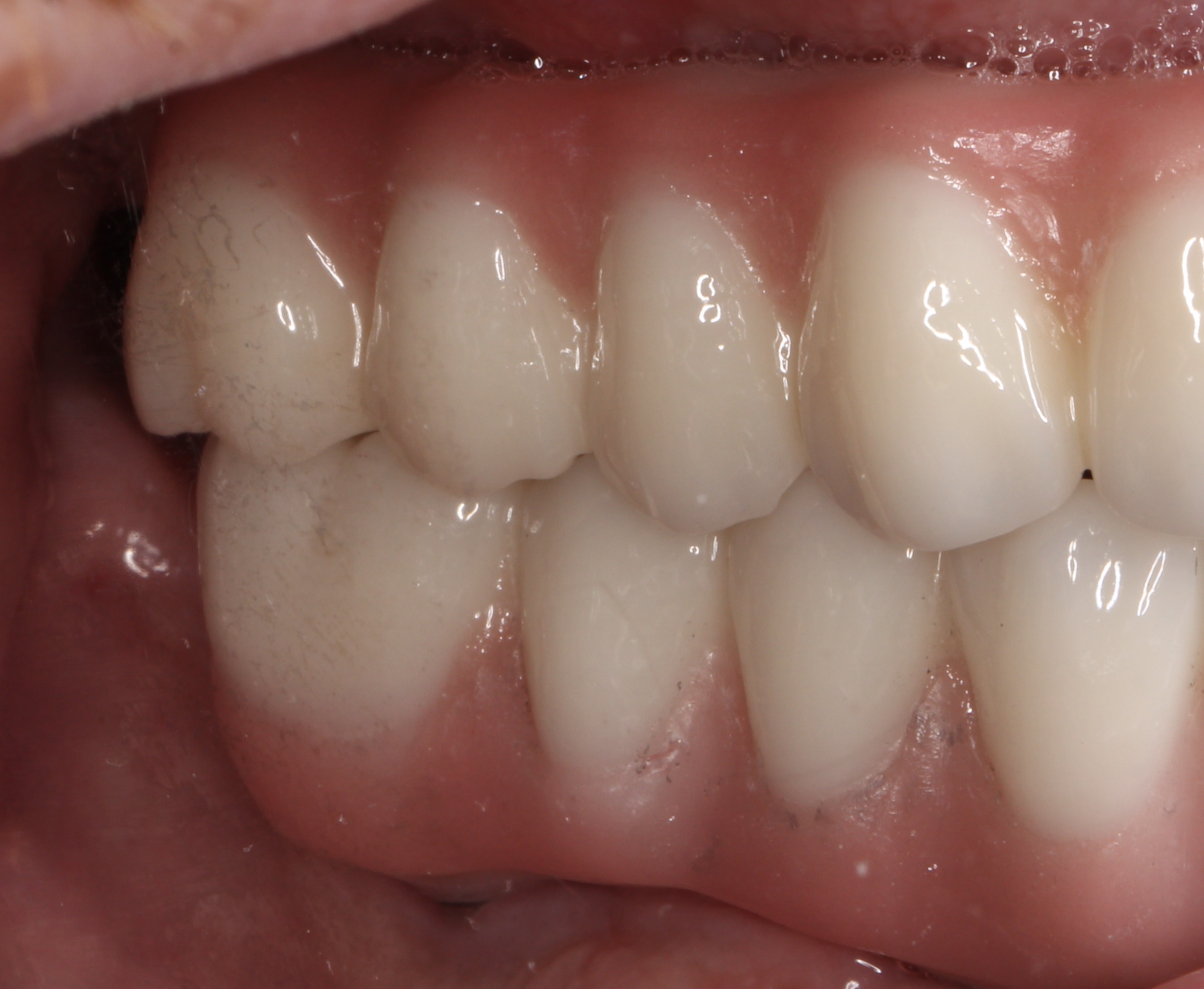
Todd's full mouth reconstruction was completed with full-arch implants in monolithic zirconia, upper and lower, made from the design refined in his prototype. In his new teeth, the open bite is closed, the upper arch is out of crossbite, and his front teeth meet and guide his jaw. He chews comfortably, and his smile is now in harmony with his face.
Gum disease and root decay brought him in. His reconstruction was designed around what lay beneath: the way his jaws had grown.
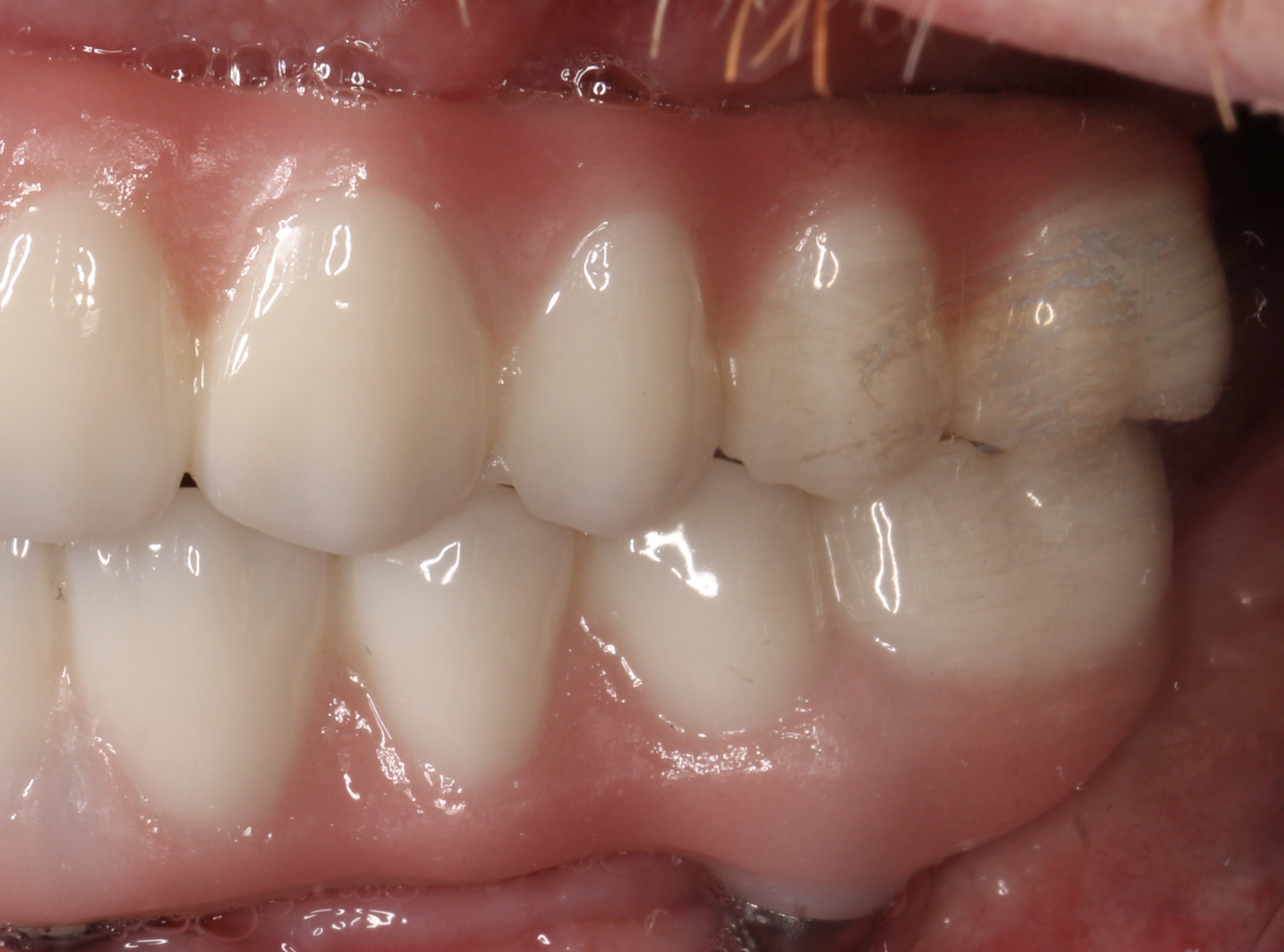
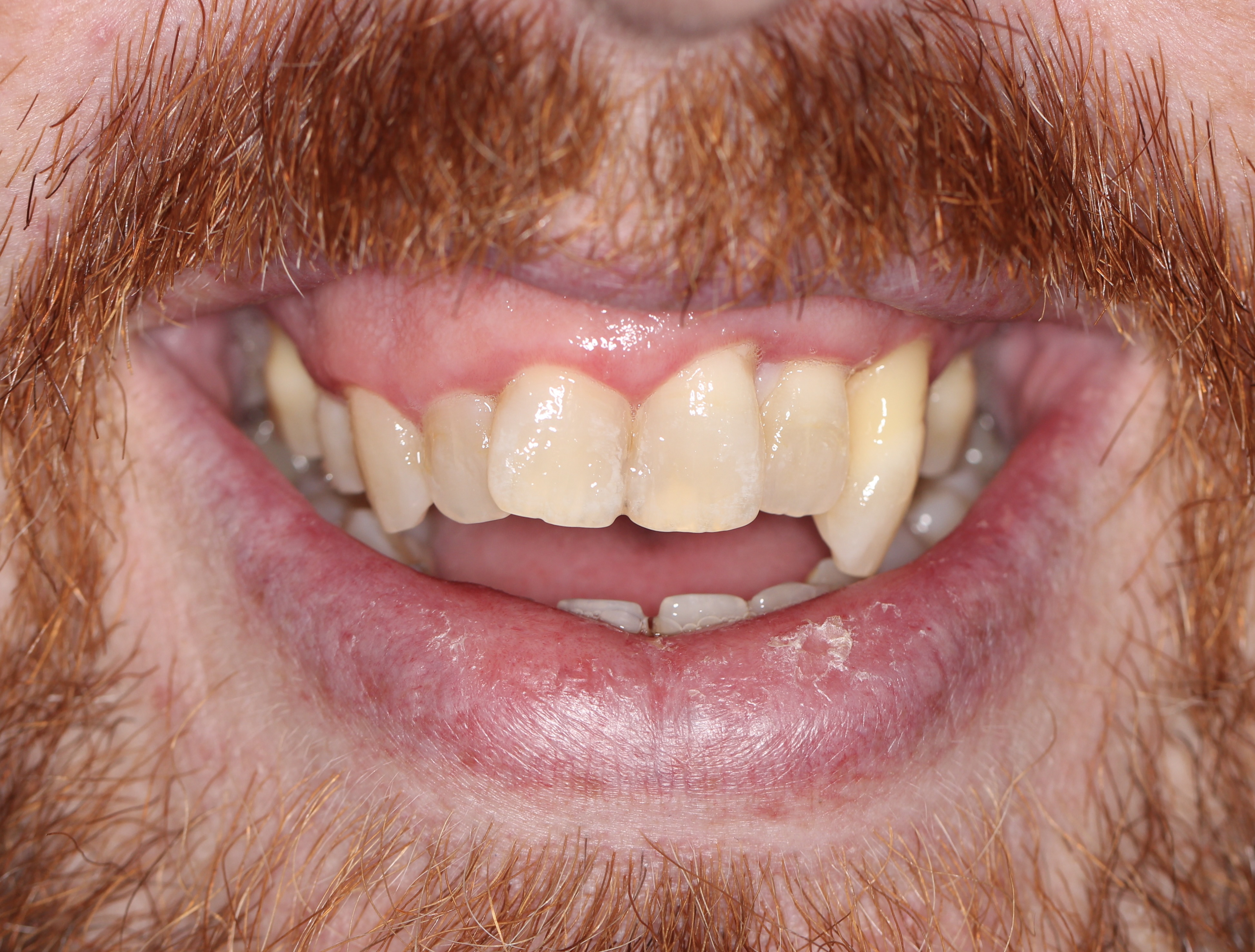


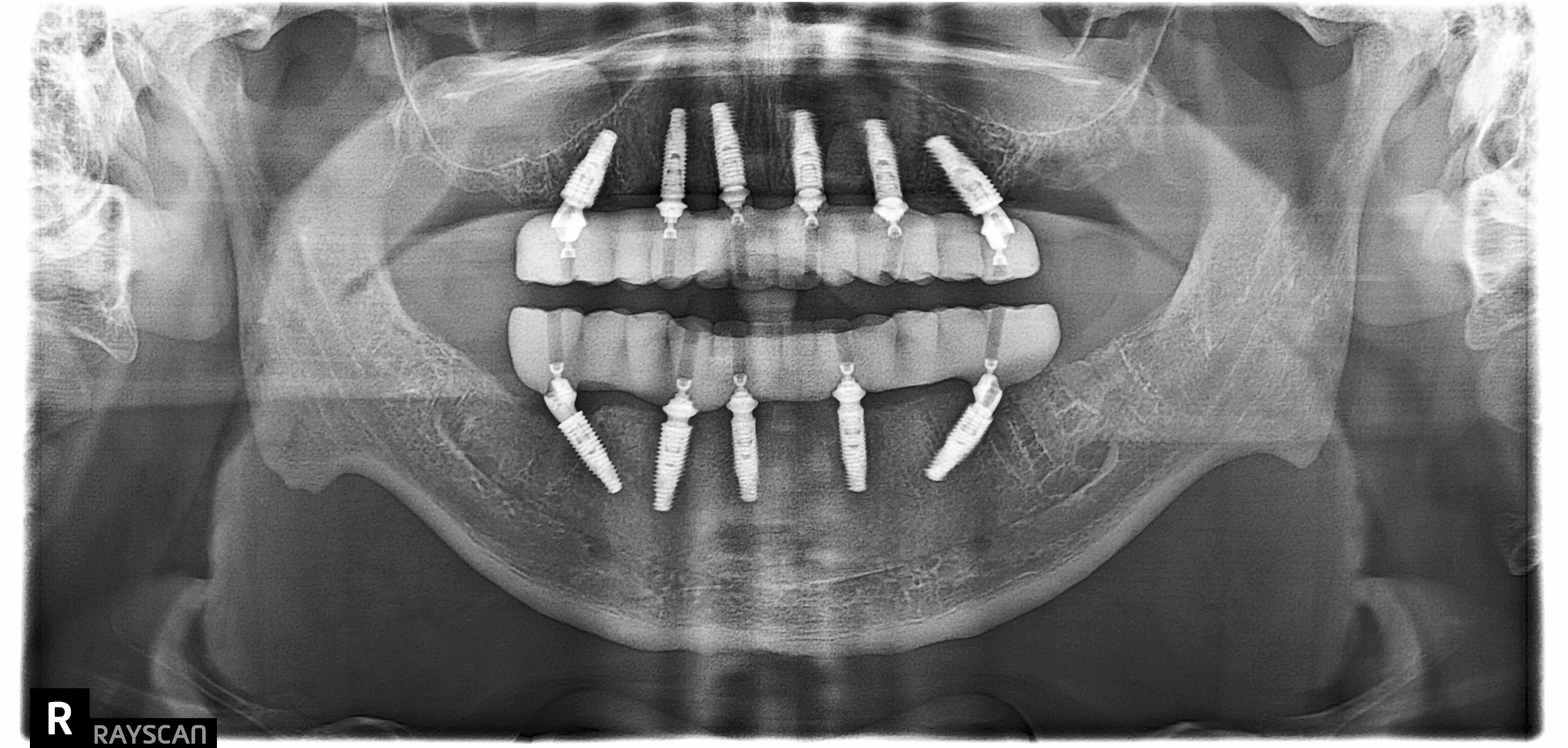
“You come here and get A-level care in an A-level facility with really A-level people.”
Like anyone with full-arch implants, he needs daily care, regular maintenance, and periodic evaluation of the implants, the gums, and the bite, all the more with a mouth prone to dryness.
When gum disease or decay accelerates in someone who keeps up with care, the cleaning schedule is rarely the cause. The way the jaws have grown can shape the bite, the lip seal, and how dry the mouth stays, and treating the teeth alone tends to buy time rather than stability. Full-arch implants are one answer; for others, saving and restoring teeth is the better path. Which one fits depends on the bone, the teeth that remain, and the bite. If your teeth are breaking down despite good care, that is a reason to be evaluated as a whole. I explain more about full-arch dental implants.
Results and treatment needs vary from patient to patient. Photographs are of a patient treated at our practice and are shown with permission, without retouching. This page is educational and does not replace an individual examination, diagnosis, or treatment recommendation.