Full-Arch Implant Rehabilitation for Ectodermal Dysplasia, With a Zygomatic Implant
A lifetime of missing teeth and underdeveloped bone, after years of being told implants were not an option, rebuilt as fixed zirconia teeth in both arches.
The Challenge
She had been a patient of this practice for nearly 30 years, long before I took over its care. One day she arrived holding a crown that had just come off one of her last lower teeth.
“I guess I need to do something to fix my mouth before I can’t do anything anymore.”
She was born with ectodermal dysplasia, a group of inherited conditions that can affect how teeth form. Several of her permanent teeth never developed. Because teeth help build the bone that holds them, the bone where they were missing never fully formed either.
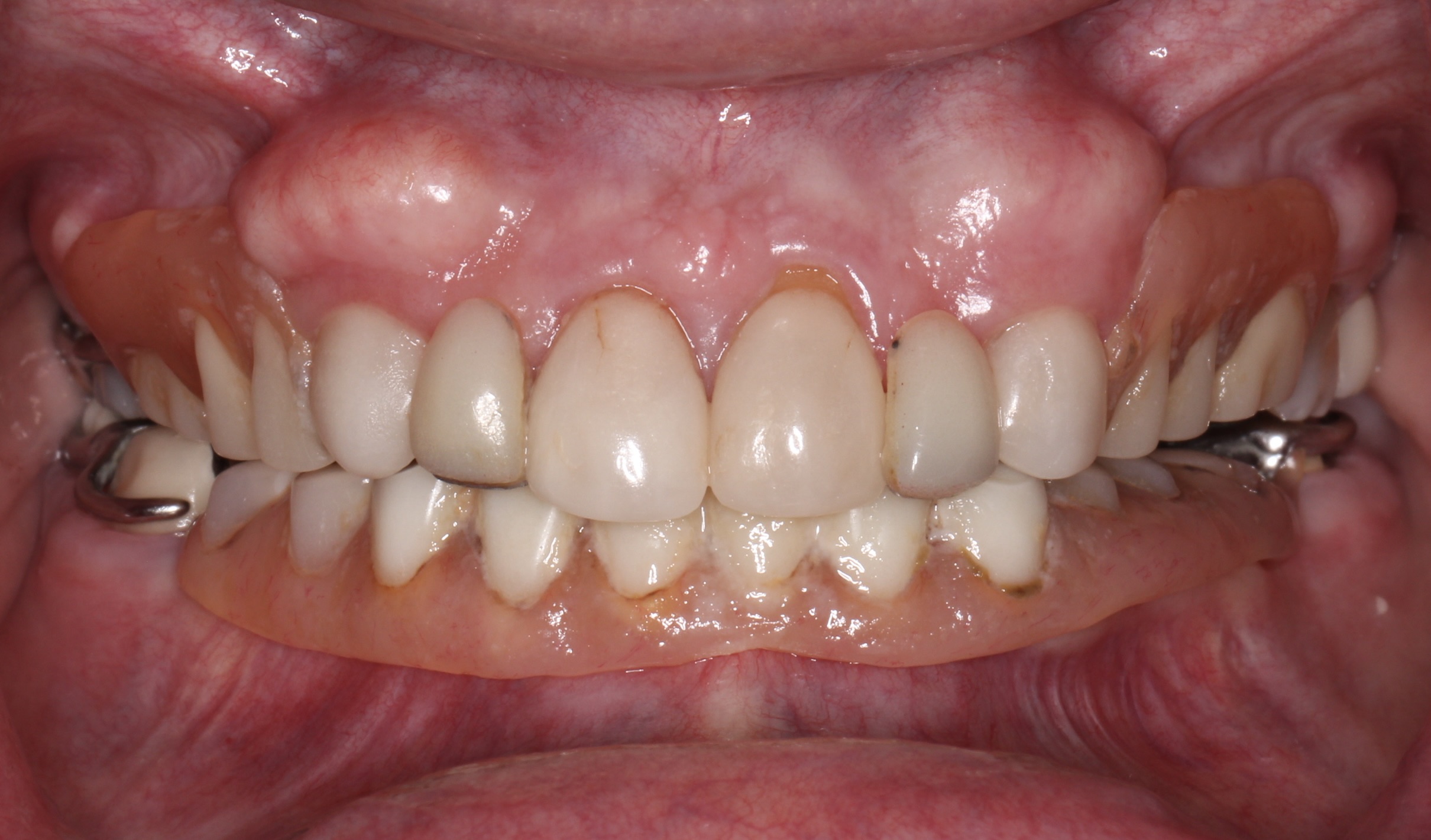
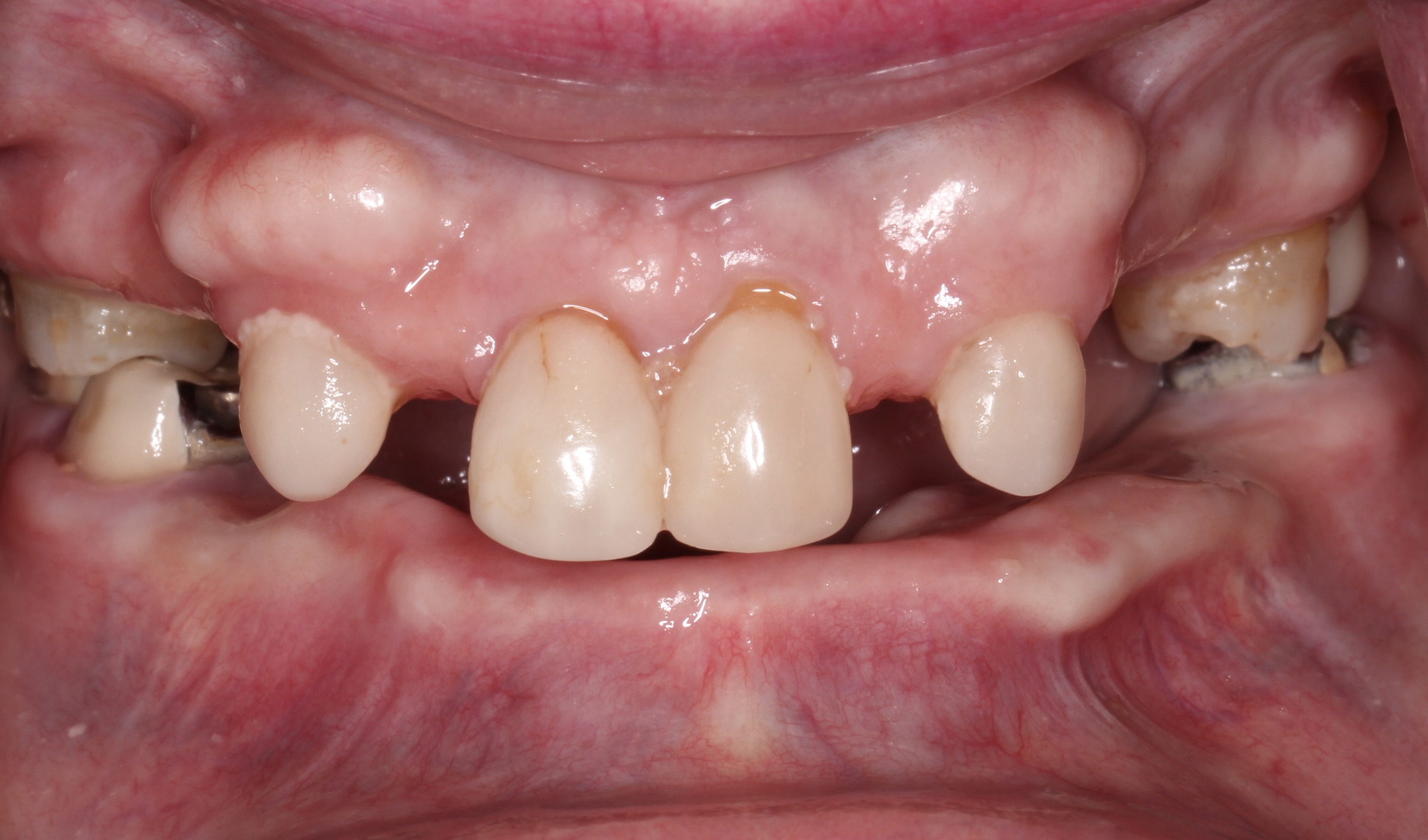
She was missing many upper teeth, including both lateral incisors, and wore a partial denture in each jaw. Several of her upper front teeth had veneers. In her lower jaw, only three teeth remained, two of them wisdom teeth, all three crowned and carrying the weight of a partial denture. More than once she had been told that implants were not an option for her.
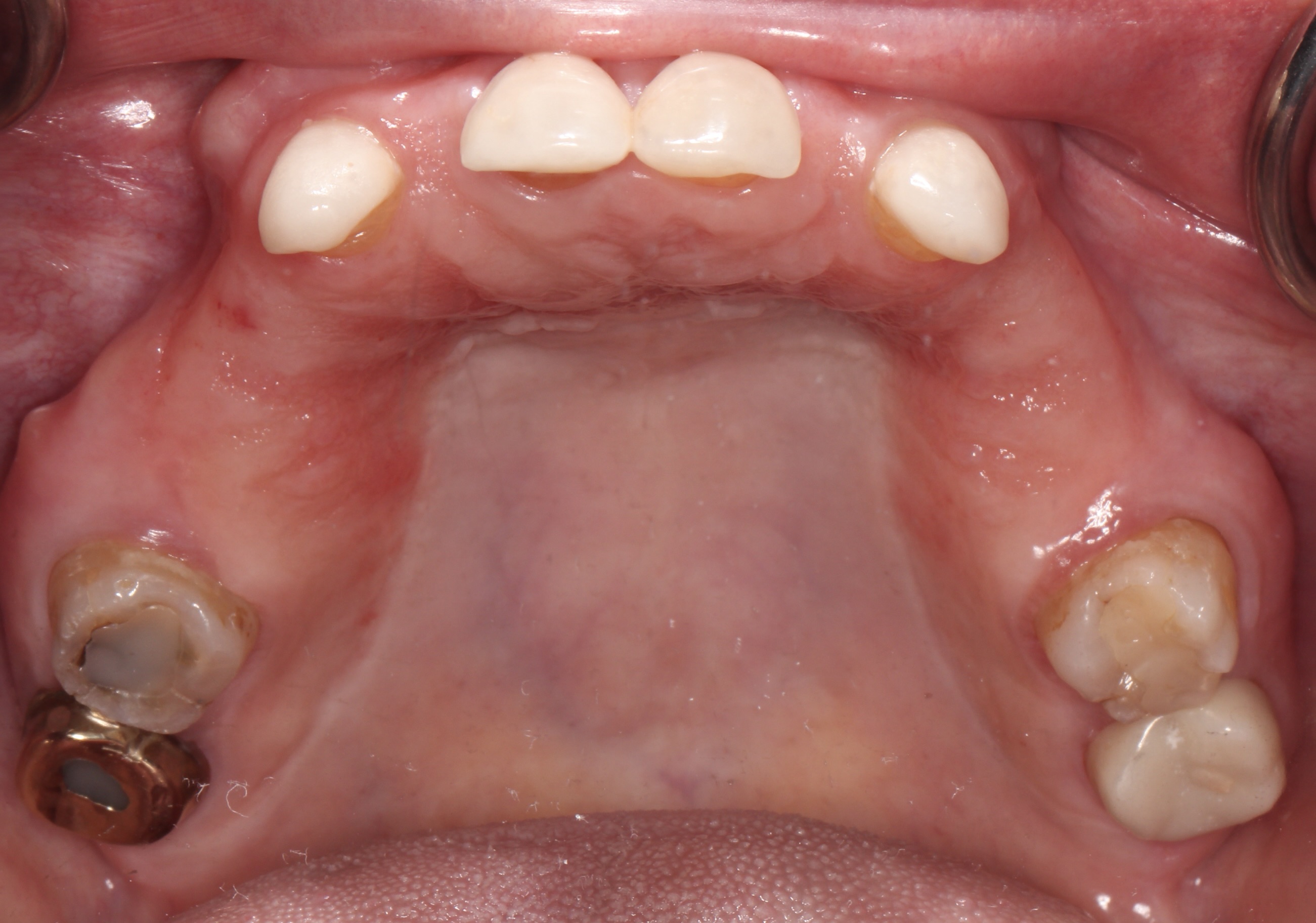
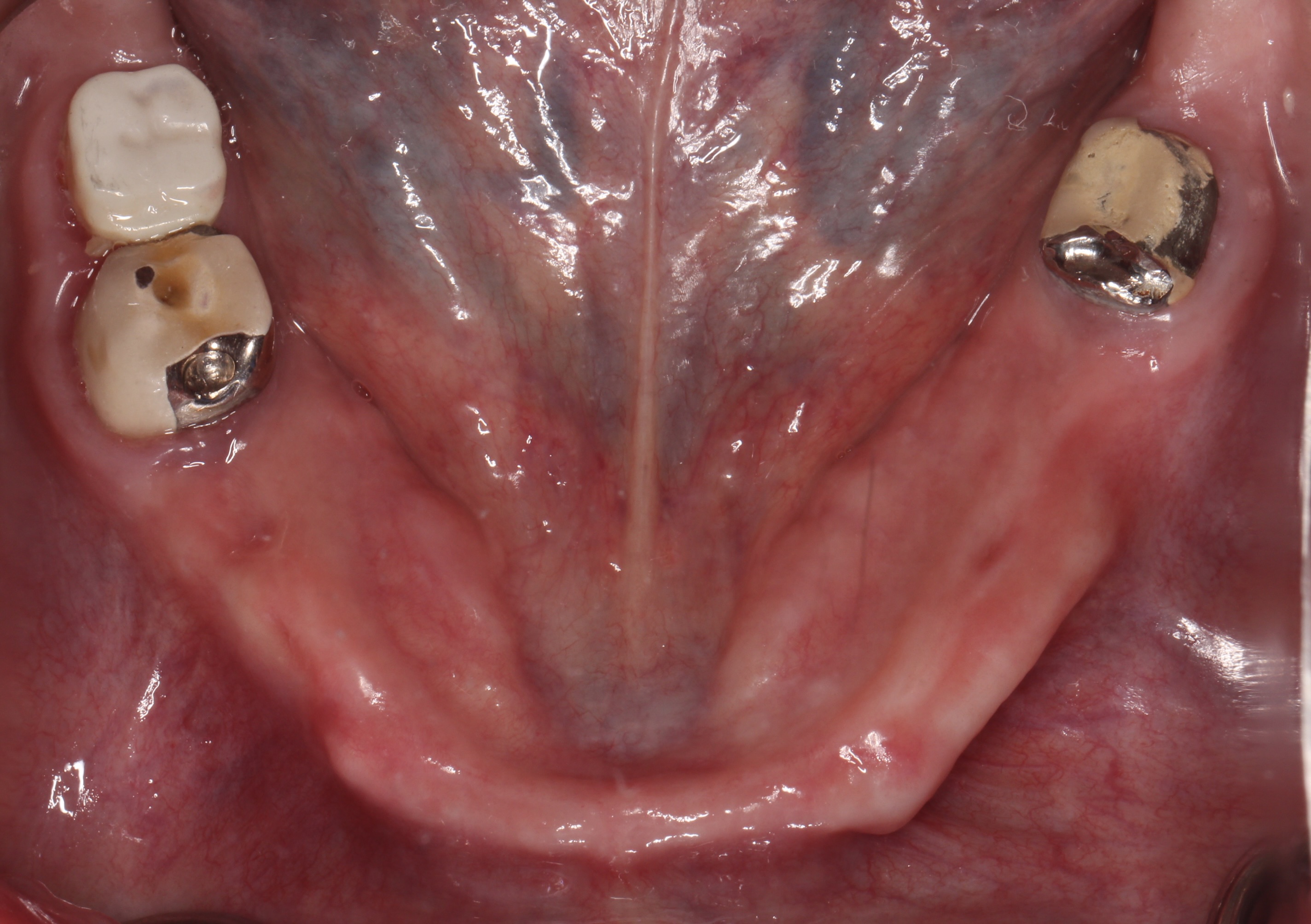
My evaluation included a 3D scan, digital scans, and photographs. The teeth she had were failing, with recurrent decay and root resorption. Her bite had lost height. In her upper jaw, the bone was thin and her sinuses were enlarged, leaving very little bone where conventional implants would normally go.
Another crown or another partial would have been built on the same failing foundation.
How I Planned It
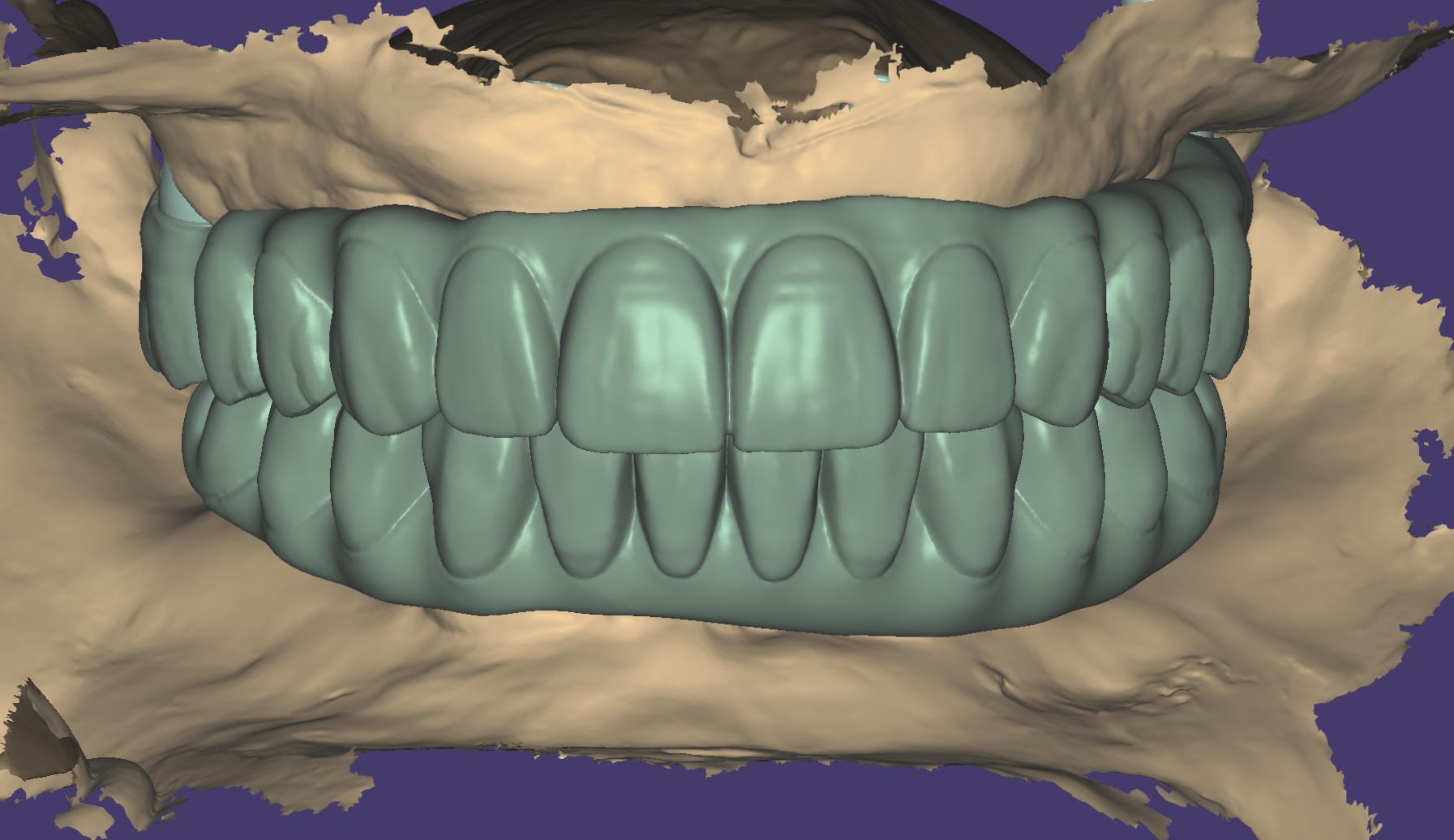
I planned her teeth first, and the implants to support them: where her teeth should sit, how much height her bite needed, and how much support her lips and face needed. The implant positions followed from that design.
The conventional route to implants in her upper jaw would have meant extensive bone grafting and sinus augmentation, with a long treatment time, multiple surgeries, and a less predictable outcome in bone that deficient. For her, it was a heavy burden.
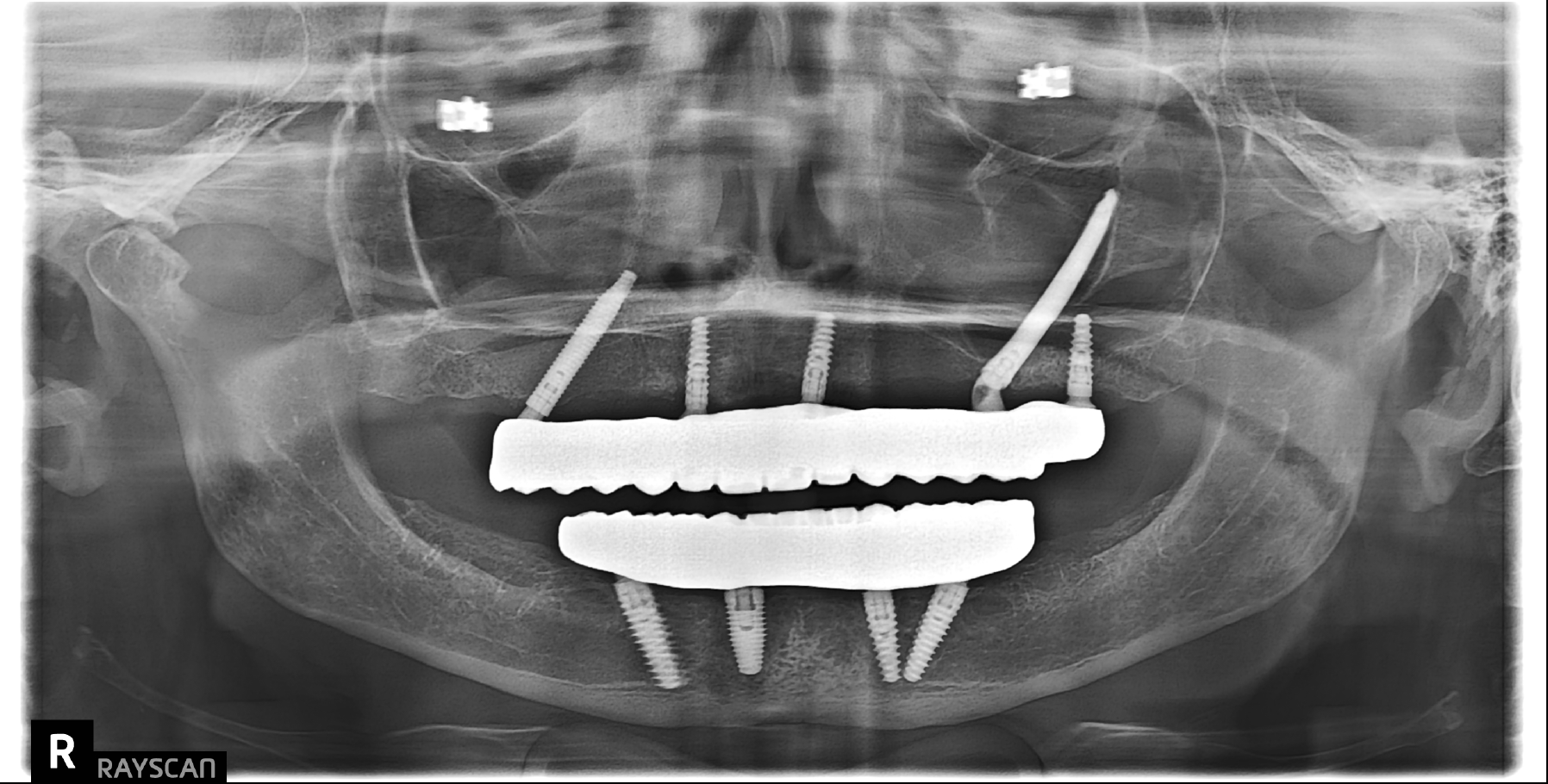
Instead, the plan used remote anchorage. A zygomatic implant is anchored in the cheekbone, where the bone is dense, rather than relying on the thin bone above her back teeth. Combined with implants placed where her bone allowed, it gave her upper jaw a stable foundation without rebuilding the bone first.
A surgical colleague removed her remaining teeth, grafted and contoured the bone where needed, and placed five implants in her upper jaw, including the zygomatic implant, and four in her lower jaw. I recorded the implant positions with intraoral scanning and photogrammetry, and within two hours of the end of surgery she had fixed provisional teeth, designed and printed in our in-house lab.
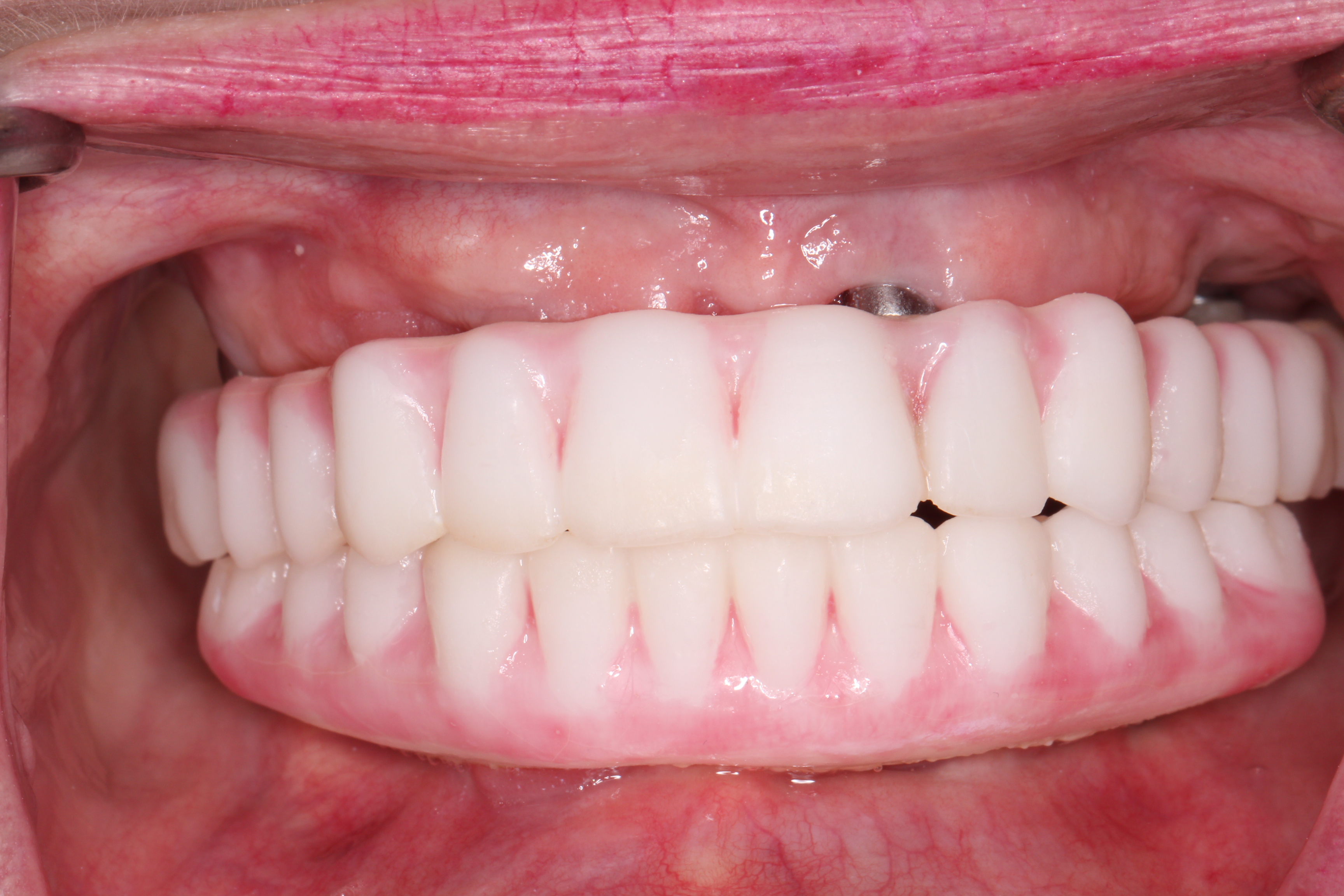
After six months of healing, I took new scans and photogrammetry records and designed her definitive teeth. Before anything final was made, she wore a printed prototype so we could confirm the fit, her bite, her speech, and the appearance of her smile.
The Result
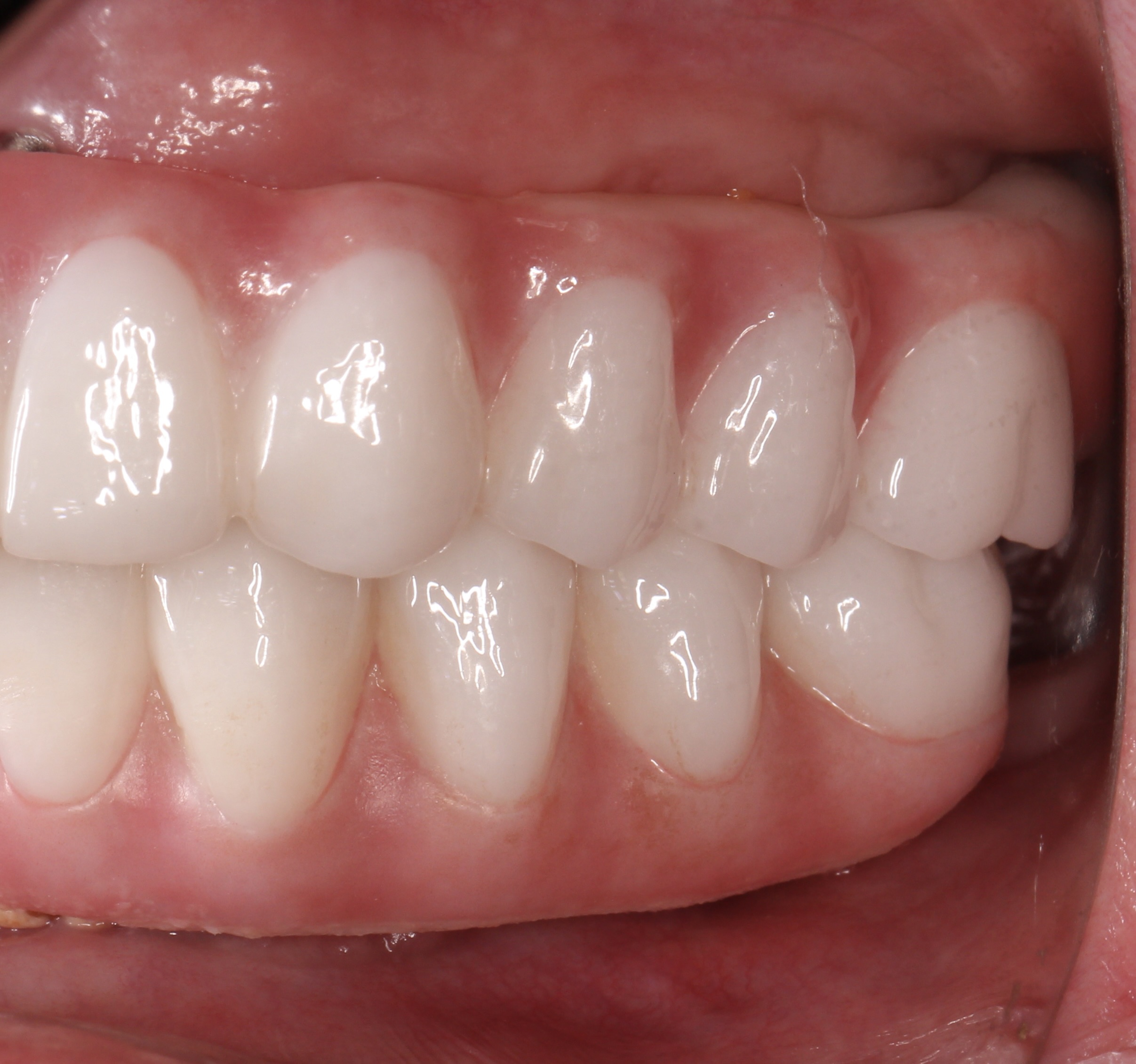
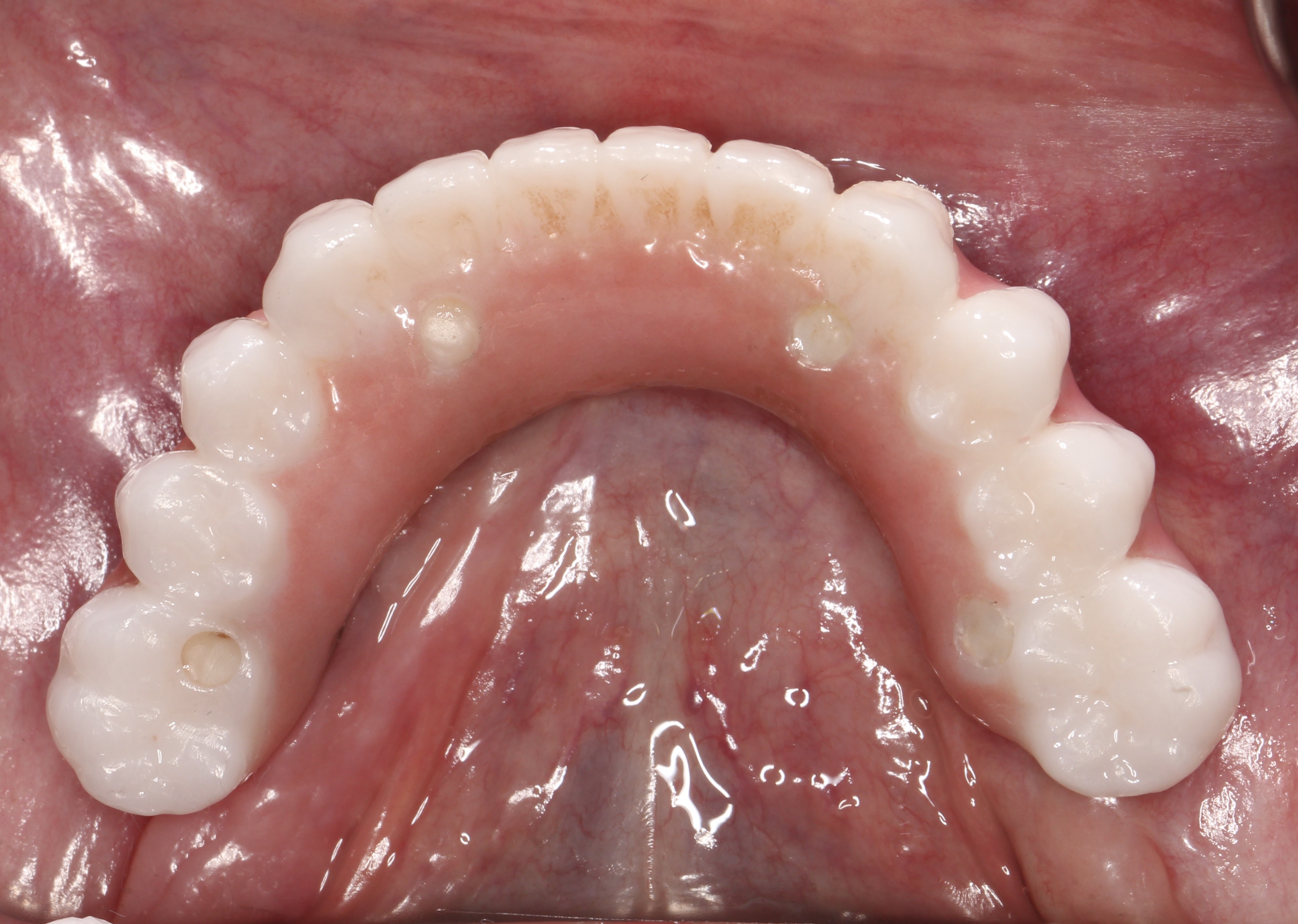
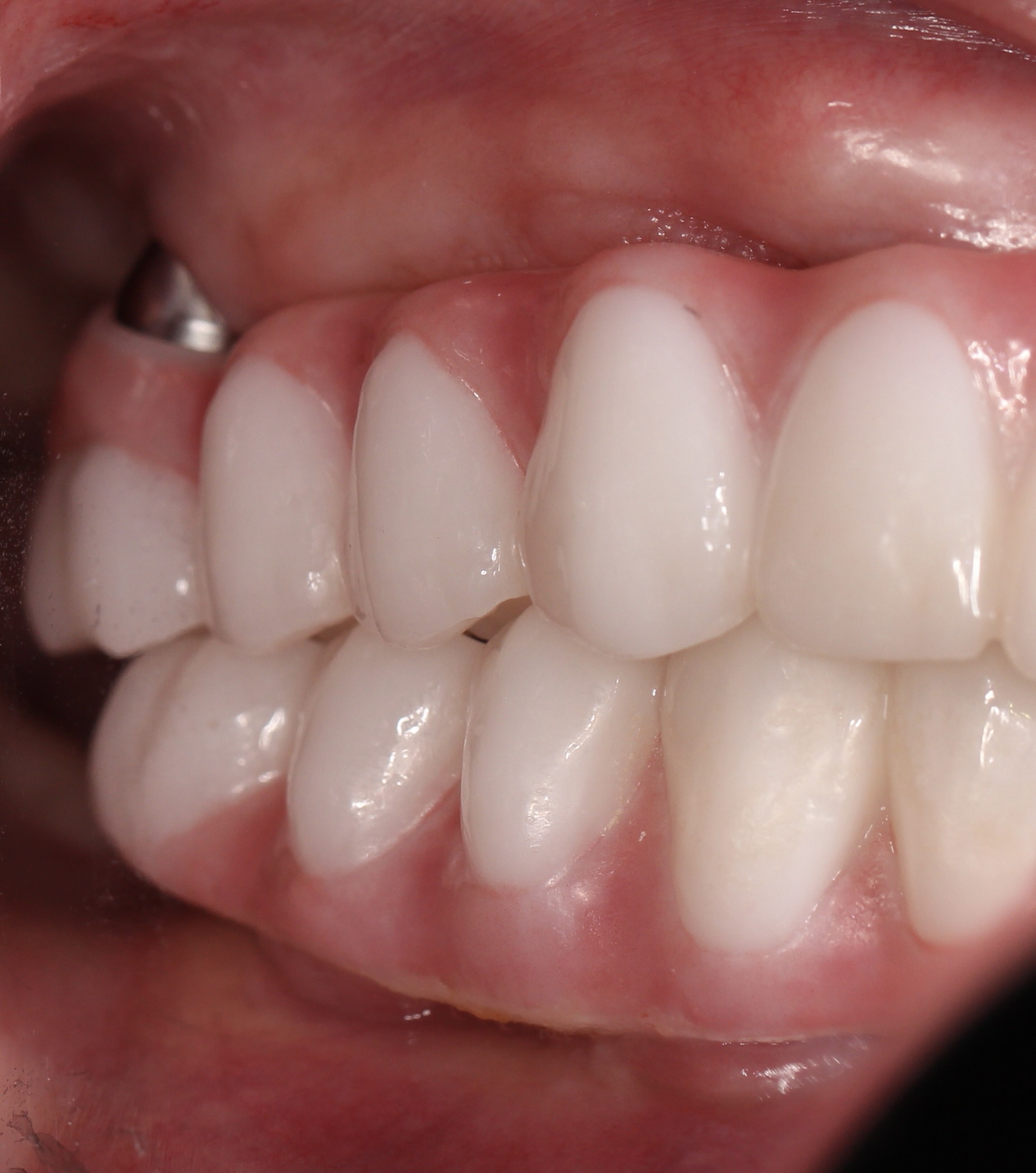
Her definitive restorations were milled in monolithic zirconia, fixed in both arches, from the design refined in her prototype. I chose zirconia for its strength and its resistance to wear across a full arch.
For the first time in her life, she has a complete set of fixed teeth. She no longer lives with a mouth that keeps breaking down, and in her words, she smiles more now.
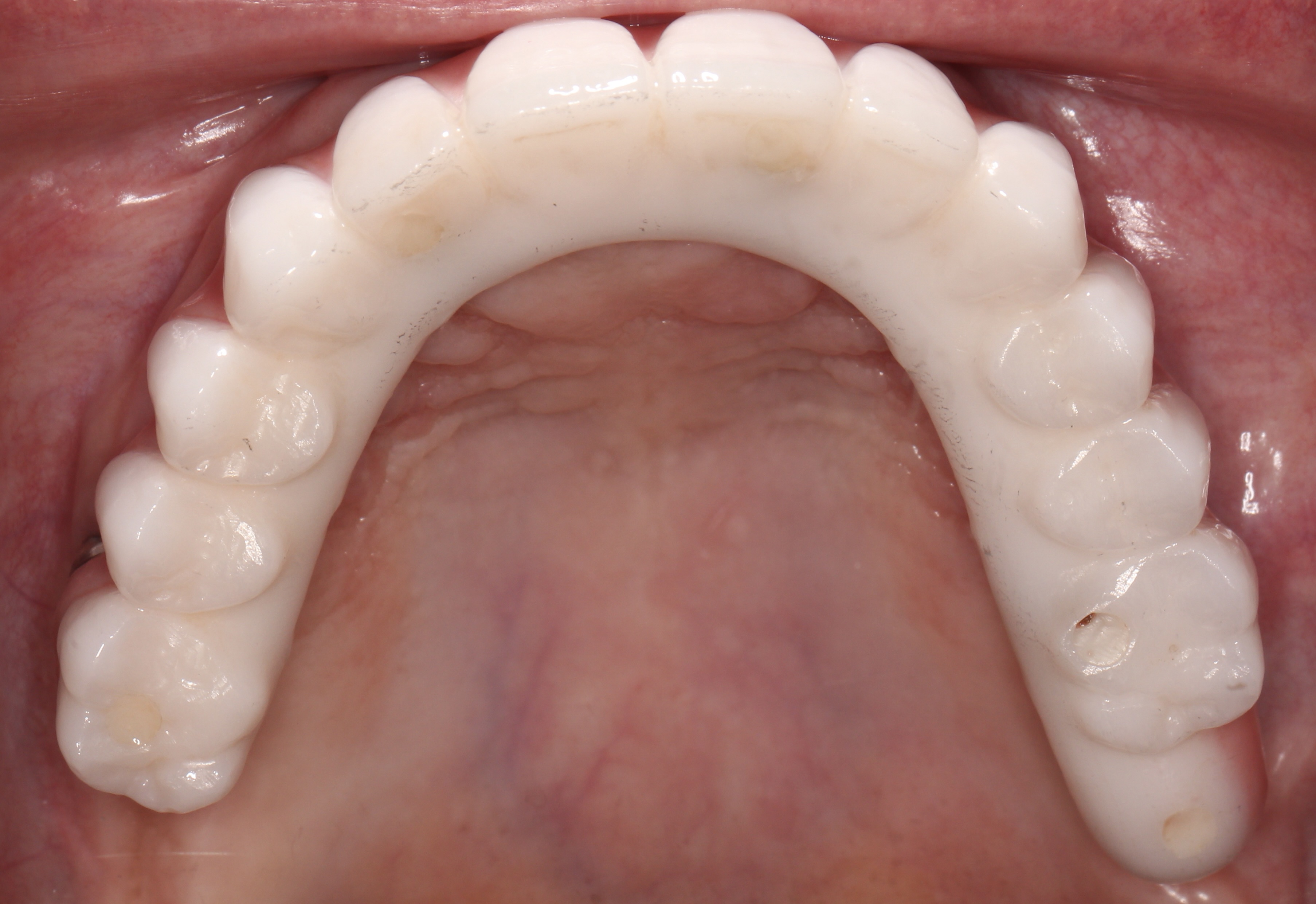
Like any implant restoration, hers need daily care, regular maintenance, and periodic evaluation of the implants, the gums, and the bite.
Being told that implants are not an option is often a statement about bone, and bone is only one part of the decision. Zygomatic implants, grafting, and other approaches each have their place, and which one fits depends on the anatomy, the planned teeth, and the patient’s health. If you have been told you cannot have implants, that is a reason to be evaluated by a team that plans these cases routinely. I explain how I approach these patients in ectodermal dysplasia and missing teeth.
Results and treatment needs vary from patient to patient. Photographs are of a patient treated at our practice and are shown with permission, without retouching. This page is educational and does not replace an individual examination, diagnosis, or treatment recommendation.