Ectodermal Dysplasia and Missing Teeth: How Full-Mouth Rehabilitation Is Planned

Ectodermal dysplasia presents a complex restorative challenge since the abnormalities begin during dental development.
Patients may be missing many permanent teeth, have small or conical teeth, underdeveloped alveolar ridges, reduced facial support, and an occlusion that never developed in the usual way.
Treatment involves more than replacing missing teeth. It requires establishing appropriate tooth position, vertical dimension, facial support, function, speech, and esthetics, with a plan that can be maintained over time.
Ectodermal dysplasia describes a group of inherited conditions affecting structures derived from the ectoderm. Depending on the type, the teeth, hair, nails, skin, and sweat glands may be involved.
The dental findings vary considerably. Some patients have only a few missing teeth, while others have extensive congenital tooth absence. Existing teeth may be small or conical. As tooth development and eruption contribute to alveolar bone development, the supporting ridges may be significantly deficient.
These anatomical differences affect tooth replacement, jaw relationships, facial support, and the design of the final prosthesis.
Very early in my prosthodontic career, I was fortunate to treat a young patient with hypohidrotic ectodermal dysplasia. The complexity of the rehabilitation sparked my interest in the condition and motivated me to master the challenges involved in its treatment.
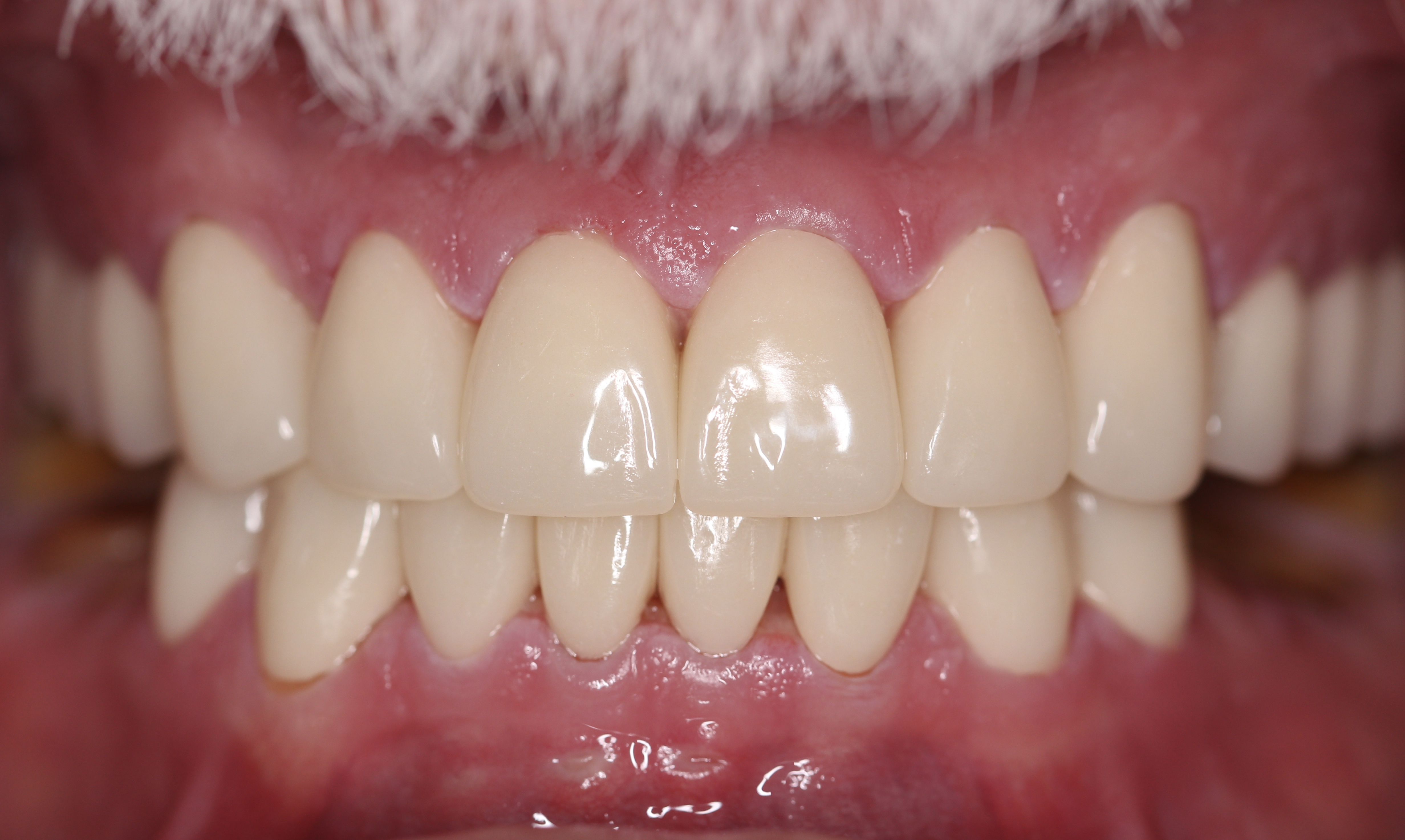
The full-mouth rehabilitation included a maxillary implant overdenture and a mandibular implant-supported hybrid prosthesis. The case was subsequently published in the Journal of Prosthodontics in 2007. At the one-year follow-up, improvements in oral function and psychosocial activities were documented.
Patients with ectodermal dysplasia often require prosthodontic treatment during childhood, while the jaws and face are still developing.
Removable prostheses are commonly used during growth as they can be relined, modified, or remade as the patient develops.
Implant placement in growing patients, on the other hand, requires careful consideration. An osseointegrated implant behaves similarly to an ankylosed tooth. It does not erupt or move with the surrounding dentition and alveolar bone, potentially resulting in infraocclusion or unfavorable positioning as growth continues.
In selected children with complete absence of teeth, anterior mandibular implants may be considered to support an overdenture, recognizing that the treatment may need revisions as growth continues.
Definitive implant placement in the maxilla and posterior mandible is generally deferred until skeletal growth is complete. Skeletal maturity, rather than chronological age alone, determines the appropriate timing.
Full-mouth rehabilitation does not necessarily require extraction of the remaining teeth.
Primary and permanent teeth may help preserve supporting bone, provide retention for removable prostheses, or serve as orthodontic anchorage. Small or conical teeth may be restored to improve their form and function.
I assess the prognosis and strategic value of each remaining tooth before determining its role in the rehabilitation.
In patients with extensive congenital tooth absence, the alveolar bone may be severely underdeveloped. This can significantly complicate implant placement.
I evaluate the available bone in relation to the planned tooth position, lip support, facial proportions, and maxillomandibular relationship. Bone augmentation may be necessary, and some patients require orthodontic treatment or correction of a skeletal discrepancy before definitive restoration.
In patients with severe posterior maxillary deficiency, zygomatic implants may provide an alternative to conventional implant placement and extensive augmentation.
In patients with congenitally missing teeth, the existing alveolar ridge may provide minimal support for implant placement.
The goal is to establish the intended tooth position, vertical dimension of occlusion, facial support, and functional relationships. Implant positions are then determined according to the requirements of the planned prosthesis.
This prosthetically driven approach is particularly important when the available bone is limited or the jaw relationships are significantly altered.
Many patients prefer fixed restorations, and fixed implant-supported prostheses can provide excellent rehabilitation when the anatomy and prosthetic requirements allow.
The choice also depends on the amount of missing hard and soft tissue, the need for lip support, available prosthetic space, implant distribution, and access for hygiene.
In patients with substantial ridge deficiencies, an implant-supported removable prosthesis may provide more effective replacement of missing tissues and facilitate cleaning and maintenance.
The appropriate design is determined through the diagnostic and treatment-planning process.
Patients with ectodermal dysplasia may begin prosthodontic treatment at an early age and require ongoing care throughout their lives.
Removable prostheses may need relining or replacement as the patient grows. Implant-supported restorations require regular evaluation of peri-implant tissues, prosthetic components, occlusion, and hygiene access.
I consider these long-term requirements when selecting materials, designing the prosthesis, and planning maintenance.
Treatment may involve pediatric dentistry, orthodontics, oral and maxillofacial surgery, and prosthodontics over many years.
The American College of Prosthodontists identifies the prosthodontist as often the most appropriate specialist to coordinate definitive restorative care.
In patients with ectodermal dysplasia, tooth position, vertical dimension, facial support, implant placement, prosthesis design, speech, and function must be evaluated together.
The complexity of these relationships makes comprehensive prosthodontic diagnosis and treatment planning particularly important.
Results and treatment needs vary from patient to patient. This article is for general educational purposes and does not replace an individual clinical examination, diagnosis, or treatment recommendation.