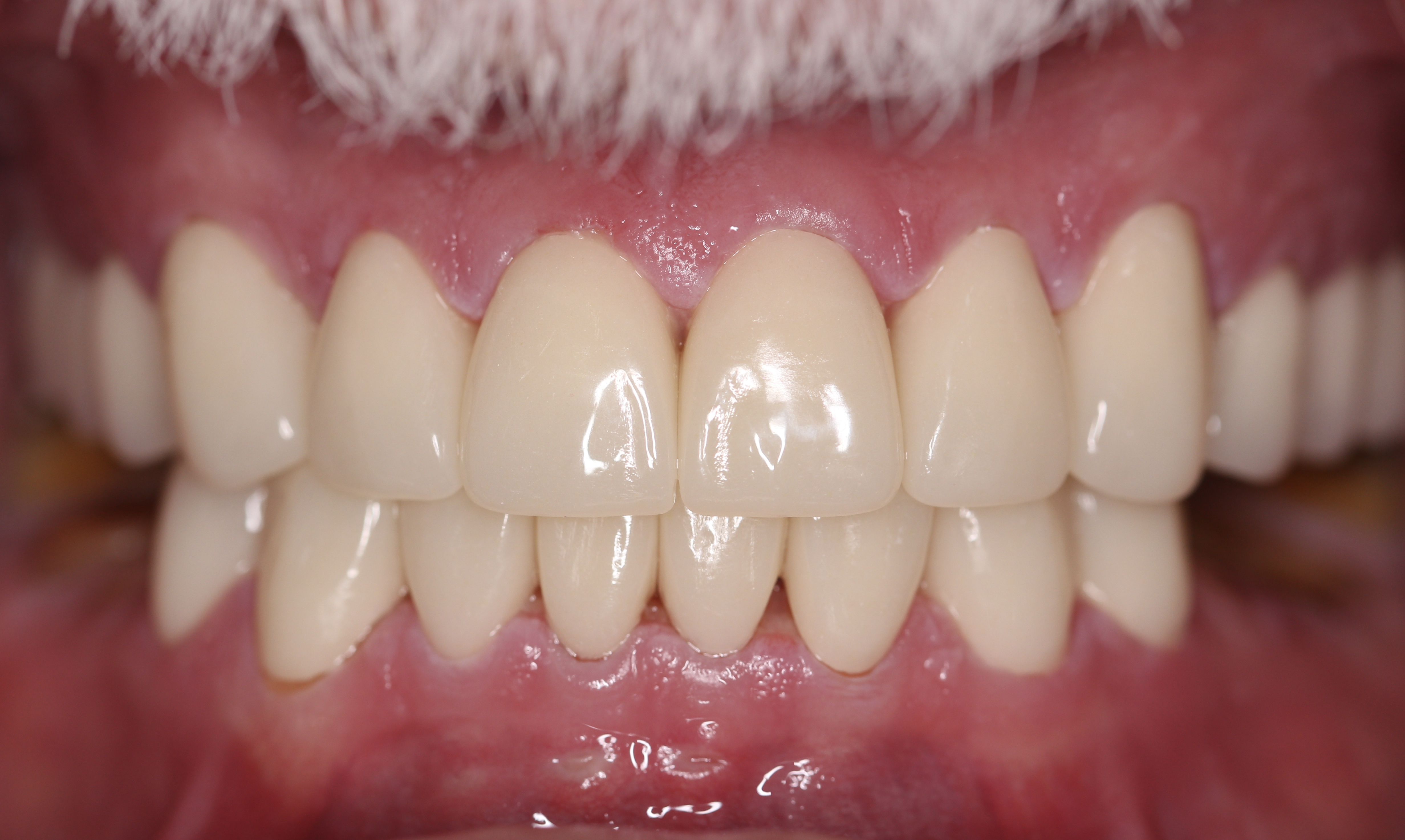
What Happens If One Implant Fails Under Full-Arch Teeth?
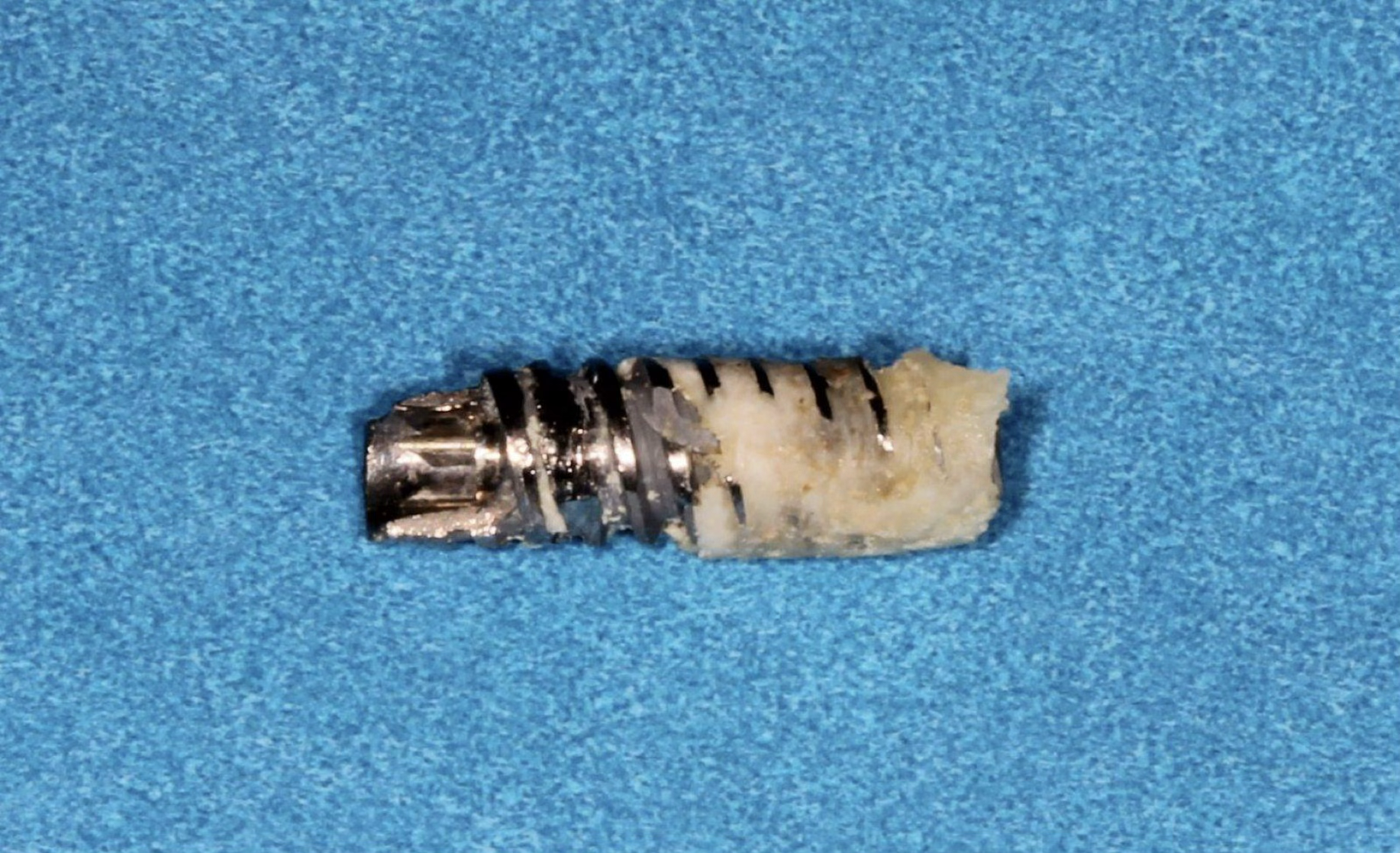
In my Austin practice, one of the most important questions patients ask me before full-arch implant treatment is also one of the most uncomfortable: “What if an implant fails?”
It is a fair question. Large long-term studies report that about 96 to 97 percent of implants supporting full-arch teeth are still functioning after 10 years, in a systematic review of full-arch treatment and a 10-year study of All-on-4 patients. That is reassuring, but it is not a guarantee. I would rather explain what failure looks like and how it is managed than promise it will never happen.
Patients sometimes describe any problem with their implant teeth as a failed implant.
A loose screw, a chipped tooth, a restoration that feels loose, or a bite that feels off is usually a prosthetic complication. The implants themselves may be completely stable in the bone. Those problems are real and deserve attention, but they are repaired at the level of the restoration. The same principle applies to single implant crowns, which I explain in Why Does a Dental Implant Crown Keep Coming Loose?
Implant failure means the implant has lost, or never achieved, its connection to the bone.
An early failure happens when an implant does not fuse with the bone during healing, a process called osseointegration. When it occurs, it usually becomes apparent in the first months, before the final restoration is made. The provisional teeth can often be modified while the site is managed.
A late failure happens after an implant has integrated and been in function. It is usually associated with progressive bone loss around the implant, called peri-implantitis, or with forces the implant and restoration were not able to manage.
The timing tells me a great deal about the cause, and the cause determines the response.
A full-arch restoration is supported by several implants working together. What happens when one is lost depends on how many implants support the restoration and how they are distributed across the arch.
When enough implants remain to support the restoration, it may continue to function, and the existing restoration may be saved.
This is one reason I consider the number and position of implants during planning, not only how many the bone can accommodate. The plan should hold up if something changes.
In most situations, a failed implant can be replaced. The site may need time to heal, and bone grafting is sometimes needed before a new implant is placed. In other cases, an implant can be placed in a different position nearby.
When a new implant is needed, the existing restoration will most likely need to be replaced. A provisional restoration carries the patient through healing until the new one is made.
I would rather see a patient early than after a small problem has become a larger one. Call the office if you notice:
When something simply feels wrong without a clear sign like these, I explain what an evaluation should cover in When a Full-Arch Implant Restoration Doesn't Feel Right.
Smoking, poorly controlled diabetes, untreated grinding, and missed maintenance visits all increase the risk of complications around implants.
Regular professional maintenance allows me to evaluate the tissues, the bone, the bite, and the restoration over time. Many problems are far easier to manage when they are found early.
No responsible clinician can promise that an implant will never fail. What I can do is plan the treatment so that if something does change, there is a clear path forward.
That means appropriate implant number and position, a restoration designed for maintenance and repair, and follow-up that catches problems early.
If something about your implant teeth has changed, my team at Smile Boutique Implant Center in Austin can arrange an evaluation.
Photo courtesy of Dr. Andrew Verrett, DDS, MS, board-certified periodontist, Austin Periodontal Associates.
Results and treatment needs vary from patient to patient. This article is for educational purposes only and does not replace an individual clinical examination, diagnosis, or treatment recommendation.