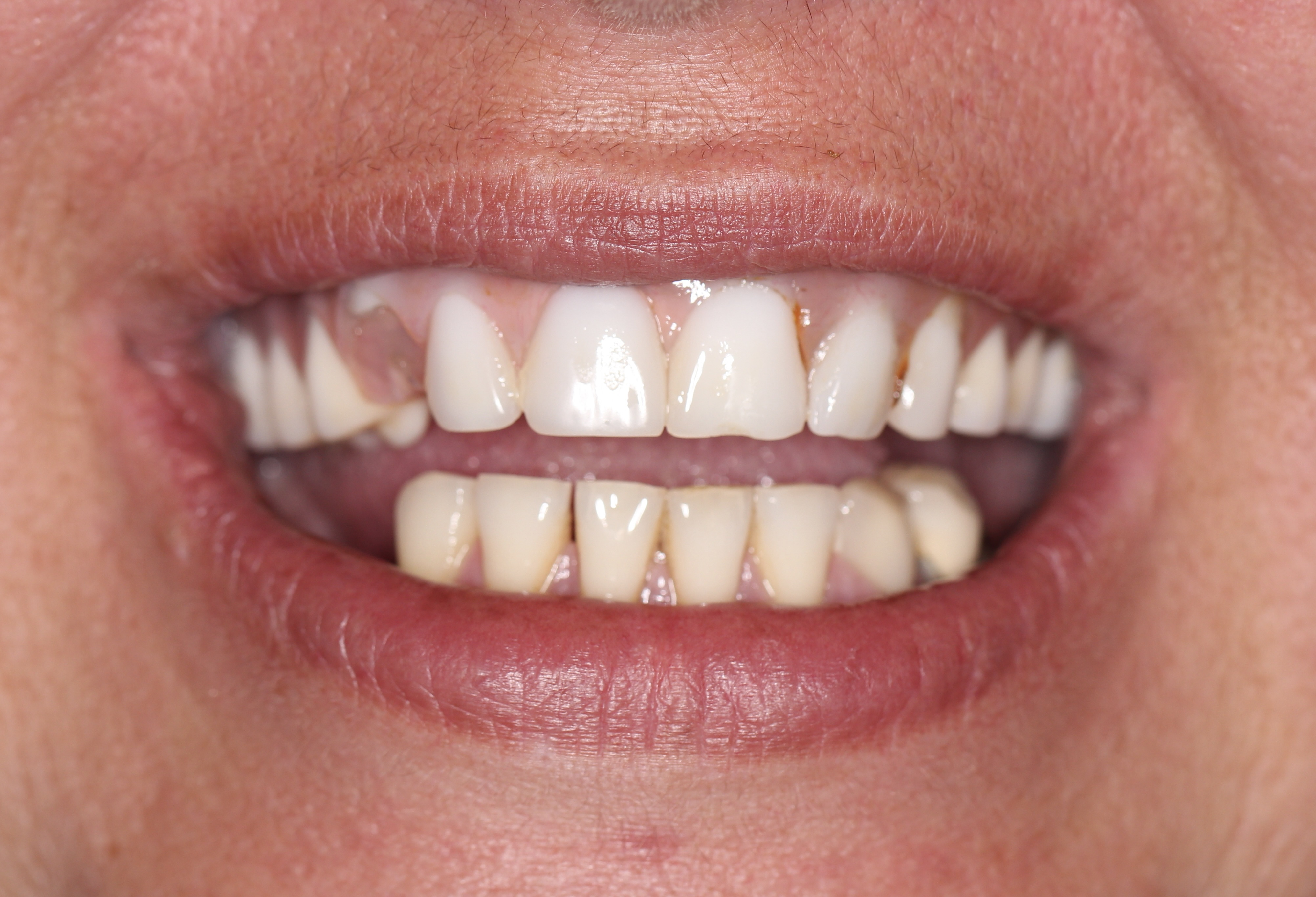
Night Guards and Occlusal Splints: Why Diagnosis, Design, and Follow-Up Matter
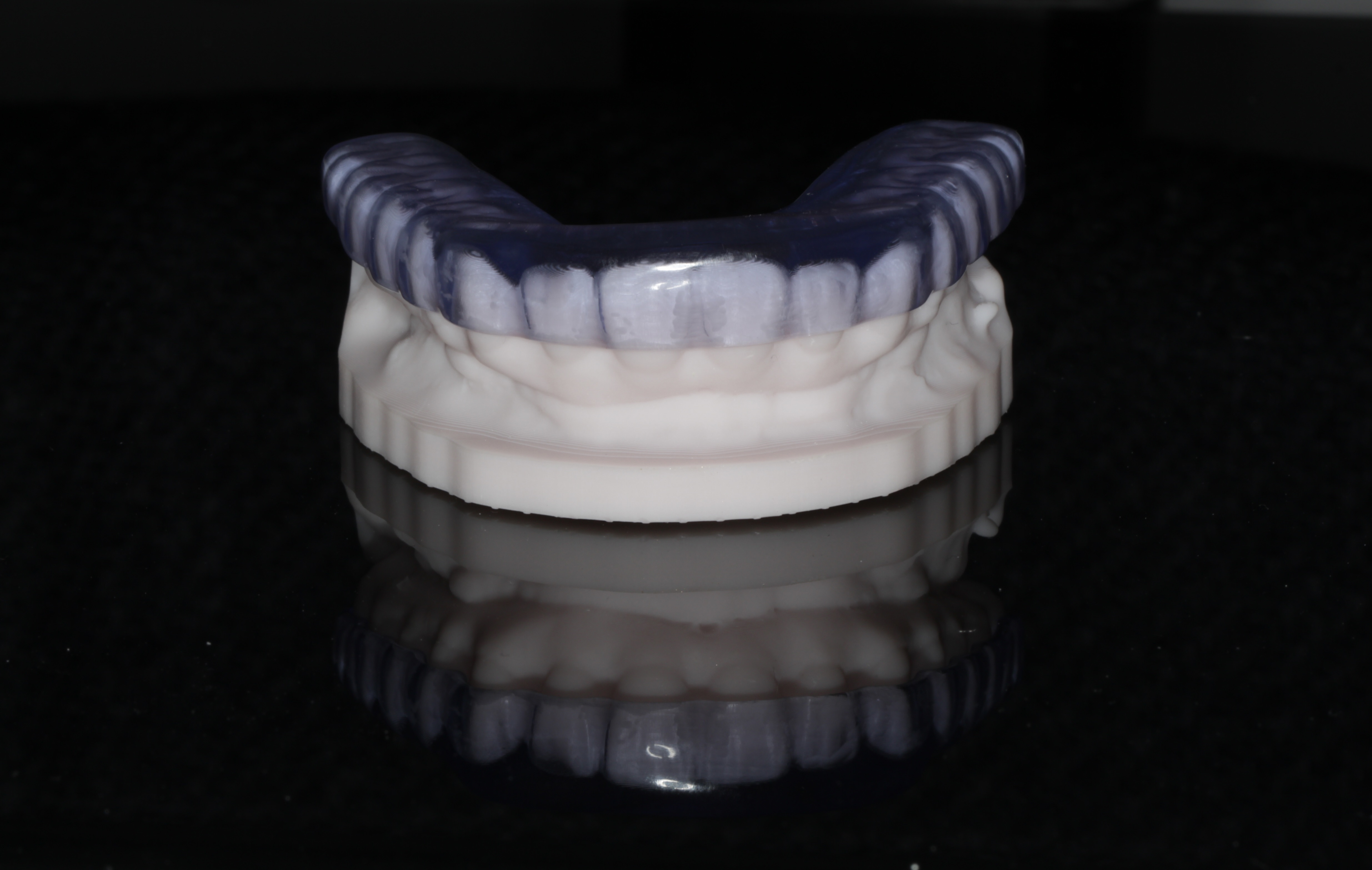
Patients often use the terms night guard, mouth guard, bite guard, splint, and TMJ appliance as though they all mean the same thing.
They do not necessarily serve the same purpose.
When I select an appliance, I am interested in why I am using it, what I want it to accomplish, how it is designed, how the teeth contact it, and what I can learn from the patient's response.
That is very different from simply making something for a patient to wear at night.
A conventional night guard is often prescribed for patients who clench or grind their teeth.
Its primary purpose may be protection. Placing material between the upper and lower teeth can reduce direct tooth-to-tooth contact and help protect natural teeth or restorations from some of the mechanical consequences of clenching and grinding.
But protecting the teeth is not the same as treating the cause of bruxism.
A patient may continue to clench or grind while wearing a guard.
And not all tooth wear is caused by bruxism. Acid erosion, for example, requires a different diagnosis and management.
When I use a stabilization appliance in a patient with TMD symptoms, I may be asking it to do more than protect the teeth.
A hard, full-coverage appliance gives me an adjustable surface on which I can control and reevaluate the way the opposing teeth contact.
For selected patients, it may be used as part of symptom management. It can also give me a reversible way to observe what happens to comfort, muscle tenderness, jaw function, and closure without altering the teeth.
That second role is particularly important to me.
Is the patient more comfortable?
Is muscle tenderness changing?
Is jaw movement becoming easier?
Does closure become more consistent, or does the patient continue to search for where the teeth should meet?
If symptoms improve, that is useful information. If nothing changes, that is information too. If the patient becomes worse, I need to know that.
None of those responses by itself proves that tooth contacts caused the original symptoms.
The value is that I can learn while the intervention is still reversible.
My postgraduate research studied patients with TMD before and after stabilization splint therapy. Those patients showed significant improvement in their dysfunction indices after splint therapy. Read more about the relationship between the bite and TMD.
In clinical practice, appropriately selected patients may experience meaningful improvement in pain or muscle symptoms with a stabilization appliance. Others improve only partially, do not change, or require a different approach.
Material matters, but I don't reduce appliance selection to a simple rule that hard is always good and soft is always bad.
A hard stabilization appliance gives me a rigid surface that can be adjusted precisely and reevaluated over time.
A soft or resilient appliance behaves differently when a patient bites or clenches on it. There are circumstances in which a soft appliance may be selected, and I do not assume that every patient will respond to one in the same way.
The important questions are what problem I am treating, what I need the appliance to do, whether it provides appropriate coverage, and whether I can monitor and adjust it appropriately.
I also pay attention to how much of the dentition the appliance covers.
When an appliance covers only part of the teeth for extended periods, teeth that are not included may move or erupt, and the way the teeth contact can change.
That does not mean every partial-coverage appliance is inappropriate. Some designs have specific indications and may be used for limited periods.
It means coverage, wearing instructions, duration of use, and clinical supervision matter.
An appliance should not simply be delivered and forgotten.
When I deliver a stabilization appliance, I expect to reevaluate it.
The contacts may need adjustment. Symptoms may change. Muscle tenderness may improve or persist. The patient's closure against the appliance may change as treatment progresses.
If an appliance produces new pain or a persistent change in how the teeth meet, that deserves reassessment.
A stabilization appliance is a clinical device being used for a specific reason, and follow-up is part of using it responsibly.
The information gained during appliance therapy can also become useful when restorative treatment is planned.
For selected patients, I may use what I learned during the appliance period as part of the subsequent restorative diagnosis and planning.
The appliance response is one part of the information I use in planning. It does not, by itself, determine the final restoration.
How that information is used when planning extensive reconstruction is a separate prosthodontic question.
Results and treatment needs vary from patient to patient. This article is for educational purposes only and does not replace an individual clinical examination, diagnosis, or treatment recommendation.