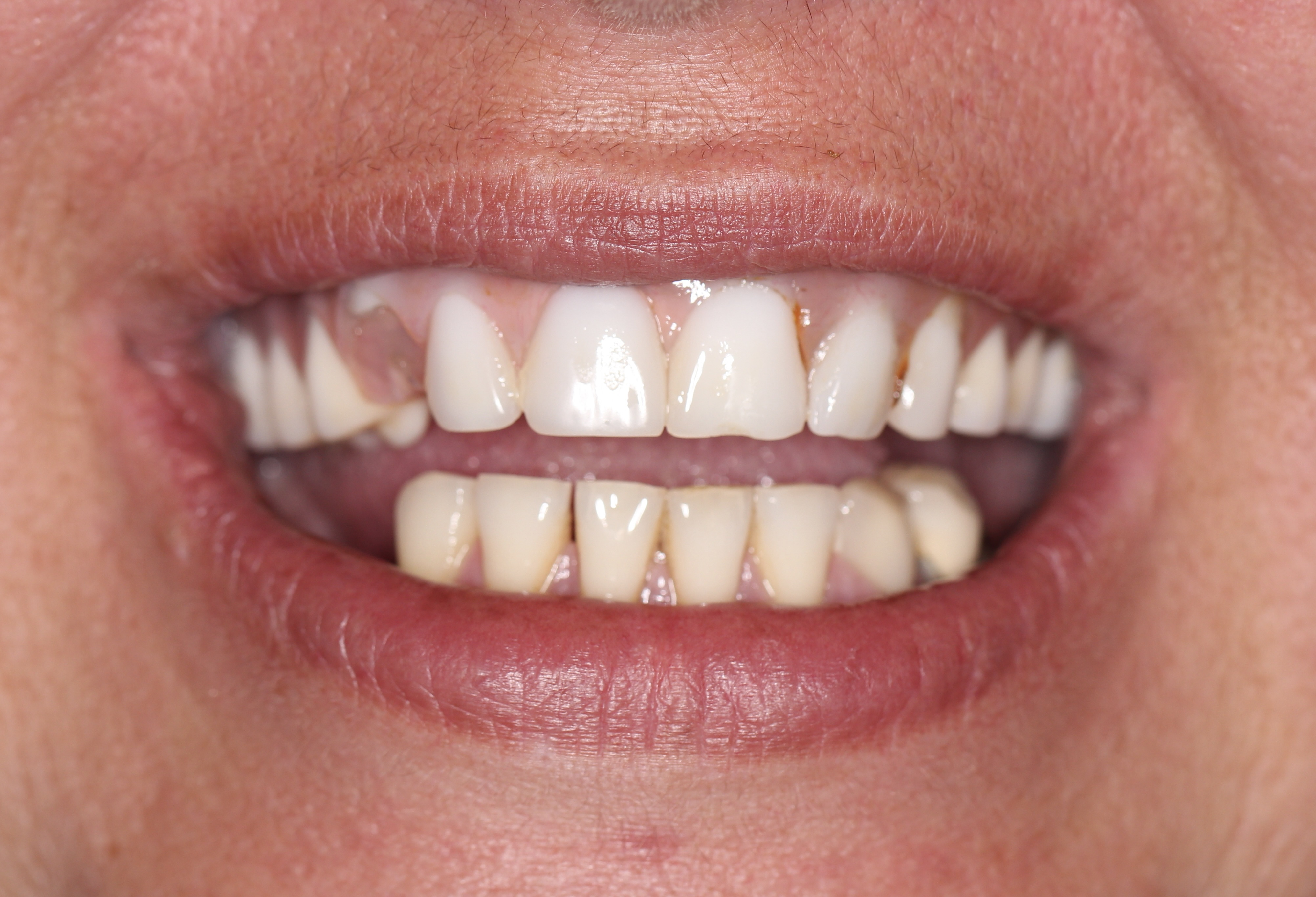
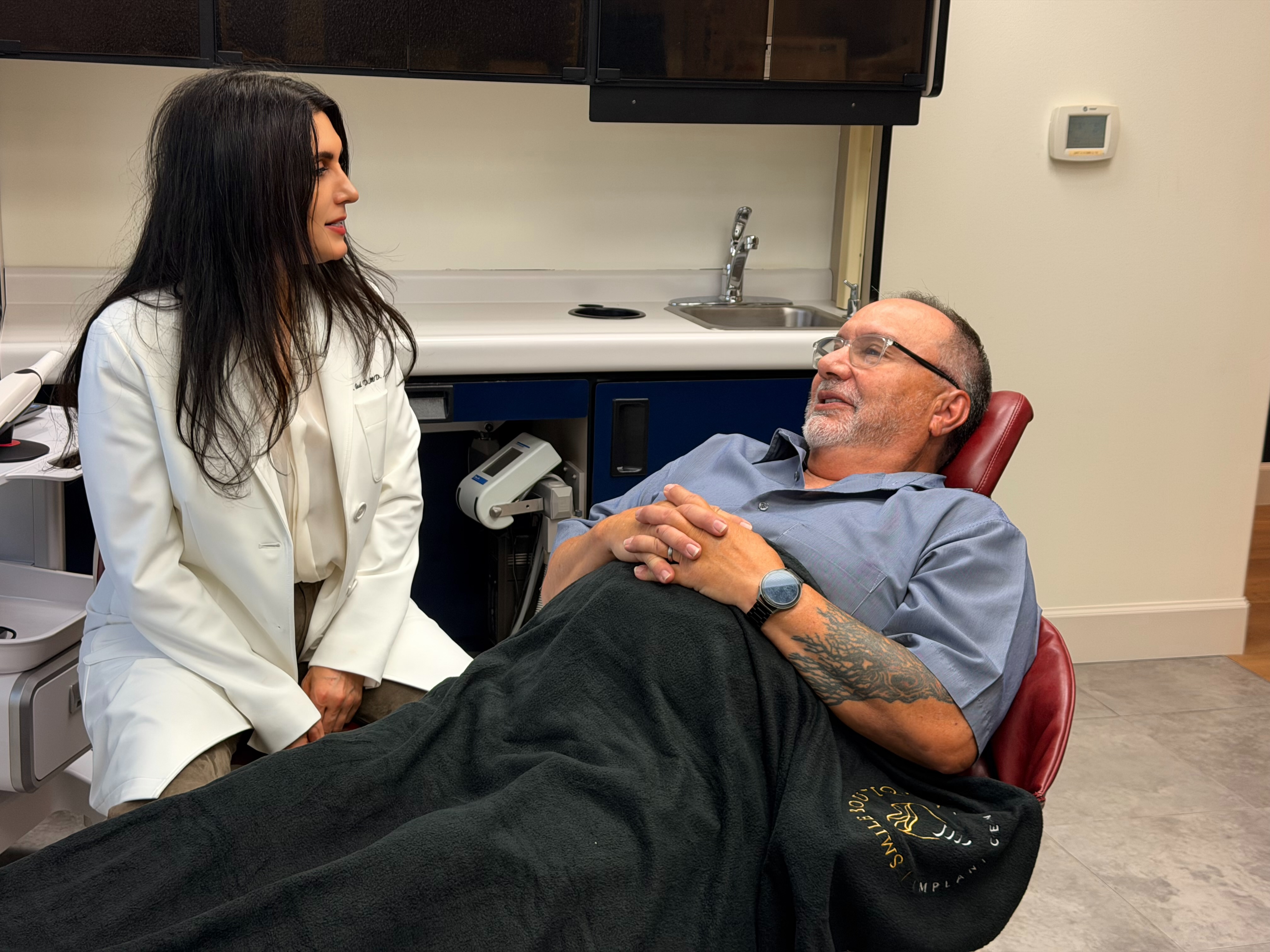
What Makes a Full-Arch Implant Restoration Look and Feel Natural?
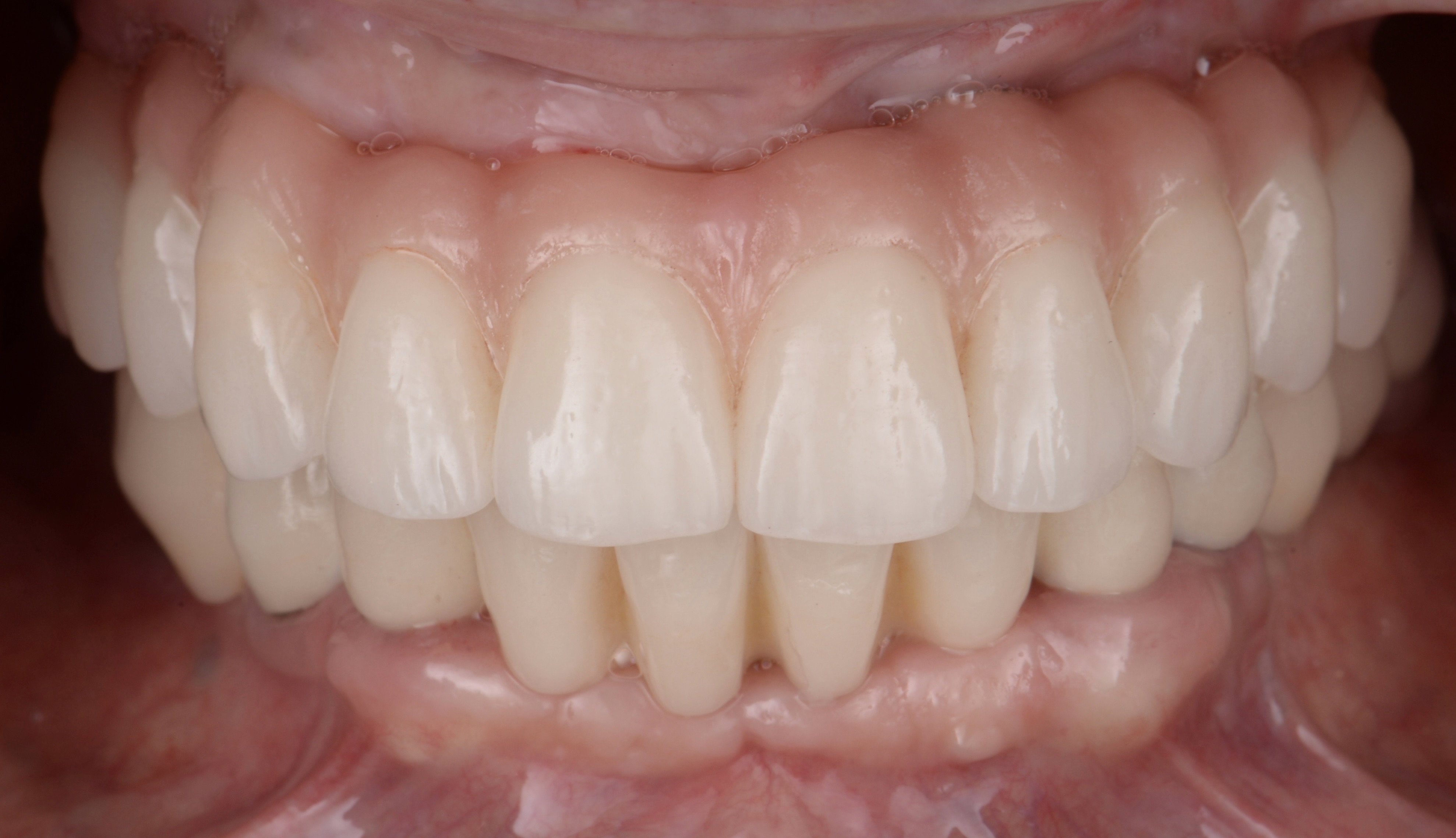
When patients tell me they are worried their full-arch implant teeth will look or feel artificial, they are asking about much more than tooth shade.
They want teeth that belong in their face and a restoration that feels comfortable in their mouth.
For me, those two goals are connected. Tooth position, size and shape, facial proportions, restorative material, lip support, contours, speech, bite, and cleansability all influence the final result.
There is no single tooth shape or smile design that looks natural on everyone.
The width and length of the teeth, their overall shape, incisal-edge position, midline, tooth display, and arrangement need to be considered in relation to the patient's face.
A tooth form that looks beautiful on one person may look completely out of place on another.
The goal is not to select a predetermined smile template and fit the patient around it. The teeth should be designed around the patient.
Facial proportions, lips, smile dynamics, existing anatomy, and the patient's own preferences all become part of that decision.
Patients understandably spend a lot of time thinking about color.
But changing the shape or proportion of the teeth can have a much greater effect on whether a smile looks natural.
Teeth can appear too wide, too long, too square, too rounded, too prominent, or simply inconsistent with the patient's facial features.
Even small changes in line angles and surface anatomy can change how wide or narrow a tooth appears without dramatically changing its actual dimensions.
The objective is not to reproduce one definition of an ideal smile. It is to find proportions and forms that make sense for that individual patient.
The restorative material also affects what we can create.
Different materials have different optical and mechanical properties. Translucency, opacity, surface texture, polish, characterization, thickness, and the way light interacts with the restoration all influence its appearance.
For a full-arch restoration, material selection also has to make sense mechanically. I cannot separate the esthetic decision completely from the functional one.
But choosing an excellent material does not automatically create an excellent smile.
The material is what we use to execute the design. The design still has to be right.
In some full-arch restorations, we are replacing missing gum tissue as well as teeth.
Where the prosthetic gingiva meets the patient's natural tissue can dramatically affect whether the restoration is noticeable.
The amount of tooth and prosthetic gingiva visible during smiling therefore has to be considered with the patient's lip movement and smile line.
The restoration also affects facial support.
Too much bulk can make the lips look or feel over-supported. Too little support can also produce an unnatural result.
Again, the design has to make sense in the face, not just on a computer screen or an isolated dental model.
Patients don't experience their restorations only in photographs.
They feel them constantly with their tongue.
The tissue-side and tongue-side contours influence how much space the restoration occupies, how food behaves around it, whether the patient can clean beneath it, and how it feels during speech and everyday function.
A restoration that is unnecessarily bulky can feel intrusive even when it looks excellent.
Cleansability is part of how a restoration feels to live with every day.
The tongue and airflow interact with the teeth and restorative contours to create speech. Changing an entire arch can therefore affect certain sounds.
Some initial adaptation is expected after a major change. But persistent speech concerns should not automatically be dismissed as something the patient simply has to tolerate.
A full-arch restoration also has to function against the opposing arch. Where the teeth contact, how those contacts are distributed, and how they interact during jaw movement all contribute to the patient's experience of the restoration.
This does not mean every unusual sensation is caused by the bite. It means function is part of restorative design.
For me, a full-arch restoration is not successful simply because it photographs beautifully.
The patient has to speak with it, chew with it, clean it, and live with it.
That is why esthetics and function cannot be designed as separate goals.
The restoration should make sense both in the face and in the mouth.
For complex cases, I use a prototype phase to evaluate tooth position, speech, bite, and contours in the mouth before the final restoration is made. The final restoration also has to seat accurately on the implants; passive fit is part of the mechanical side of a result that feels natural to live with.
Results and treatment needs vary from patient to patient. This article is for educational purposes only and does not replace an individual clinical examination, diagnosis, or treatment recommendation.