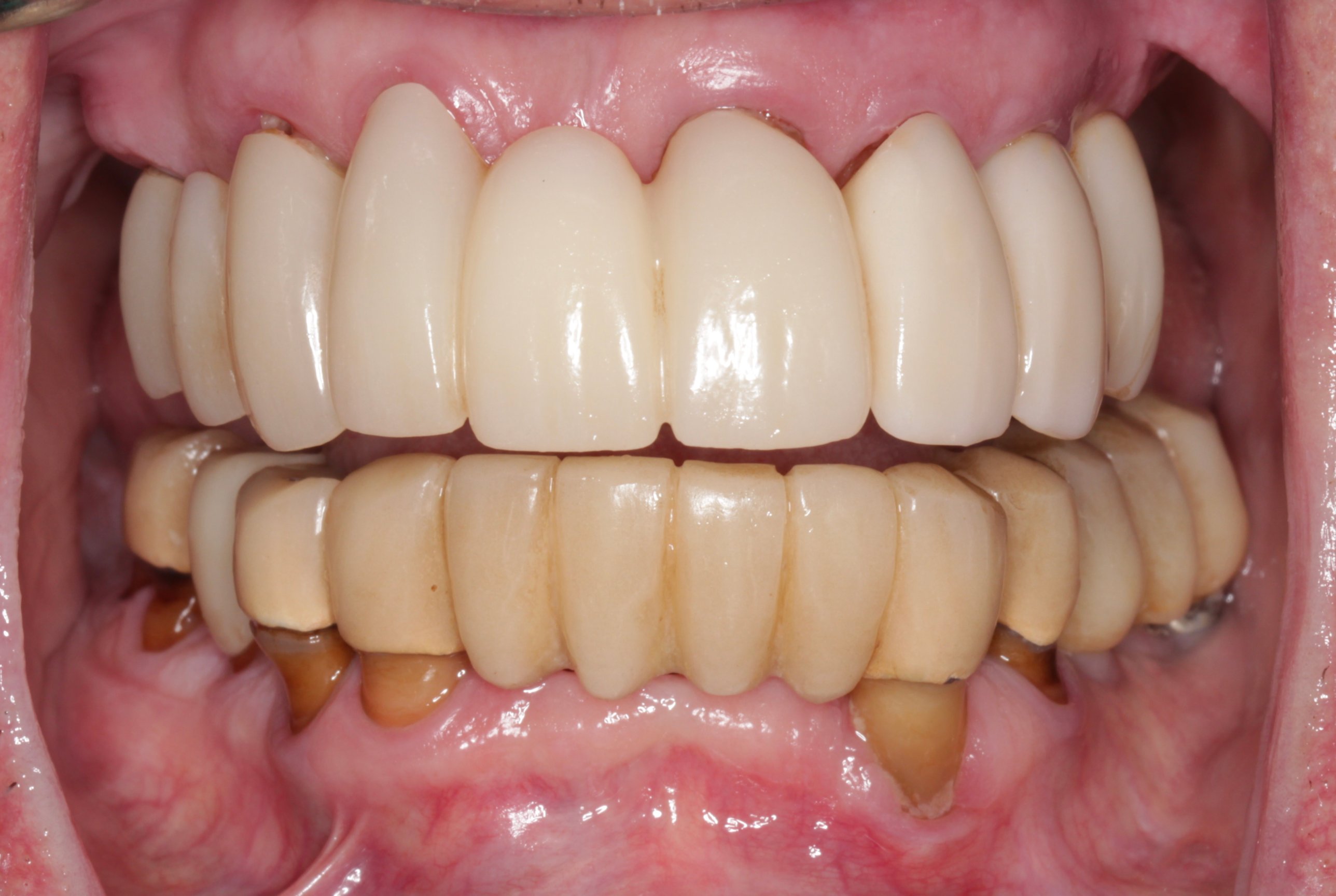
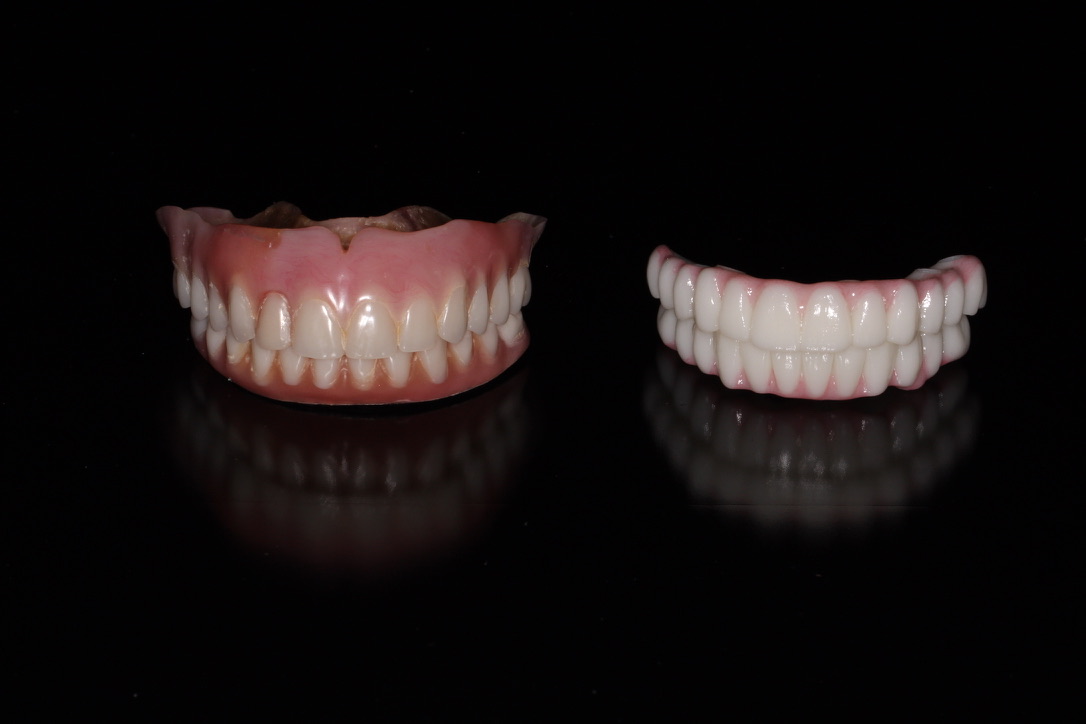
Broken or Loose Full-Arch Implant Teeth: Repair or Remake?
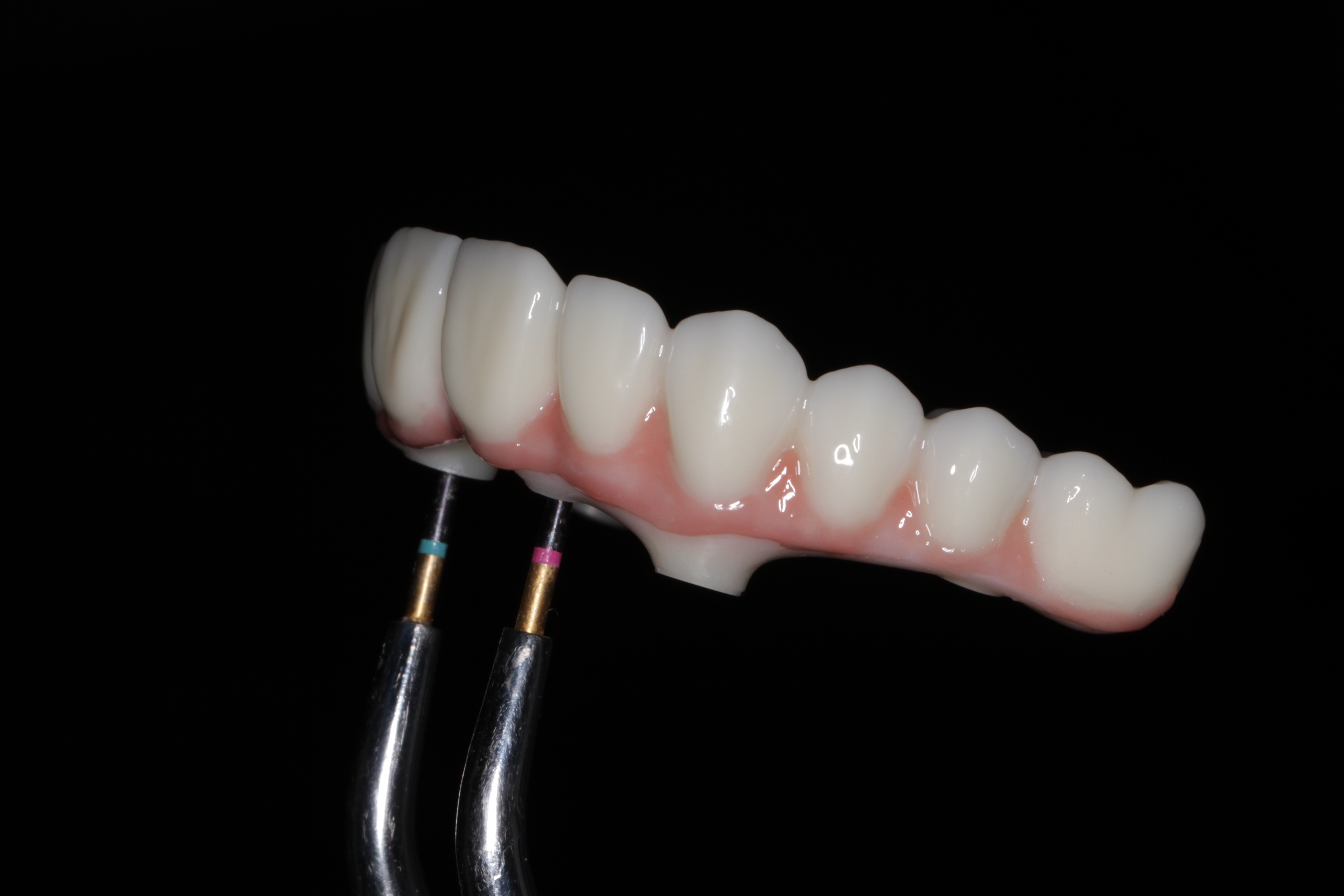
A broken, chipped, or loose full-arch restoration can often be repaired, and sometimes needs to be remade. The implants themselves do not automatically need replacement. I decide by evaluating the implants, the prosthesis, and the bite together.
Patients who come to me with this concern are often discouraged. They invested a great deal and expected a lasting result. Before recommending more treatment, I determine what failed and whether the cause can be corrected, whether the original treatment was completed here or at another office.
Breakage tends to fall into a few patterns:
Some of these are isolated events. Others point to the fit, the material, the design, or the forces of the bite. A review of implant prosthetic complications identified denture-tooth fracture as a frequent complication of fixed complete restorations. The type of failure varies with the construction, so a fractured resin tooth and a fractured zirconia arch call for different decisions. If your concern is speech, food trapping, appearance, or comfort rather than breakage, I cover that in when full-arch teeth don’t feel right.
A restoration that moves, a fracture, new swelling, drainage, or significant pain needs prompt evaluation. Avoid chewing on a loose or broken restoration, and leave tightening or gluing to the office. A loose prosthesis and a mobile implant are different problems, and the examination distinguishes them.
I assess three things in relation to one another.
The implants. I examine the tissues, assess stability, and compare radiographs with prior records when available. I use a 3D scan when it answers a specific question; not every complication requires one. The number, position, and angulation of the implants also shape what a new restoration can achieve.
The prosthesis. I assess fit, material, thickness, contours, and cleaning access. Inspecting the interfaces and components properly may require removing the restoration. A restoration that does not seat passively places repeated stress on screws and components.
The bite. How the arches meet, how much restorative space was available, and whether you clench or grind all influence how a prosthesis performs. Repeated breakage in one location suggests a load or design problem, though I also check fit, material thickness, support, and component condition.
The evaluation leads to repair or remake, with revision in between.
Repair fits when the restoration is fundamentally sound and the problem is isolated, such as a repairable chip, a fractured resin tooth, or a damaged component whose cause can be addressed. A loosened screw is usually replaced rather than simply retightened, and loosening that recurs sends me back to the fit and the bite.
Revision fits when the restoration is sound but needs correction, such as refining the bite or the contours, so the same part stops failing. The existing prosthesis is retained.
Remaking the restoration fits when the problem is built into it, such as inadequate fit, insufficient material thickness or strength for your bite, or a design that keeps placing the same part under stress. A major fracture of a zirconia arch generally requires a new restoration. A patch offers only temporary relief when the underlying limitation remains. A new restoration is designed with esthetics and function planned together, and a prototype lets me evaluate the design in the mouth before the definitive restoration is made.
Often, no. Healthy implants in usable positions can support a repaired or new restoration. Before deciding what to retain, I also confirm component availability and whether the implant distribution supports the proposed design.
Bone loss calls for assessment of its cause and severity; it does not automatically mean an implant must be removed. Implant treatment, additional implants, or removal may be needed when health, position, or support prevents a maintainable result. When one implant is the problem rather than the restoration, I explain the options in what happens when one implant fails. I make that decision implant by implant.
Records from the original treatment, including implant brand and size, component information, surgical notes, and prior scans, make the evaluation more precise and can simplify the work that follows. Ask the original office to send them. I can also coordinate with your previous dentist or surgeon to confirm what was placed and what can be retained.
A broken or loose restoration is a finding, not a verdict. The examination determines what failed, why, and what can be kept in your full-arch implant restoration.
Results and treatment needs vary from patient to patient. This article is for general educational purposes and does not replace an individual clinical examination, diagnosis, or treatment recommendation.