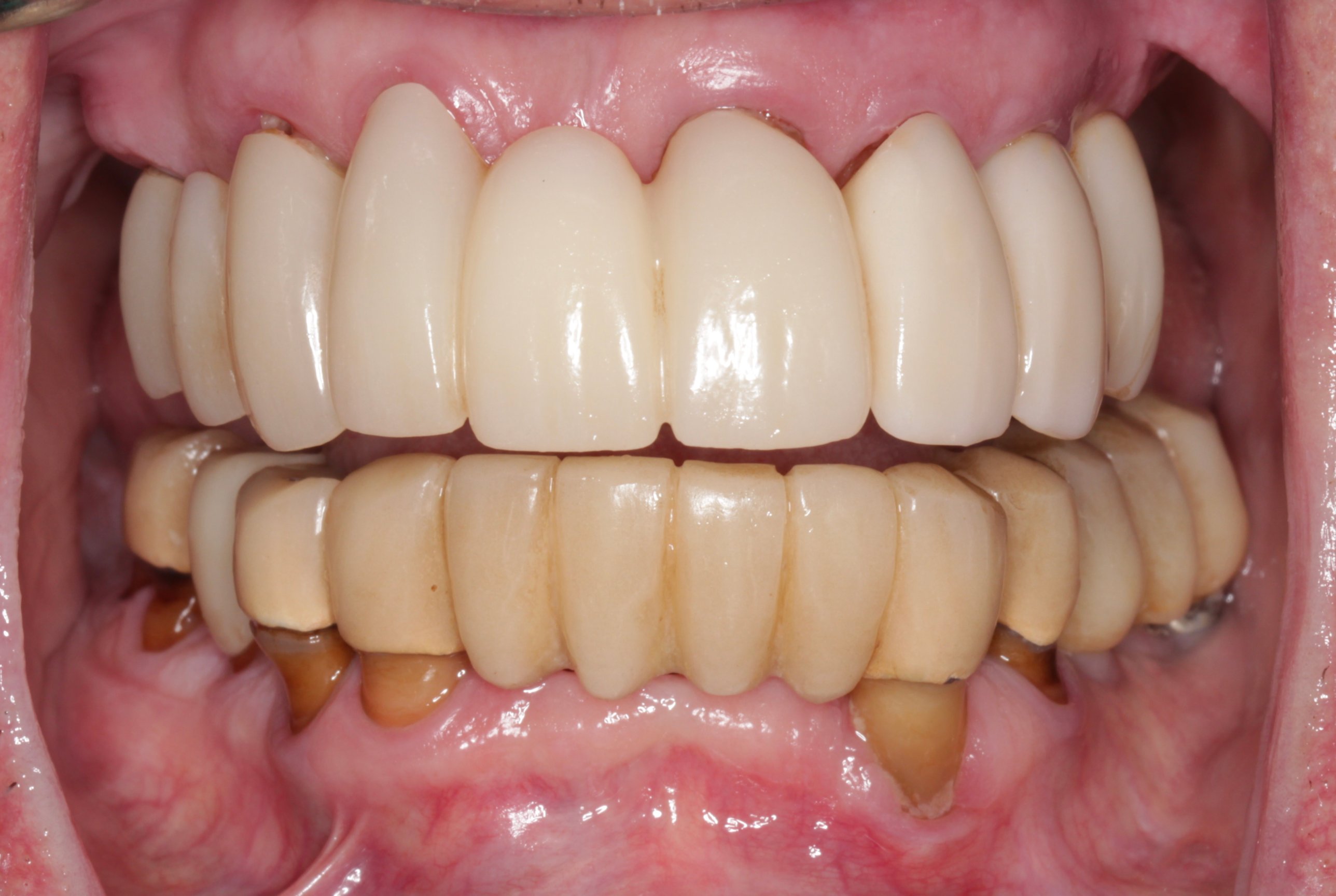
Full-Arch Implant Teeth: Prosthesis Design vs. Restorative Material
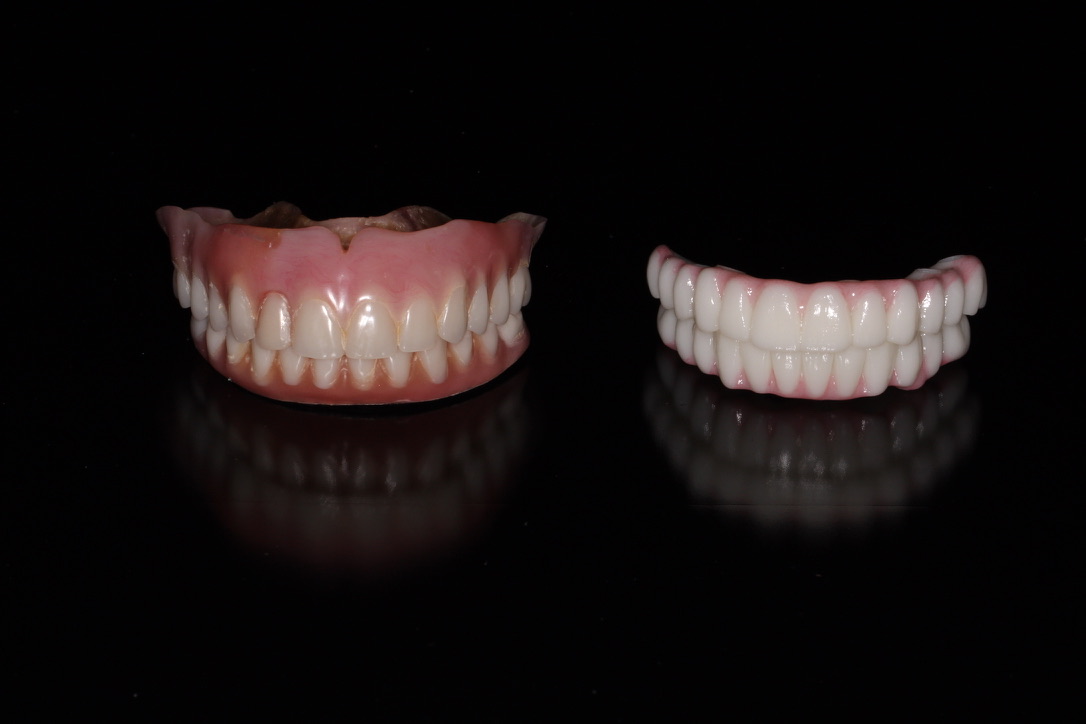
A patient recently asked me directly: what material do you use? Zirconia? Acrylic? It is the right question. The material matters. It is also only half the answer. The other half is the design.
No single material is right for every full-arch restoration. The choice depends on what the restoration needs to replace, the available space, the bite, and how it will be maintained. Design and material are separate decisions, made together, because each places limits on the other.
Patients often ask whether they should get a “hybrid” or a “zirconia” arch, as if these were two competing products. “Hybrid” does not simply mean acrylic. The term originally described a fixed restoration of denture teeth and acrylic on a metal framework, and today it is used loosely for many full-arch restorations, including zirconia arches. “Zirconia” names a material and says nothing about the design. A treatment plan should define both: what the restoration replaces, and what it is made from.
The design of a full-arch prosthesis defines where the teeth sit, how the restoration relates to the face and lips, how it meets the tissue, and how it can be cleaned. It also determines whether the restoration replaces teeth alone or teeth and lost tissue, based on the amount of tissue lost, the implant positions, the smile line, and lip support.
The material defines how that design is built: its strength, its wear, its appearance, and how it can be repaired. The same material can be used in different designs.
A strong material cannot compensate for tooth positions or contours that do not suit the patient.
A full-arch restoration meets several demands at once, and esthetics and function are designed together:
I evaluate each of these in the provisional and refine them in the prototype before the definitive restoration is made. I describe that stage in more detail in how full-arch implant teeth can look and feel natural.
For my definitive full-arch restorations, I use monolithic zirconia. A fully monolithic restoration is milled from a zirconia blank without a separate layer of veneering porcelain. That removes one source of chipping, but the zirconia itself can still fracture. Some arches are partly veneered, so “zirconia” alone does not describe the construction. Research shows high survival for monolithic zirconia full-arch restorations, though the available studies are mostly retrospective and short to medium term.
Zirconia type, thickness, connector dimensions, surface finish, and support all matter. More translucent zirconias are generally weaker than less translucent formulations. Like any rigid full-arch restoration, zirconia requires accurate fit and careful occlusal design. Any surface adjusted in the mouth is finished and polished to limit wear of the opposing teeth.
This approach uses a metal framework, usually titanium, with teeth and gingival contours in acrylic or composite. The framework provides rigidity, and the resin surfaces are easier to adjust or repair. Their resilience does not remove the forces transmitted to the implants.
Acrylic and composite wear faster than zirconia and can chip, stain, or fracture, particularly against a strong opposing arch or under heavy forces. They usually need more frequent maintenance and, over the years, renewal of the teeth on the framework.
The bite. A patient who clenches or grinds places much higher demands on any restoration. I assess wear patterns, a history of clenching or grinding, and prior restoration failures before choosing a material.
Restorative space. Each material needs a minimum thickness to be strong. The space between the implants and the planned tooth position, established in the design, determines what can be built there.
The opposing dentition. Natural teeth, a removable denture, or another implant restoration each respond differently to zirconia and to acrylic or composite, in both wear and force.
Every full-arch restoration needs maintenance, and some will need repair. Acrylic and composite can often be repaired chairside or in the lab. A small zirconia defect can often be managed, while a major fracture generally requires a new restoration. Stored digital designs in our in-house dental lab simplify replacement, but I reassess the mouth and the cause of failure before reusing a design. Copying a restoration that failed for a design reason would repeat the problem.
Repairability is one part of how long full-arch implant teeth last, alongside the design, the bite, home care, and regular maintenance.
The right material is the one that carries out the right design for a particular patient. I determine both from the face, the bite, the available space, and the opposing teeth. The material name on a quote is not the decision. The design is, and that applies to every All-on-4 restoration I plan.
Results and treatment needs vary from patient to patient. This article is for general educational purposes and does not replace an individual clinical examination, diagnosis, or treatment recommendation.