What Affects the Cost of Full-Arch Implant Treatment?
Patients who need full-arch treatment have often been away from regular dental care for some time. When they begin looking for a provider, many call and ask two questions: whether there is a charge for the consultation, and what the price is.
Both are understandable. Neither tells you who will plan your treatment, how, or what is included. Full-arch treatment is a specialist effort: a surgeon places the implants, I plan and restore the teeth, and an anesthesiologist joins when sedation calls for it. Each part is done by the clinician trained for it, and the plan is coordinated from the start so every decision serves the final result. That coordination is part of what a specialist-led fee reflects.
Full-arch implant quotes vary because they rarely describe the same treatment. Implant number and distribution matter, but they are only part of the plan. Surgery, interim teeth, design verification, the final restoration, and follow-up also affect the fee.
Patients often bring two or three quotes to a consultation and ask why they are so far apart. The more useful question is what each one includes. Two plans with the same name can lead to very different results in the mouth.
A useful written quote states whether it covers one arch or both and separates the surgical fee from the restorative fee. It names the interim teeth, the final restoration and its material, and the follow-up care, including any maintenance billed separately. A quote that lists only implants and “teeth” leaves too much undefined to compare.
Treatment begins with planning, and planning begins with the teeth. I evaluate facial esthetics, lip support, the bite, phonetics, and the available bone. The final tooth position is designed first, and the implant positions are planned to support it.
The plan also defines the teeth you will use during healing. A fixed provisional can be attached soon after surgery when implant stability allows. When it does not, another interim approach is used. Even fixed interim teeth come with eating restrictions, because the healing implants are not ready for unrestricted chewing. ITI treatment guidance emphasizes case selection and implant stability when choosing the loading protocol.
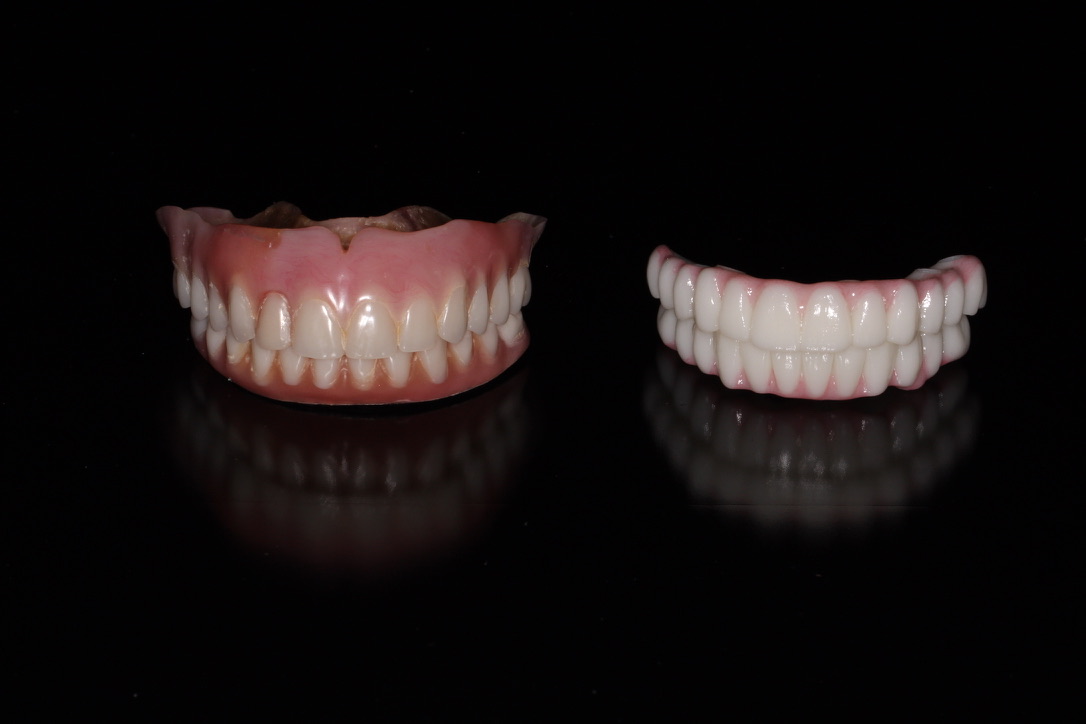
Before the definitive restoration, our in-house dental lab fabricates a prototype from the digital design. I evaluate it in the mouth for tooth position, lip support, speech, the bite, and hygiene access, and I refine the design until it performs as intended. The definitive restoration is made from that refined design. I explain this stage further in why a prototype comes before the final restoration.
Offices combine and name these stages differently. Ask how the design is verified before the final restoration is made.
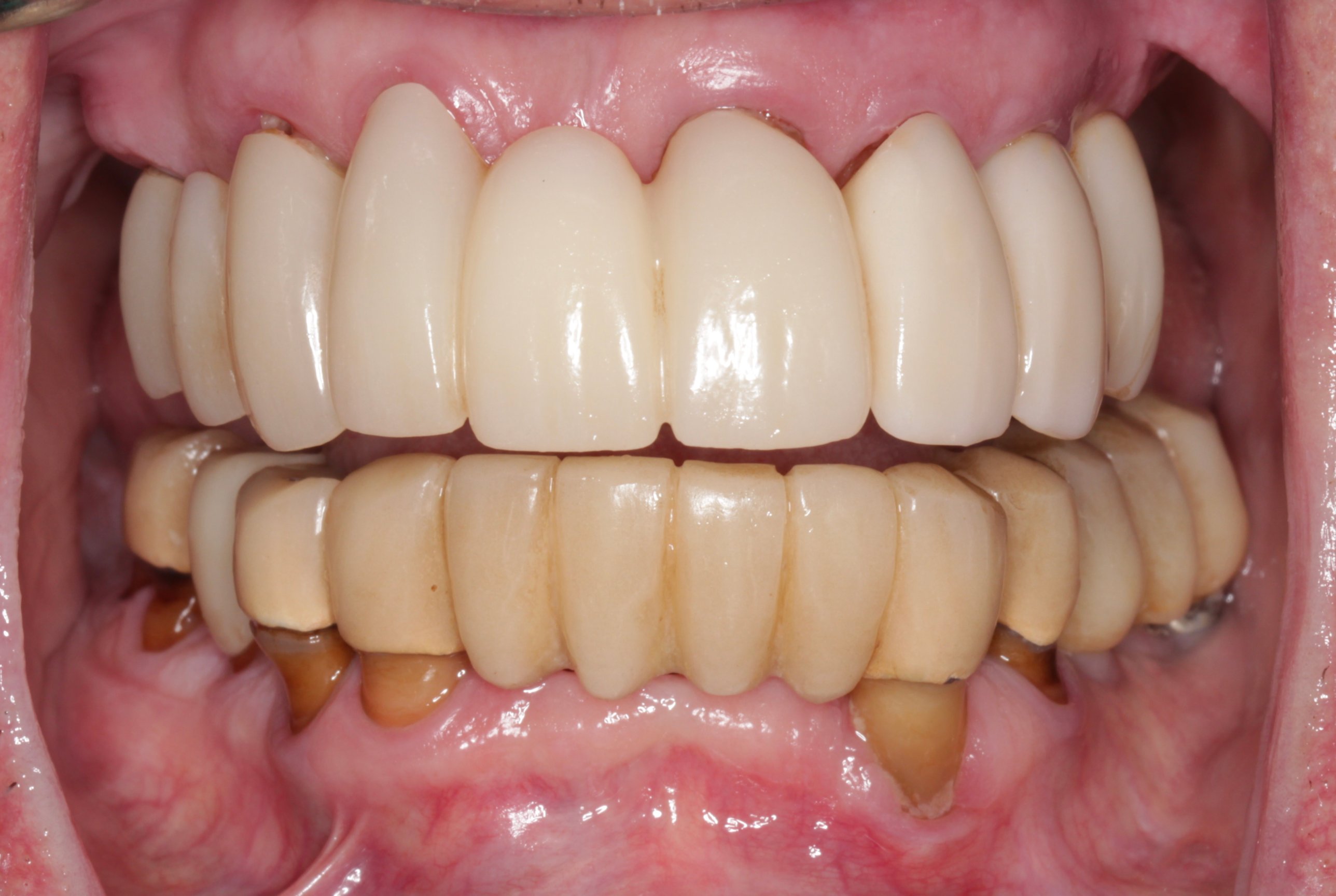
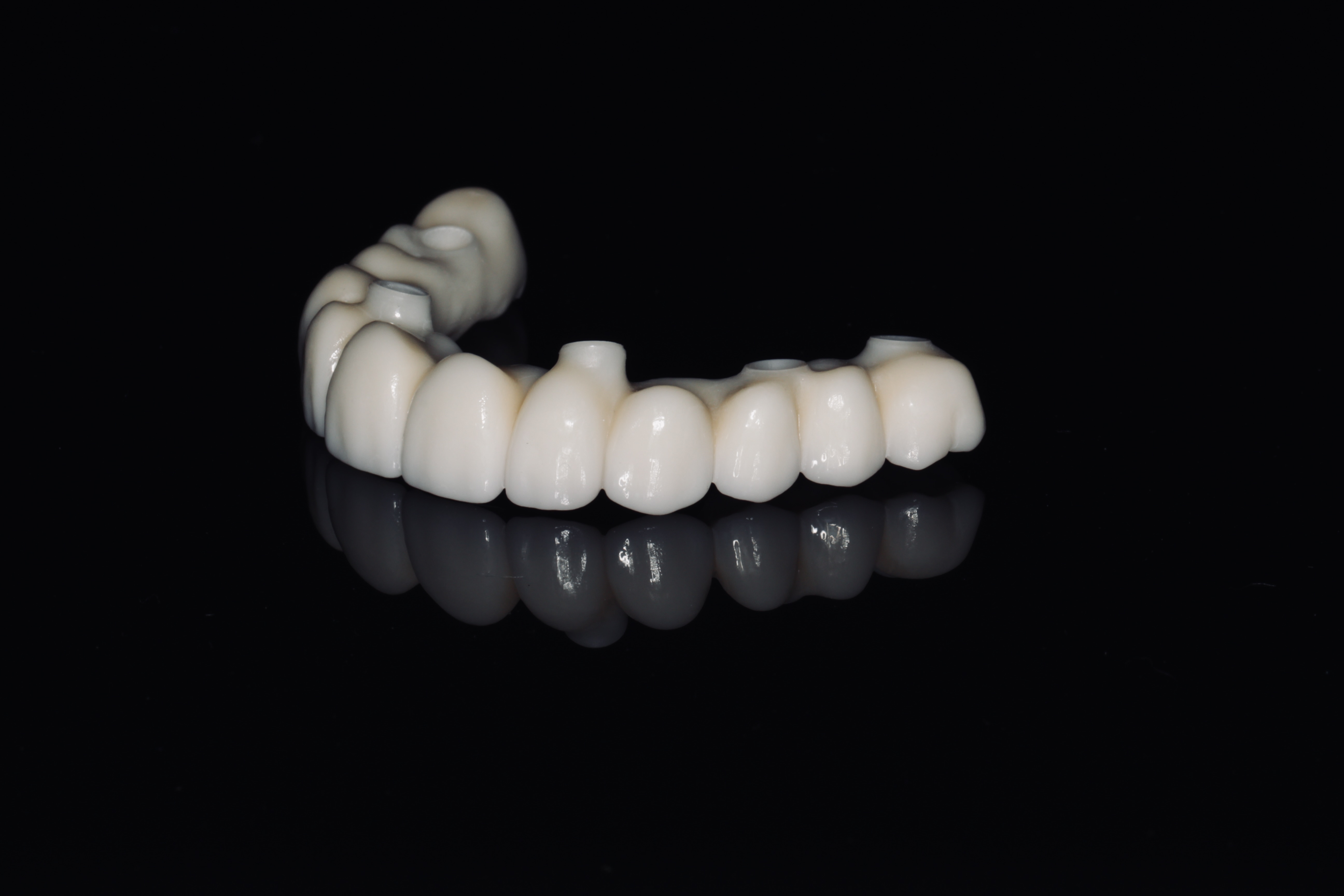
Definitive full-arch restorations are most often made from monolithic zirconia or from acrylic or composite on a metal framework. The material affects both the result and the fee. For my definitive full-arch restorations, I use monolithic zirconia. I design its contours and thickness around the bite, the restorative space, the opposing teeth, and the esthetic demands of each case.
Laboratory precision matters as much as material. The restoration must seat accurately without being forced into position by its screws, the clinical aim of passive fit. Accurate records and fit verification reduce avoidable mechanical problems, though maintenance is still required.
Extractions, bone grafting, sinus procedures, treatment of infection, or management of the opposing arch can be part of the plan. These are determined in the examination, and a complete quote states which ones apply.
A lower quote deserves a close reading. The difference often comes from what is excluded or deferred:
A fair comparison is a comparison of the same scope of care.
A full-arch restoration is a long-term commitment. Follow-up includes assessment of the tissues, implant health, bite, restoration, and home cleaning. The restoration is removed only when clinically indicated, and the American College of Prosthodontists discourages routine removal without a clinical reason. Repairs or component replacement are performed when needed. Ask which follow-up services the initial fee includes and what ongoing care is likely to cost.
A thorough evaluation is the place to see what your own treatment requires. You can learn more about All-on-4 treatment at our practice.
Results and treatment needs vary from patient to patient. This article is for general educational purposes and does not replace an individual clinical examination, diagnosis, or treatment recommendation.