When a Full-Arch Implant Restoration Doesn't Feel Right: What Should Be Evaluated?
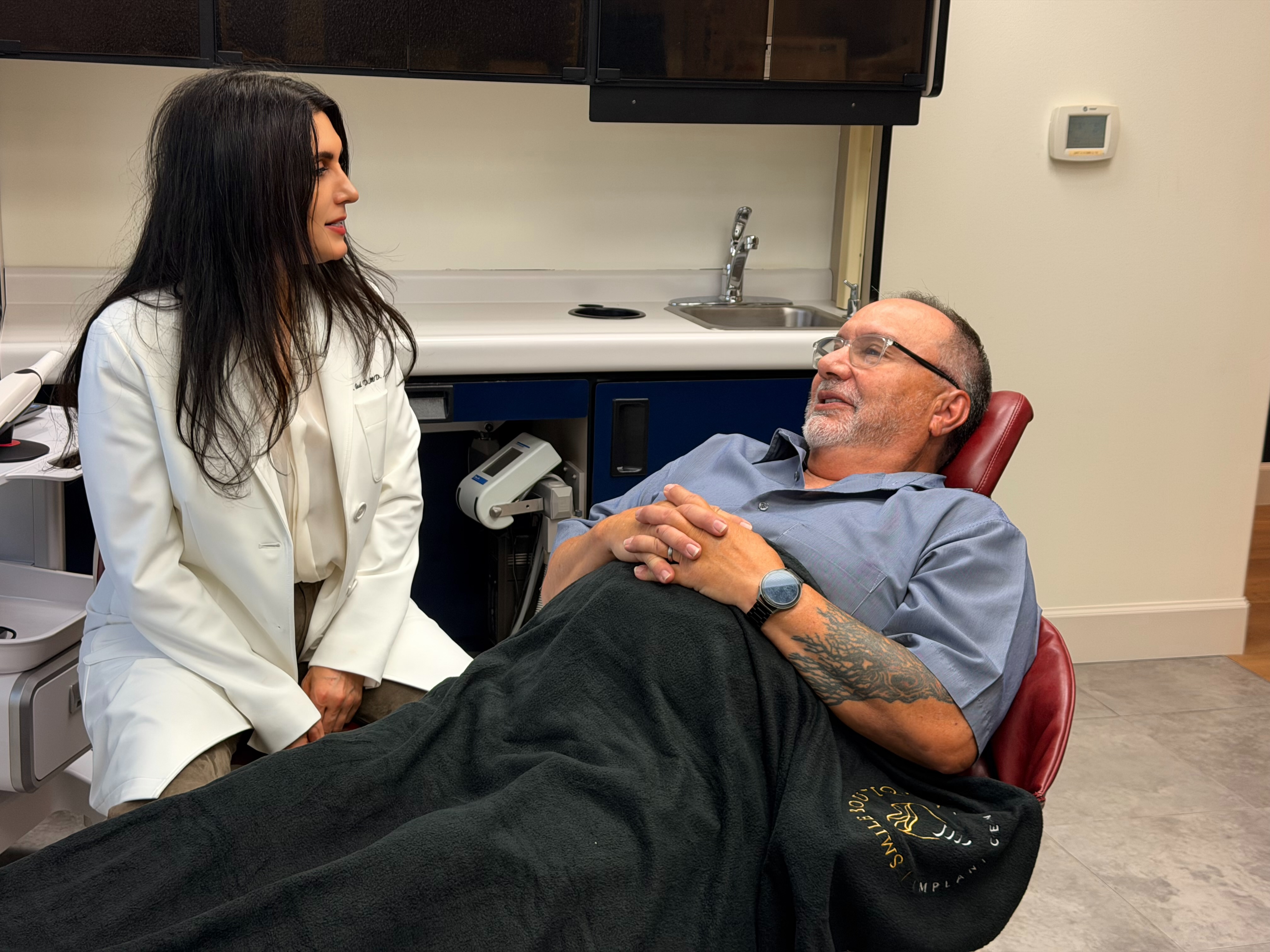
Patients sometimes come to me for a second opinion after full-arch implant treatment because something simply does not feel right.
Sometimes they can describe it precisely:
“My teeth feel too bulky.”
“I can't chew comfortably.”
“My speech changed.”
“Food constantly gets underneath.”
“My bite doesn't feel right.”
“My teeth don't look like me.”
Other times, the patient knows something feels different but has difficulty explaining exactly what it is.
The first step is not deciding that the restoration is bad.
It is figuring out what the patient is experiencing and why.
Movement, clicking, recurrent screw loosening, fracture, or chipping can indicate a mechanical problem that deserves evaluation.
The question is not simply whether something can be tightened, repaired, or adjusted. I determine why the problem occurred.
The restoration itself, its fit, prosthetic components, implant position, functional loading, or a combination of factors may need to be considered.
Repeatedly repairing the same complication without understanding why it keeps happening may not solve the underlying problem.
A restoration can be structurally intact and still have contours that are difficult for the patient.
It may feel bulky to the tongue.
It may occupy too much tongue space or interfere with speech.
Food may consistently collect in particular areas.
The patient may struggle to clean beneath it.
These can be design issues rather than implant failures.
A restoration has to work not only on the side people see when the patient smiles, but also on the surfaces the tongue, tissues, and patient experience every day.
Some patients describe uneven chewing, pressure in particular areas, difficulty finding a comfortable place to close, or a sense that the teeth do not meet naturally.
Those concerns deserve evaluation.
But I would not automatically attribute every symptom after full-arch treatment to “the bite.”
The opposing teeth or restoration, muscle symptoms, parafunction, adaptation, restorative design, or mechanical complications may also contribute to what the patient is experiencing.
The diagnosis comes before the adjustment.
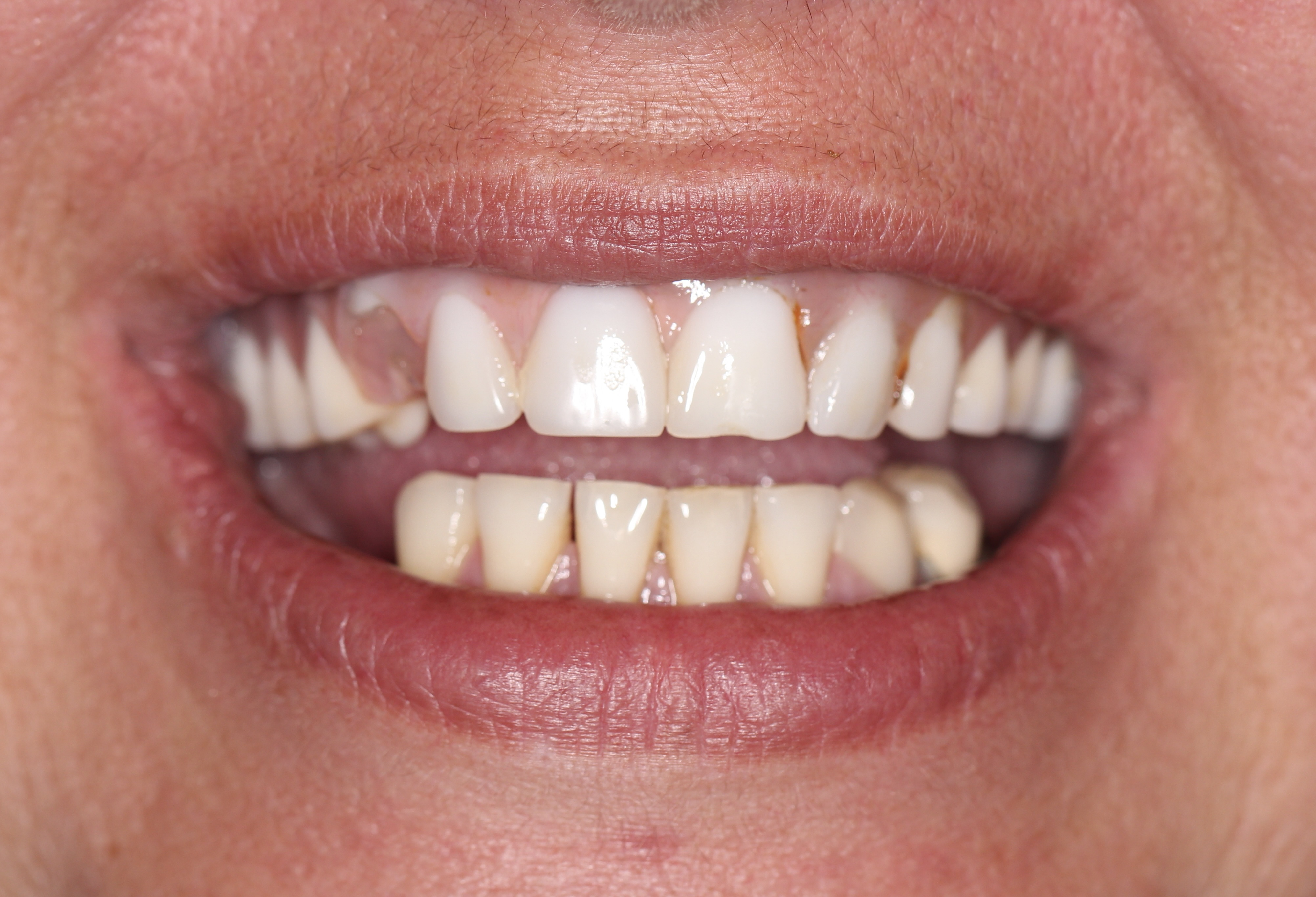
Sometimes the restoration functions reasonably well but does not look right to the patient.
Tooth size, shape, position, proportions, midline, shade, facial harmony, lip support, gingival display, or the transition between the prosthesis and natural tissue may contribute.
Sometimes the issue is more fundamental: the smile may look attractive in isolation but not feel individualized to the patient's face.
I assess specifically what the patient sees rather than simply asking whether they “like the smile.”
Identifying the concern comes before deciding whether anything should be changed.
Not every problem is prosthetic.
Inflammation, bleeding, drainage, discomfort, difficulty maintaining hygiene, or changes in the surrounding bone may indicate concerns beyond the restoration's design.
True mobility of an implant fixture is a different and more serious finding that requires prompt professional evaluation.
New swelling, drainage, significant pain, mobility, or a fractured or loose restoration should be assessed promptly rather than treated as a routine adjustment issue.
Sometimes evaluation identifies a specific issue that can be addressed with a limited adjustment or repair. In other cases, the restoration is structurally intact but its design does not adequately support comfortable speech, chewing, hygiene, facial support, or the patient’s sense that the teeth belong to them.
When the concern is clinically supported, a revision may be more appropriate than asking the patient to simply adapt to a restoration that continues to interfere with daily life.
A revision should not be made impulsively or treated as a purely cosmetic redo. I first identify what needs to change, determine whether it can be corrected within the existing restoration, and then design the revised restoration around the implant positions, tissues, bite, function, and face.
A useful second opinion is not simply another dentist saying, “I would have done it differently.”
I assess the patient's primary complaint first.
Then I can evaluate whether the implants are healthy and stable, whether the restoration fits appropriately, whether there are mechanical complications, whether the patient can maintain it, how it relates to the opposing arch, and whether tooth position or restorative contours are contributing to speech, comfort, function, or esthetic concerns.
Just as importantly, I also consider whether something outside the restoration itself could be contributing to what the patient feels.
Sometimes the solution is limited.
Sometimes a more substantial change may ultimately be appropriate.
And sometimes the evaluation confirms that the restoration is clinically sound while the patient is still adapting to a major change.
The purpose of a second opinion is not to find something wrong.
It is to determine what is actually happening before deciding what, if anything, should be changed.
Results and treatment needs vary from patient to patient. This article is for educational purposes only and does not replace an individual clinical examination, diagnosis, or treatment recommendation.