When Jaw Pain and Complex Dental Problems Need a Prosthodontic Evaluation
Patients with jaw pain, muscle soreness, difficulty chewing, clicking, or a bite that feels different are often unsure where to start.
Should they see a dentist? A prosthodontist? An orofacial pain specialist? A physical therapist? An oral surgeon?
There isn't one answer for every patient. But a prosthodontic evaluation can be particularly useful when jaw symptoms need to be evaluated alongside the teeth, bite, existing restorations, or other dental concerns.
When I evaluate a patient with jaw or bite concerns, I am not looking only at the temporomandibular joints.
I look at the system as a whole: the jaw joints, chewing muscles, teeth, existing restorations, bite, and how comfortably the patient can function.
I examine when the symptoms began, whether they are changing, what movements reproduce them, whether the jaw clicks or locks, whether the muscles are tender, and whether opening and closing are comfortable.
I also evaluate how the teeth meet, patterns of wear or fracture, missing teeth, existing crowns or implants, and whether the patient can close and chew in a comfortable and repeatable way.
That combination is where a prosthodontic perspective can be valuable.
Patients sometimes assume that seeing a prosthodontist means being told they need extensive dentistry.
The range is wider than that.
Appliance therapy and follow-up. When a stabilization appliance is indicated, delivering it is the beginning of treatment rather than the end. As muscle activity and symptoms change and the patient's closure becomes more comfortable and repeatable, the contacts on the appliance may change and need refinement. The appliance is adjusted and reevaluated over a series of visits, and the patient's response during that period provides useful clinical information.
Occlusal adjustment in defined situations. When the examination documents a specific problem, such as a high restoration, a reproducible interference, or a damaging contact pattern, selective adjustment may be appropriate. This is targeted correction of a documented finding, not routine reshaping of the dentition.
Establishing a stable, reproducible occlusal relationship. Some patients need their occlusion evaluated and established in a defined jaw relationship, including centric relation when appropriate. That may be the treatment itself or the foundation for treatment that follows.
Restoring posterior support. When posterior teeth are missing or failing, the loss of support becomes part of the occlusal and restorative diagnosis. Restoring that support may be important to how the patient functions and how the definitive occlusion is designed.
Reconstruction and full-mouth restoration. In some patients, limited treatment cannot establish the occlusal relationship identified through the diagnostic process. Restorative treatment may then range from correction of a few teeth to comprehensive reconstruction.
Sometimes the patient has jaw symptoms and an otherwise stable dentition.
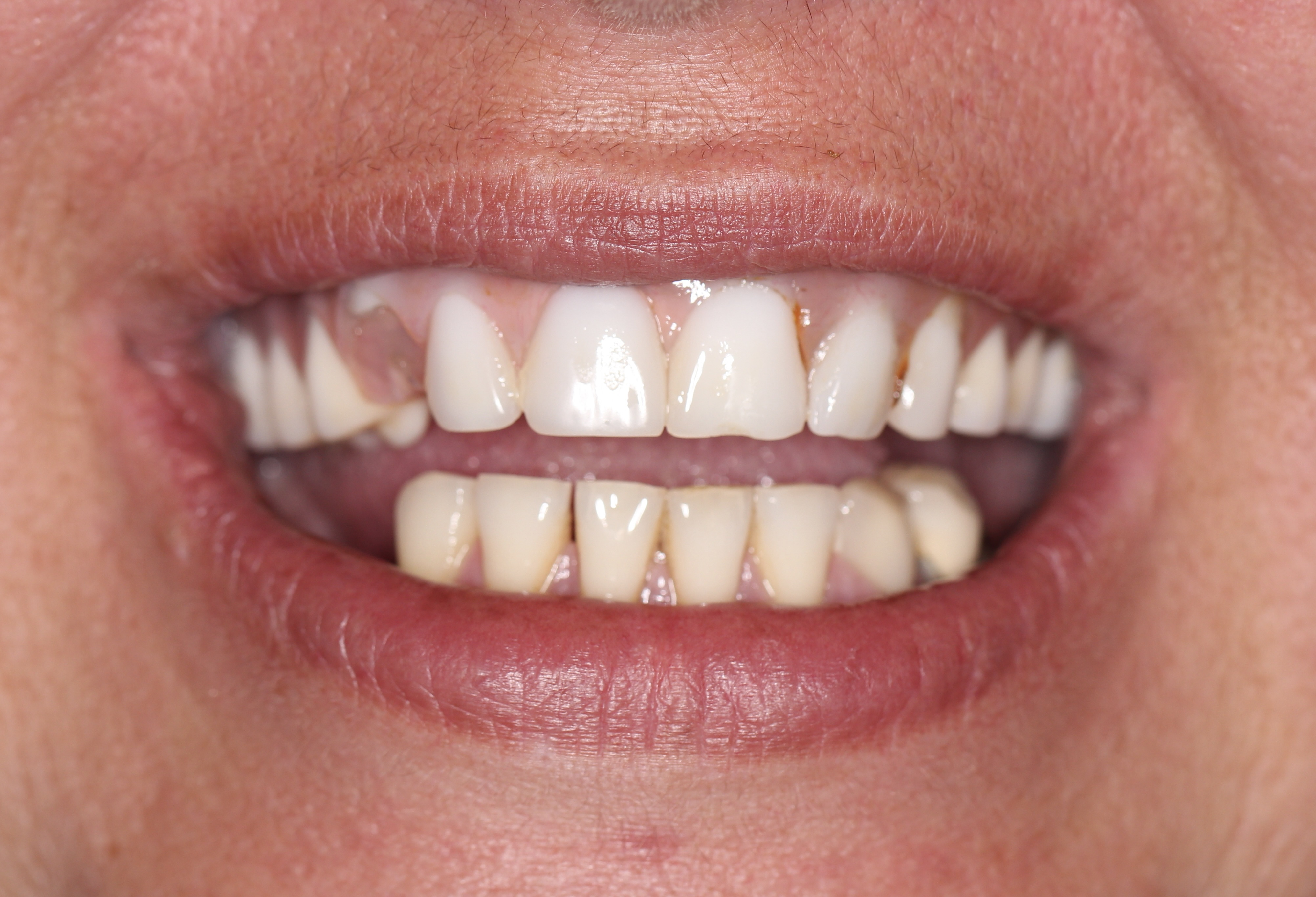
Other times the patient may also have severely worn teeth, missing teeth, repeated fractures, failing crowns or bridges, extensive previous dentistry, or a bite that has changed over time.
These findings can influence both diagnosis and treatment planning. But extensive structural breakdown is not a prerequisite for prosthodontic involvement. The occlusal relationship itself may be part of the problem.
When a clinically significant discrepancy exists between a comfortable, reproducible jaw relationship and the existing tooth contacts, the treatment may need to address that discrepancy. The extent of treatment depends on the individual diagnosis. A discrepancy alone does not establish that the bite caused TMD or justify irreversible treatment.
Learn more about when the bite itself may need treatment.
Temporomandibular disorders, or TMDs, often referred to by patients simply as “TMJ,” include different muscle- and joint-related conditions. Similar symptoms can also occur with headache disorders, nerve-related pain, systemic disease, injury, or other medical conditions.
An orofacial pain specialist may be appropriate when chronic or complex facial pain is a significant component. Physical therapy can be important when musculoskeletal factors need to be addressed. Certain joint conditions may warrant evaluation by an oral and maxillofacial surgeon. Other symptoms may require medical evaluation.
Identifying those distinctions is part of the prosthodontic evaluation, and interdisciplinary care can be incorporated when it adds value.
The prosthodontic role becomes especially important when treatment will change how the teeth meet, whether that involves a few teeth or most of the dentition.
If the patient also has active pain, limited movement, locking, significant muscle symptoms, or a bite that is changing or difficult to reproduce, those findings belong in the diagnosis before the definitive treatment is designed.
Patients with complex problems sometimes arrive having already been told what procedure they need.
I prefer to begin one step earlier.
What is producing the patient's symptoms? Are they primarily muscular, joint-related, dental, occlusal, restorative, or a combination? Is the bite objectively changing, or does it feel different? What does the clinical examination show?
Then the treatment can follow the diagnosis.
Results and treatment needs vary from patient to patient. This article is for educational purposes only and does not replace an individual clinical examination, diagnosis, or treatment recommendation.