No-Prep and Minimal-Prep Veneers: When Can Porcelain Be Added Without Reduction?
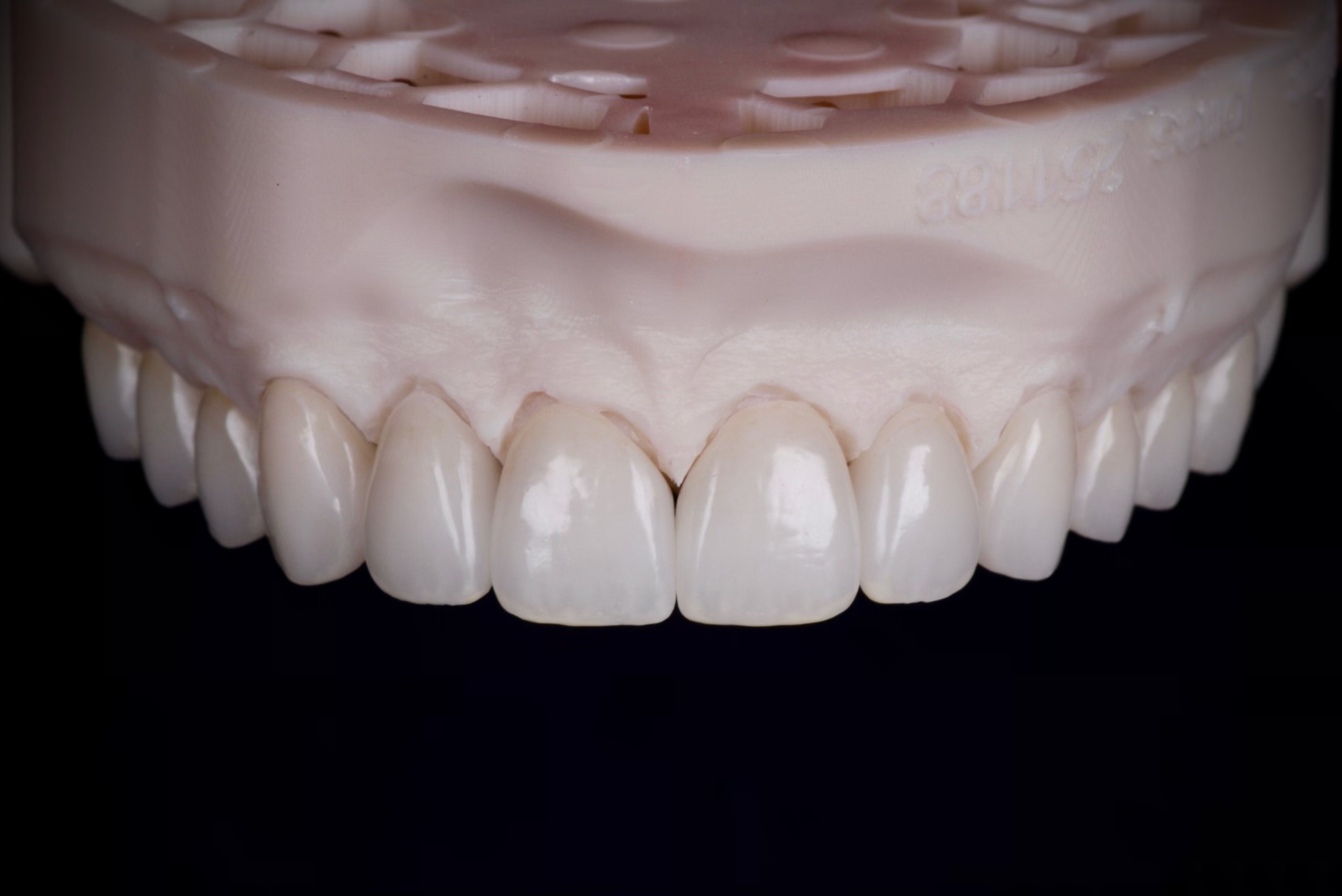
“Can I just get a snap-on smile?” Patients ask me this because they want to change their smile without touching their natural teeth. A snap-on smile is a removable overlay, not a bonded veneer. The wish behind the question is fair, though: can porcelain be added without shaving the teeth? Sometimes, yes.
Porcelain can be added with little or no preparation when the planned result adds volume to the tooth. Whether that applies to a particular smile is decided by the diagnostic design and the examination.
Many patients ask for no-prep veneers because they want to protect their natural teeth. That instinct is sound. Preserving enamel guides every veneer case I plan. The amount of preparation is a result of the design, and I determine it tooth by tooth.
A no-prep veneer is placed without mechanically reducing the tooth. If enamel is reshaped, even slightly, there has been some preparation. A minimal-prep approach uses limited reduction, kept within enamel where the anatomy allows. The label itself does not tell you how much enamel remains.
Bonding to enamel is a real advantage, though material, design, and the bite also affect longevity. In the mouth the difference between the two approaches is often small. Each tooth receives the preparation its planned contour requires, and no more.
Porcelain can be added with little or no reduction when there is room to add width, thickness, or length without creating an unnatural contour. This includes:
Where a tooth already sits forward, is rotated outward, or is too large for its position, porcelain added on top would make it bulkier. There, space has to be created.
Porcelain needs thickness for strength, color, and natural translucency. Without space, that thickness is added on top of the existing tooth. Within an ideal contour, the result looks natural. Beyond it, the tooth becomes overcontoured.
Overcontour also affects the gums. The way a restoration emerges from the gum line, its emergence profile, shapes the health of the surrounding tissue. A bulky margin is harder to clean and can contribute to plaque retention and inflammation. A smile can look full in a photograph and still be unhealthy for the gums, so I plan the margin and contour for cleansability as well as appearance.
Research shows favorable long-term outcomes for no-prep and minimally invasive veneers in carefully selected cases. Case selection is what makes that result possible.
I begin with the intended result. I evaluate tooth position, shape, proportion, color, existing restorations, the gum line, and the bite. A diagnostic design establishes the planned contour of every tooth, and a mock-up lets me assess those contours in the mouth.
The design shows where porcelain can simply be added and where space must be created. One smile often includes both. The mock-up then guides preparation, so I remove only what the design requires. Tooth position and dark underlying color limit how thin the porcelain can be. In some cases, whitening or orthodontics first creates a more conservative path to the same result.
When teeth are already heavily restored or structurally compromised, I may recommend a different restoration. I explain how that decision is made in veneers or crowns.
Even without reduction, veneers are a commitment. Removing bonded porcelain can damage or remove enamel, so I do not present no-prep veneers as reversible. Veneers need good home care, regular professional maintenance, and protection from heavy forces such as grinding. The teeth beneath them are still monitored for decay and gum changes, and over many years the veneers may need repair or replacement.
Whether your teeth can receive porcelain with little or no preparation is something I determine in a thorough evaluation. You can learn more about porcelain veneers at our practice.
Results and treatment needs vary from patient to patient. This article is for general educational purposes and does not replace an individual clinical examination, diagnosis, or treatment recommendation.