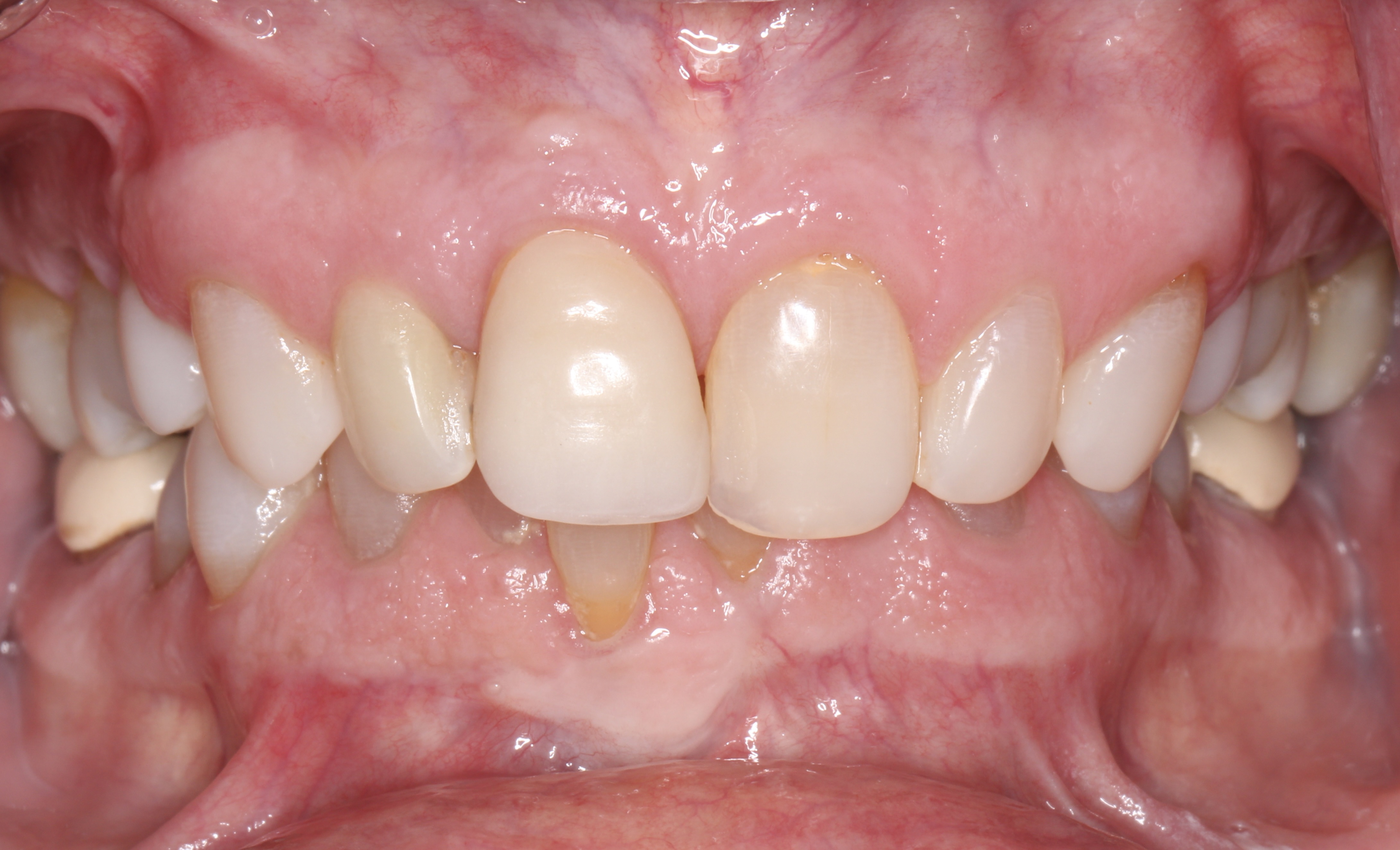
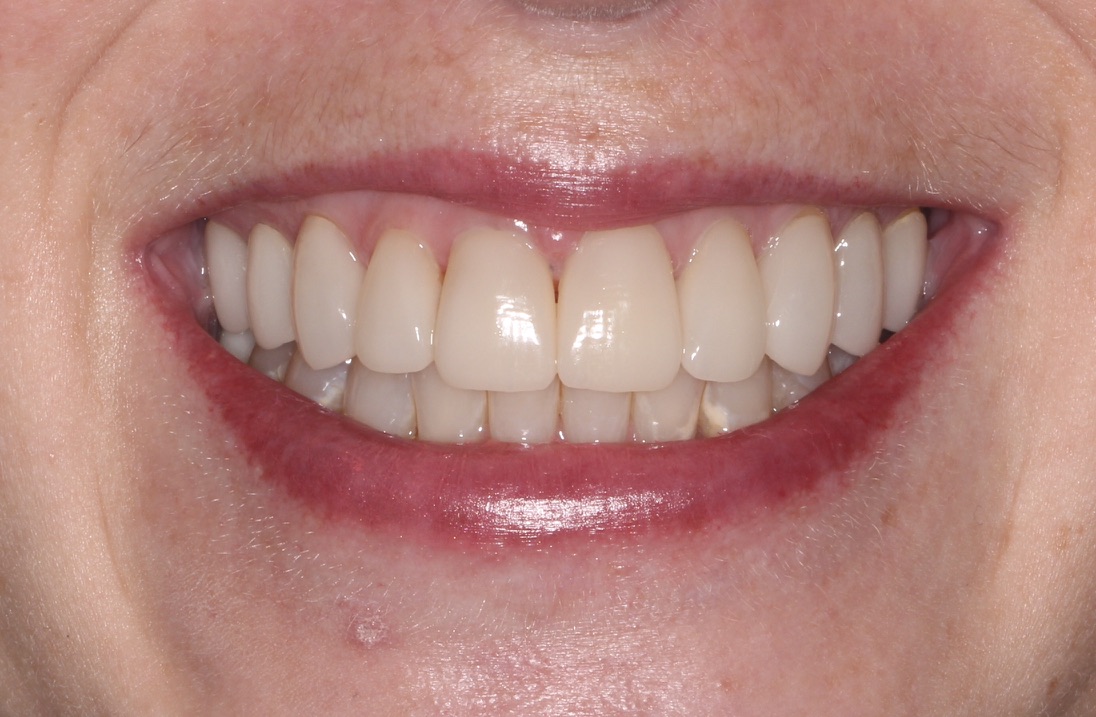
Why Do My Teeth Look Short?
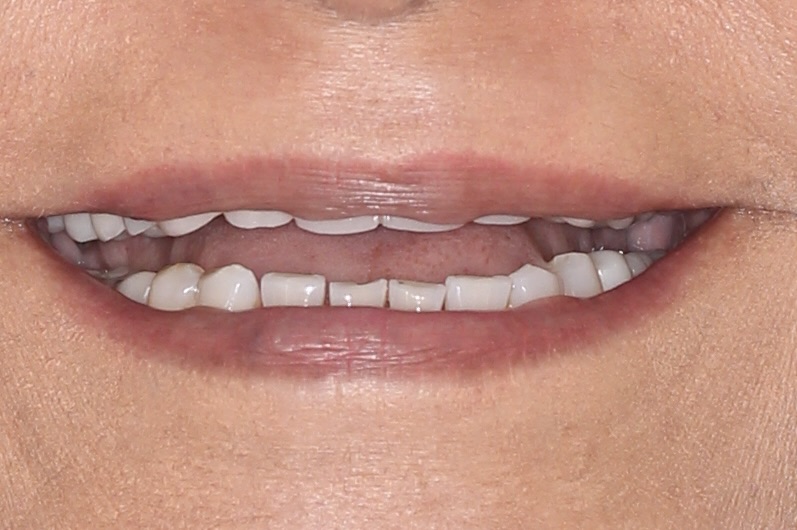
“My teeth look shorter than they used to.” “My smile looks small.” “I hardly see my upper teeth in photographs.” These concerns can sound similar, but they do not always have the same explanation.
Some teeth have lost length through wear or chipping. Others are naturally small, partly covered by gum tissue, or positioned so that less of the tooth shows. The lips also influence how much tooth is visible when you speak and smile.
As a prosthodontist in Austin, I first distinguish between a tooth that is physically short and a tooth that only appears short. That distinction helps determine whether treatment should involve the teeth, gum tissue, tooth position, or a combination.
Older photographs can help establish whether your smile has changed. If your teeth have always looked small, natural tooth size and proportions may be part of the explanation. A tooth can also look short because it is relatively wide, even when its length is not unusually small.
Some people have one or more teeth that developed smaller than usual, a condition called microdontia. However, a small-looking smile does not automatically mean the teeth themselves are undersized.
I consider the teeth in relation to each other, the gumline, and the face. There is no single tooth length or proportion that suits every patient, and naturally small teeth do not necessarily need treatment.
When teeth become shorter over time, wear is one possibility. Front edges may flatten, develop small chips, or lose the contours visible in older photographs.
Grinding can wear opposing tooth surfaces against each other. Acid exposure from foods, drinks, reflux, or recurrent vomiting can also contribute to tooth wear. These processes may occur together. The pattern and history help guide the evaluation rather than assuming that every short tooth is caused by grinding.
Sensitivity, repeated chipping, and visible changes deserve attention even when you are mainly concerned about appearance. Adding length without understanding the contributing factors may leave new restorations exposed to the same problems.
When wear affects many teeth, the question extends beyond the front edges. The overall bite and the space available for restorations may need to be evaluated. Short teeth alone, however, do not establish that the bite has collapsed or that full mouth restoration is necessary.
The clinical crown is the portion of a tooth visible above the gumline. A short clinical crown does not necessarily mean the tooth itself is small or worn.
In some people, gum tissue remains over part of the enamel that would normally be exposed. This is called altered passive eruption. The underlying tooth may have normal dimensions, but the visible portion looks short or square.
When the teeth are healthy and their underlying shape and length are appropriate, esthetic crown lengthening alone may be sufficient. Veneers or dental crowns may not be needed. This procedure exposes more of the natural tooth by reshaping gum tissue and, when necessary, the underlying bone.
This differs from wear, where tooth structure has been lost, or naturally small teeth, where the tooth itself developed smaller. Crown lengthening exposes existing tooth structure. It does not replace missing structure.
A gummy smile can also involve lip movement or the position of the teeth and jaws. I evaluate these relationships and coordinate with a periodontist when crown lengthening is appropriate.
A tooth can remain the same length while becoming less visible. Lip length, movement, and tooth position all influence tooth display. Age-related changes in the lips and surrounding tissues can reduce how much of the upper front teeth shows.
This is why I evaluate more than a close-up photograph with the lips pulled away. I look at the face at rest, during conversation, and during a natural smile. A posed photograph captures only one moment.
If the upper lip covers more of the teeth, simply extending their edges may create teeth that are too long for the bite or interfere with speech. If tooth position is contributing, orthodontic treatment may be considered. The limits of what dental treatment can change should be discussed before proceeding.
These treatments can change visible tooth length, but they are not interchangeable.
Composite bonding may be considered for selected additions to tooth edges or changes in shape. Porcelain veneers may be appropriate when changes to the visible surfaces and edges are needed and the remaining tooth structure supports that approach. Crowns may be indicated when a tooth has substantial structural damage or an existing restoration that requires broader coverage.
A tooth should not receive a crown simply because it looks short. When gum coverage or tooth position is the primary issue, periodontal or orthodontic treatment may address the concern without adding restorations.
Treatment may combine approaches. One area might benefit from orthodontic movement, another from periodontal treatment, and another from a carefully selected restoration. The plan should preserve healthy tooth structure wherever practical.
Length is evaluated together with width, edge position, gum levels, lip movement, and the relationship to the opposing teeth. Esthetics and function are designed simultaneously.
Depending on the case, photographs, digital scans, and a diagnostic tooth design help assess the proposed changes. A mock-up or provisional restoration may then allow clinical evaluation of appearance, speech, lip interaction, and bite before the final restorations are completed.
This is more than choosing a shape from a photograph. A design that looks appealing in isolation must also work when you speak, chew, and move your jaw.
At Smile Boutique Implant Center, I approach short-looking teeth by identifying what is missing: tooth structure, visible tooth display, or balance in the proportions.
Some patients need a limited change. Others benefit from coordinated care. The aim is not simply longer teeth, but a smile that suits your face while respecting the health and function of your mouth.
This article is educational and is not a substitute for an individual examination, diagnosis, or treatment recommendation.