Full-Mouth Reconstruction With TMJ or Bite Changes: How Treatment Is Sequenced
Patients who need extensive restorative treatment often want to know how the process actually works.
What happens first? What order does treatment follow? When are the final teeth made?
The sequence is not arbitrary. It follows the diagnosis and gives me opportunities to evaluate important decisions before they become definitive.
That matters even more when the patient also has a history of TMD, active jaw symptoms, or a bite that has been changing.
By this point, the examination has established what restorative treatment is needed and whether the occlusion itself requires correction. What follows is how that plan gets carried out.
Restoring one tooth and rebuilding much of a dentition are very different planning problems.
With extensive reconstruction, I may be establishing tooth form, tooth position, vertical dimension, occlusal contacts, and how the restored teeth function together.
I need records that are sufficiently consistent for those decisions.
Active pain, muscle guarding, restricted movement, or a changing closure can make some records less consistent. I evaluate whether that variability is significant enough to affect the reconstruction I am planning.
I am not looking for an abstract standard of perfect stability. I need clinical information that is reliable enough for the specific treatment.
Complex restorative treatment often requires a defined reference for the relationship between the upper and lower jaws.
Centric relation may be used when it is the appropriate reference for that patient and treatment plan. Other clinical situations may be managed differently.
The important point is that the reference used for the reconstruction needs to be clinically appropriate and reproducible.
Whether the occlusion itself needs to be corrected is a diagnostic question that comes earlier. At this stage the question is narrower: once the treatment position has been established, can I record it consistently enough to design and reproduce the planned occlusion?
Read more about muscle, joint, and disc problems in TMD.
Some patients reach this stage after a period of stabilization appliance therapy. That period may provide useful information about symptoms, muscle tenderness, jaw function, closure, and the consistency of the records I need for restorative treatment.
The question that matters most to me here is whether I can now obtain records more predictably than I could earlier.
The appliance itself does not design the reconstruction. It gives me information that I can interpret together with the examination, records, restorative diagnosis, and treatment goals.
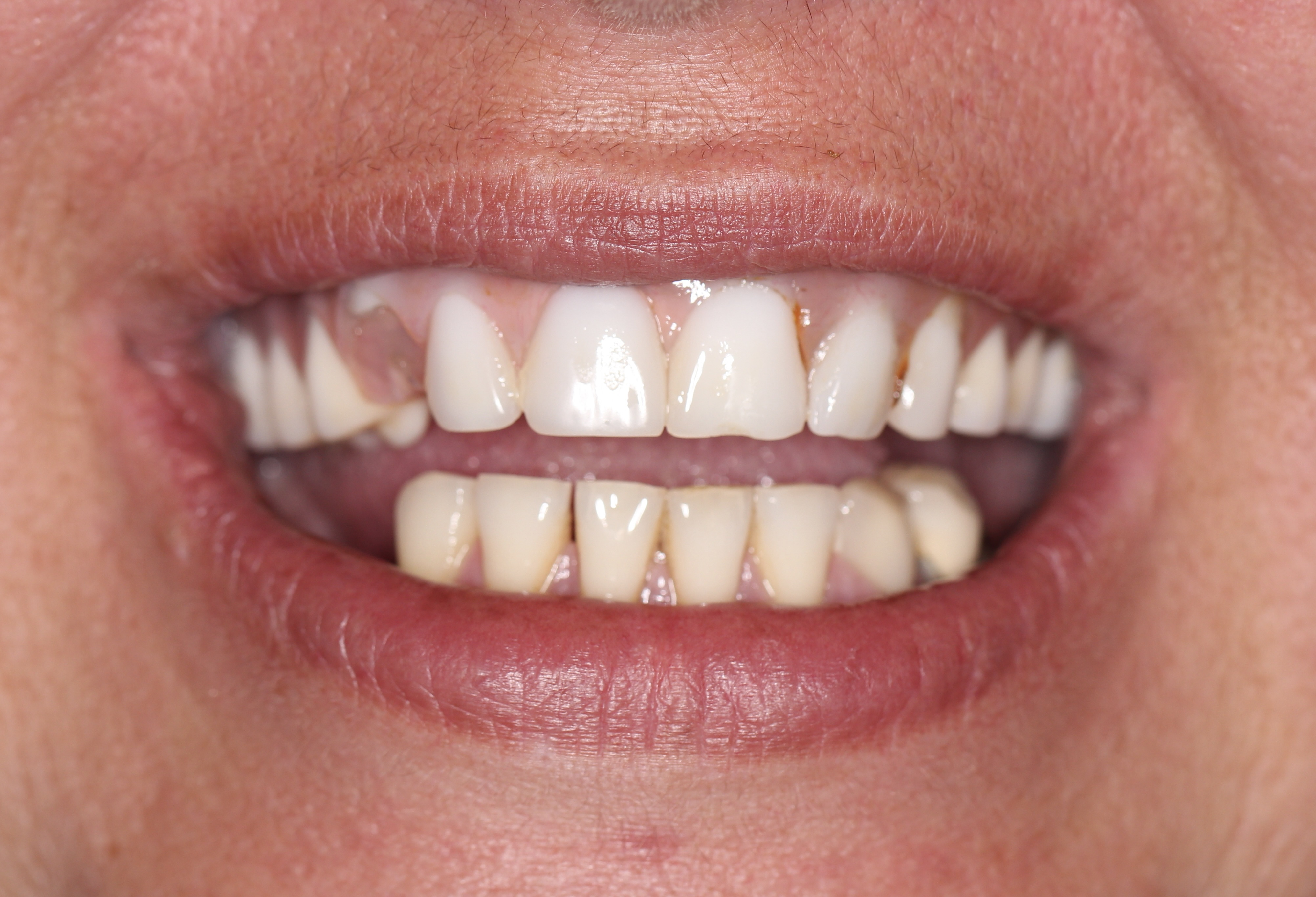
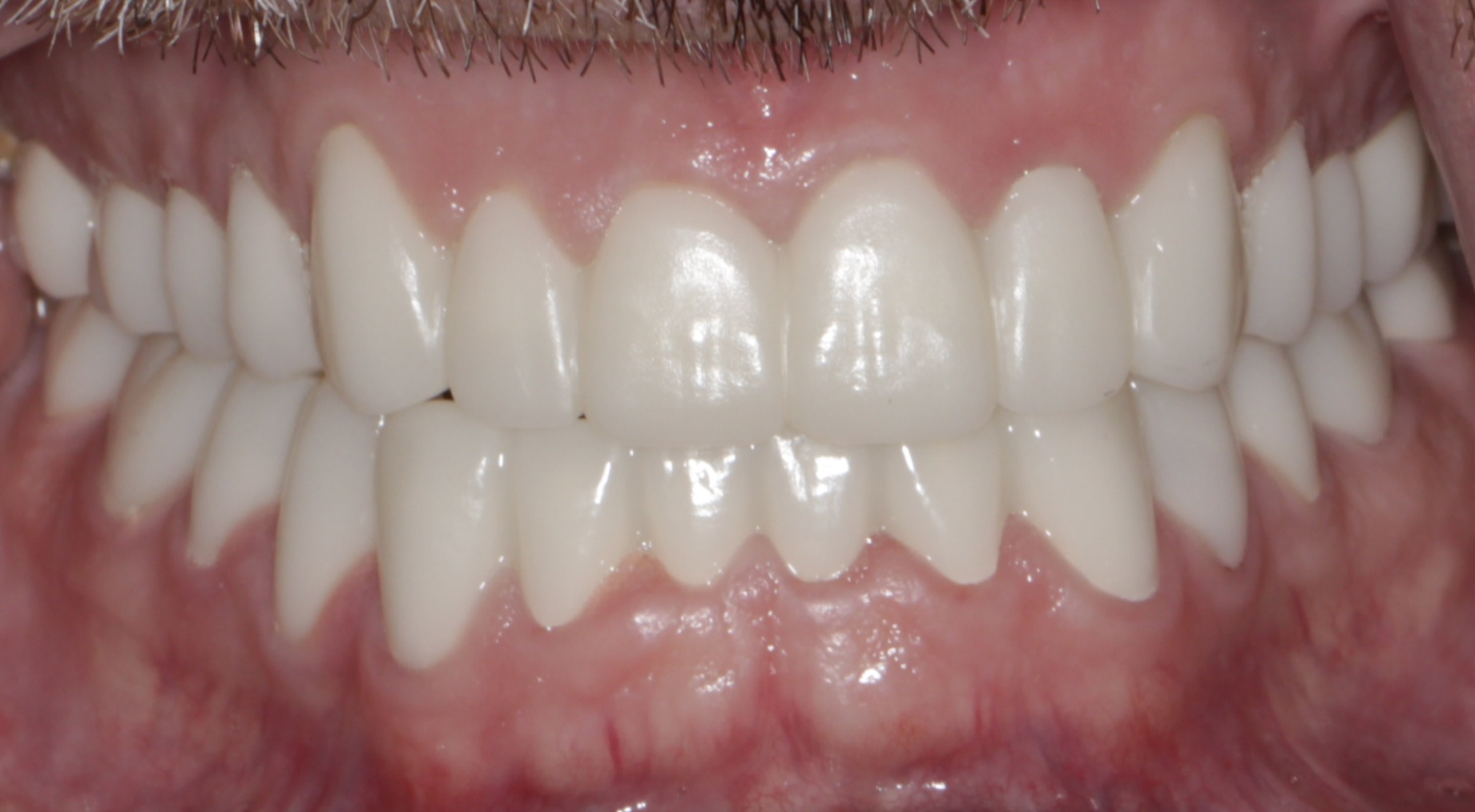
Provisional restorations are the temporary restorations a patient wears before the final ones are made.
For complex reconstruction, the provisional phase is not simply a temporary cosmetic step.
It gives me an opportunity to evaluate the proposed treatment before final ceramics are fabricated.
If I have changed tooth length, tooth position, occlusal contacts, or vertical dimension, I can evaluate those changes clinically.
How does the patient chew?
How does the new occlusion function during jaw movement?
Is the planned vertical dimension comfortable and functional?
How does the patient speak?
How do the teeth relate to the lips and face?
Are there contacts, contours, or tooth positions that should be refined?
This is why I put significant value on provisional restorations in complex cases. They allow me to make changes while changes are still relatively easy to make.
When the treatment plan includes a change in vertical dimension, or bite height, I evaluate that planned change before transferring it into the definitive restorations.
I confirm that the patient can function comfortably at the planned vertical dimension and that it provides the restorative space, tooth proportions, esthetics, and occlusal relationships the treatment requires.
Provisional restorations give me a practical way to evaluate those relationships before finalizing them.
Not every complex case moves directly from diagnosis to definitive restorations.
Some treatment plans require separate phases because certain steps need to occur before others. Implant placement may require healing before the definitive restoration can be completed. Orthodontic or surgical treatment may need to precede restorative treatment. In other cases, I may keep a patient in provisional restorations longer so I can confirm the planned function, occlusion, esthetics, and other clinical relationships before proceeding to the final restorations.
Working in phases is not hesitation. It allows each part of a complex treatment to be completed at the appropriate time while maintaining the overall treatment plan.
I am ready to move toward definitive restorations when the information I am relying on is consistent with the treatment I am planning.
The definitive restoration should be the culmination of the diagnostic and provisional process, not the first time the treatment plan is tested in the patient's mouth.
That is one of the most important differences between simply restoring many teeth and planning a full-mouth reconstruction.
Results and treatment needs vary from patient to patient. This article is for educational purposes only and does not replace an individual clinical examination, diagnosis, or treatment recommendation.