Implant-Supported Overdentures vs. Fixed Full-Arch Teeth

“Snap-in teeth or permanent teeth?” Patients ask me this often. The difference is greater than whether the teeth come out at night.
Both removable implant overdentures, often called snap-in dentures, and fixed full-arch implant teeth are sound, well-established treatments, and neither is simply the “upgraded” version of the other. The right choice depends on your anatomy, how much bone and soft tissue have been lost, and what you want from daily life with your new teeth.
Many patients arrive preferring fixed teeth. That preference is part of the conversation, and the decision is made from the examination, because the same goal can call for different designs in different mouths.
An implant overdenture is a removable prosthesis that attaches to implants. It stays in place while you eat and speak, and you remove it for cleaning. Depending on the design, it is supported partly by the gums or primarily by the implants.
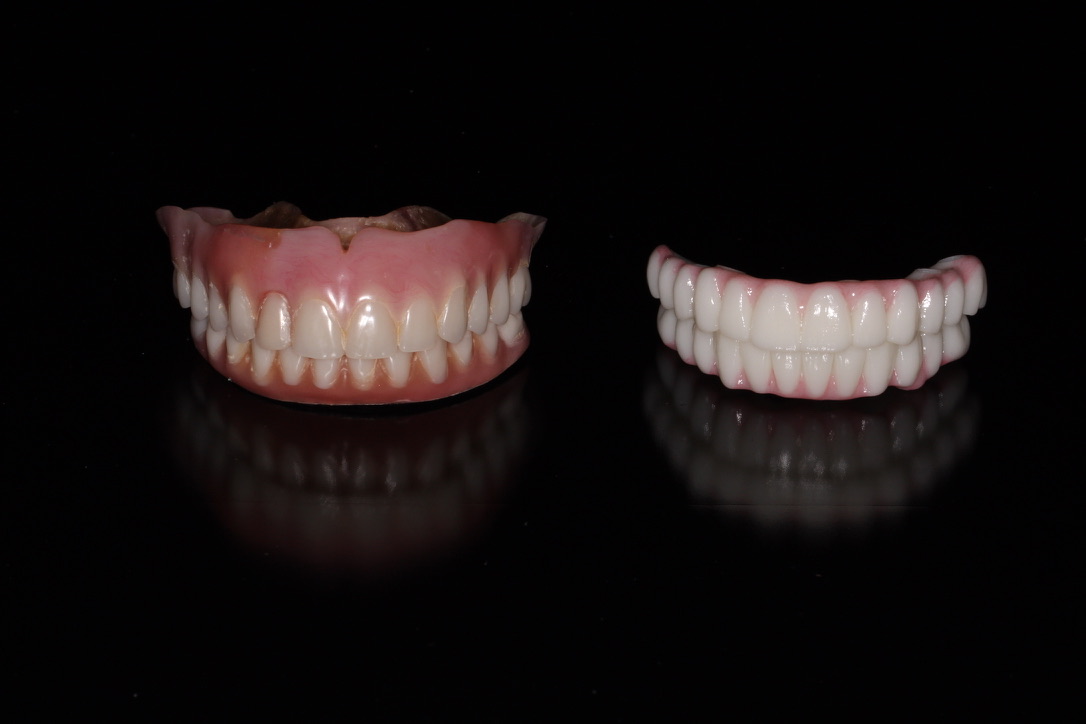
Fixed full-arch teeth are screwed to the implants and stay in place. Only the dentist removes them. Their fixed position feels closer to natural teeth than a removable denture, although sensation and cleaning still differ. I discuss what makes them comfortable and natural-looking.
Research shows that both approaches substantially improve quality of life for people who have lost their teeth, with fixed designs favored by those who place the highest value on stability.
With an overdenture, you remove the prosthesis to clean it and the implant attachments. Removal makes the attachments and surrounding tissues easier to reach, provided you can handle the denture comfortably. The attachments wear and are replaced as part of routine maintenance.
Fixed teeth are cleaned in place, around and beneath the prosthesis, with floss, a water flosser, and small brushes, along with professional maintenance. I remove the prosthesis only when clinically indicated. Both options require maintenance; they ask for different habits.
Bone and number of implants. The upper and lower jaws have different requirements. A lower overdenture that also rests on the gums can often be retained by fewer implants than a fixed arch. Upper overdentures generally need more implants than lower ones, as do removable designs supported entirely by the implants. The comparison is between complete designs, not implant counts.
Lip and facial support. After teeth are lost, the ridge resorbs and the lips and cheeks lose support. When that loss is substantial, a removable design can replace both the missing tissue and the lip support while remaining easy to clean. A fixed design carrying the same volume can become difficult to maintain. In other patients, the bone and soft tissue allow a fixed restoration to restore facial support beautifully. I assess this from the face as much as from the mouth.
The bite. Opposing teeth, jaw relationship, muscle strength, and clenching or grinding all influence the design and the material. Esthetics and function are designed together, so the tooth position that supports your lips must also work for your bite.
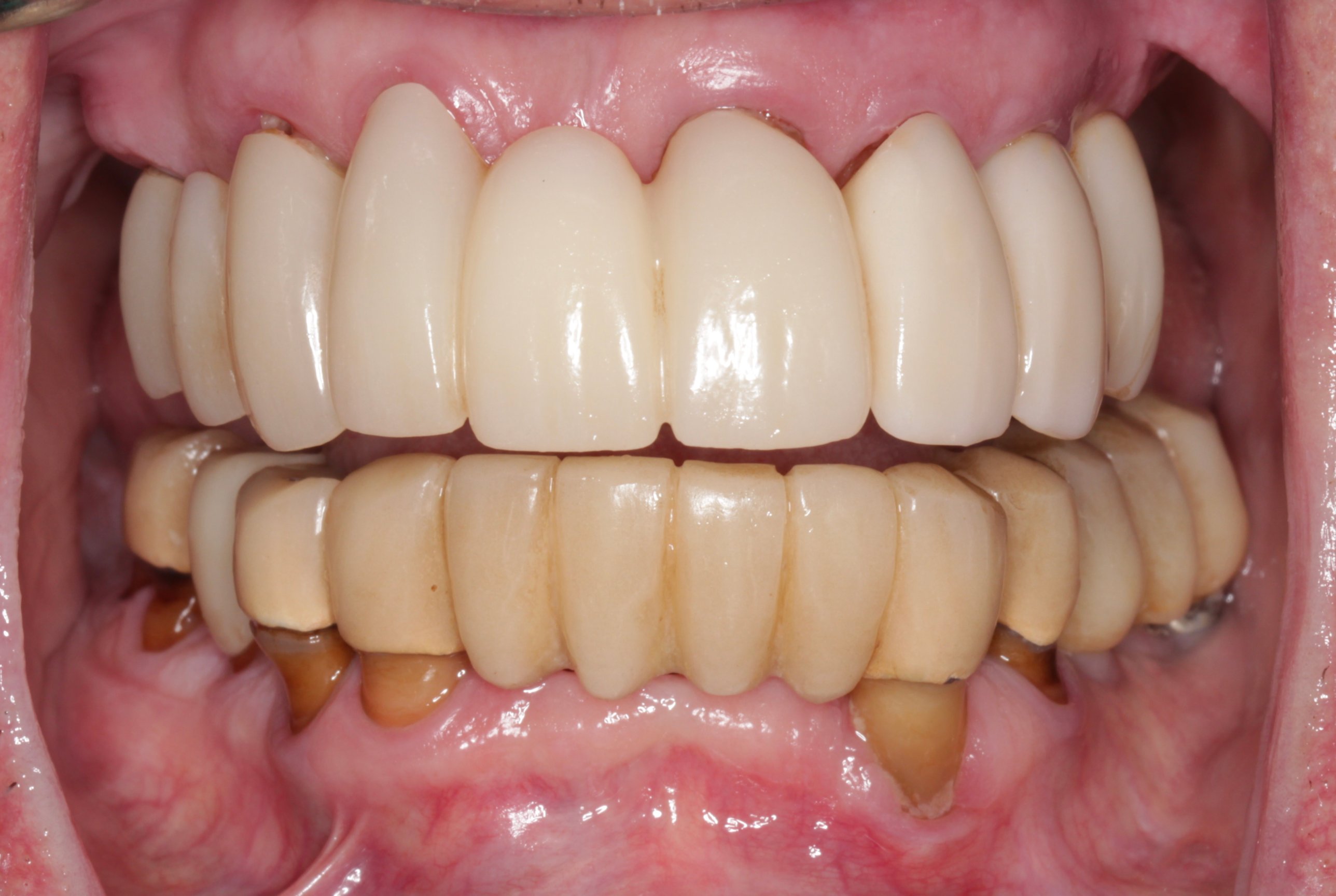
If you already wear a denture, it tells me a great deal. Its fit, how your lips sit over it, how you speak with it, and what you dislike about it all inform the plan, and it is often the starting point for evaluating tooth position and facial support. A denture that already looks and functions well can sometimes be converted to attach to implants. One that does not is usually replaced.
If you are facing the loss of your remaining teeth, the same principle applies. The final tooth position is planned first, and the implants are placed to support it. I explain that sequence in why the final tooth comes first.
In selected cases, an overdenture is a planned stage. When implants are positioned with a future fixed restoration in mind, a patient can begin with a removable prosthesis and move to fixed teeth later, if the bone and implant positions allow it. That pathway is planned from the beginning and can require additional implants or a new prosthesis.
Both options can be designed to a very high esthetic and functional standard. A thorough examination, with imaging appropriate for implant planning, establishes what each would require in your mouth and the care each one asks of you at home.
If you are weighing these options, you can learn more about dental implants and full-arch implant restoration, or schedule an evaluation to see which design fits your anatomy and your goals.
Results and treatment needs vary from patient to patient. This article is for general educational purposes and does not replace an individual clinical examination, diagnosis, or treatment recommendation.