When Dental Problems Stop Being Separate Problems
Most people do not wake up one morning with a completely broken-down mouth. The changes usually accumulate over years.
A large filling becomes a crown. A neighboring tooth fractures. A missing tooth changes how you chew. Older restorations begin failing at different times. Each problem may be treated reasonably on its own, yet the mouth gradually becomes a collection of repairs that no longer work well together.
That is often when a full mouth restoration becomes worth considering.
Full mouth restoration, sometimes called full-mouth reconstruction or rehabilitation, is not one procedure. It is a coordinated approach for situations in which multiple dental problems have become connected.
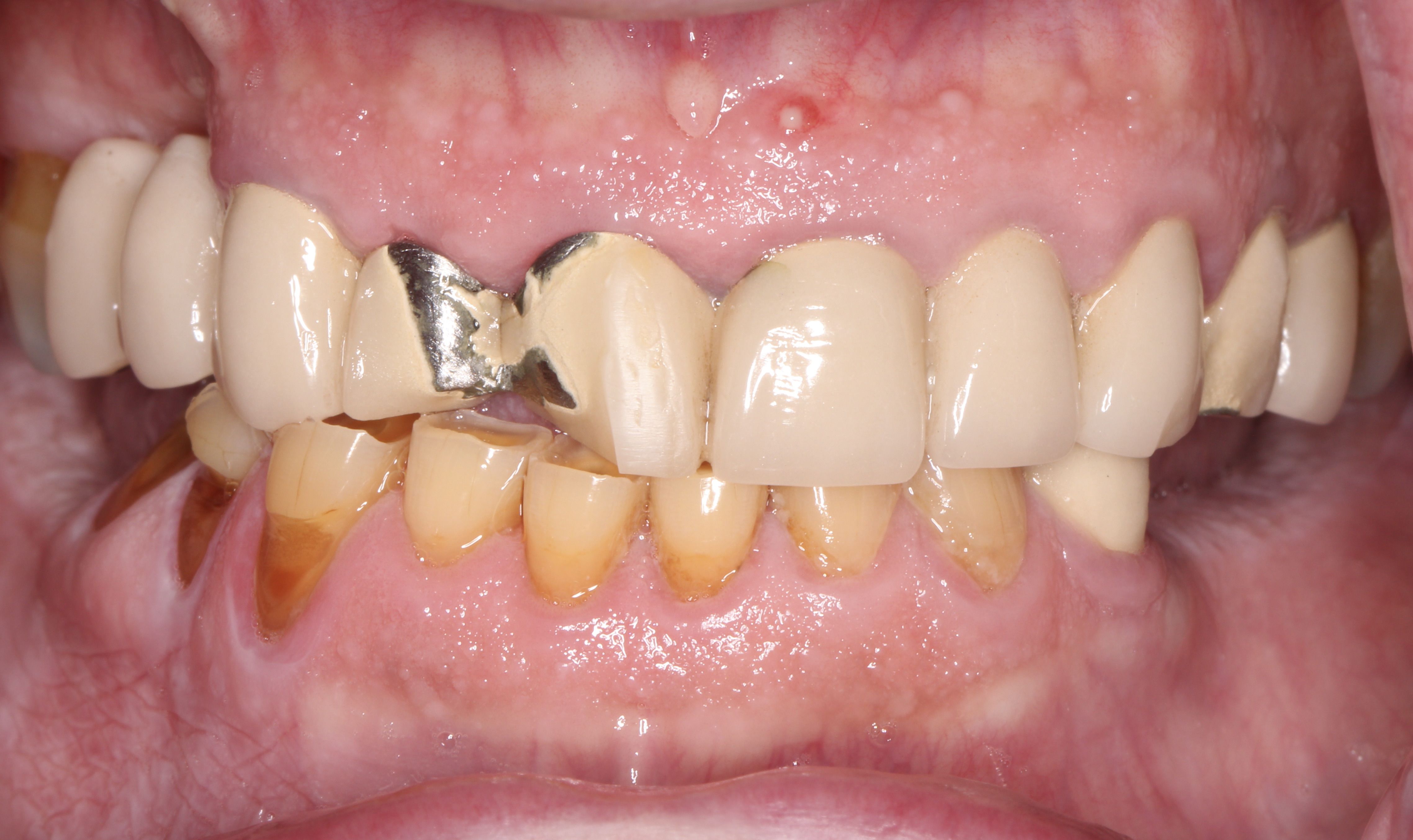
A crown that loosens once may be an isolated event. Several crowns that fracture, repeatedly come off, or require replacement suggest a pattern that deserves a closer look.
The cause may be weakened tooth structure, recurrent decay, grinding or clenching, missing posterior support, or forces that are not being distributed favorably through the bite. Often, more than one factor is involved.
Before replacing another restoration, I want to understand why the previous dentistry failed. If the underlying problem remains, a technically excellent new crown may still be placed into the same unfavorable environment.
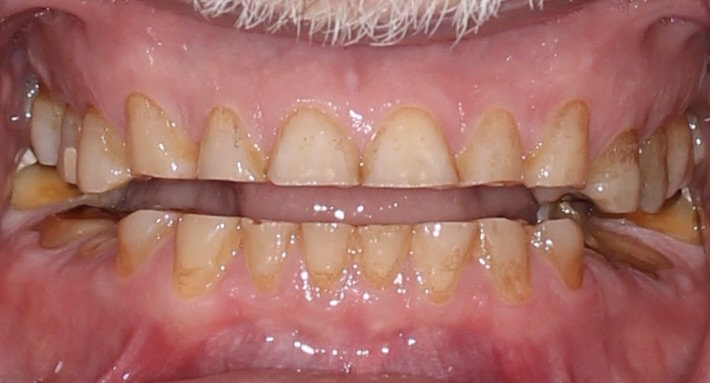
Tooth wear progresses slowly. Many patients do not notice it until their front teeth look shorter, the edges become thin or chipped, or the teeth begin to feel increasingly sensitive.
Some also notice changes outside the teeth themselves. Their smile looks different. They show more of their lower teeth when speaking. Their lips no longer seem to have the same support. They may feel that there is less room in their mouth, even though they cannot identify exactly what has changed.
Rebuilding worn teeth is not simply a matter of making them longer again. The available space, tooth proportions, bite, speech, facial appearance, and remaining tooth structure must all be considered together.
Some patients tell me, “I can’t find my bite.”
They may move their jaw around each time they close, trying to find a position that feels comfortable. They may chew mainly on one side, avoid certain foods, or notice that only a few teeth touch. Others feel that recently completed dentistry never fully settled into the rest of the mouth.
A changing bite can develop after tooth loss, progressive wear, shifting teeth, fractured restorations, or years of treatment completed at different times.
Not every uneven bite requires extensive dentistry. But when the change affects several teeth or appears alongside repeated restorative problems, placing one more crown without evaluating the whole bite may not solve the larger issue.
Many adults have dentistry from different chapters of their lives: large fillings placed years ago, crowns of different ages, a bridge, root canal-treated teeth, missing teeth, and perhaps newer implants.
Eventually, several of those restorations may require attention within the same period. Treating them independently can create another layer of patchwork dentistry.
A comprehensive plan does not mean everything must be replaced. It helps identify what remains healthy, what requires treatment now, what can be monitored, and how each new restoration should relate to the others.
Complex dental problems often produce separate recommendations.
One tooth may need root canal treatment. Another may be considered for extraction. An implant may be suggested in one area while crowns or veneers are discussed elsewhere.
Each recommendation may be reasonable. The unanswered question is whether they all lead toward the same final result.
This is where prosthodontic planning becomes important. My approach begins with the intended outcome, then works backward. Which teeth can be predictably preserved? Which teeth cannot? Where should replacement teeth be positioned? How should the final bite function? What needs to happen first?
Patients are sometimes concerned that seeking a comprehensive opinion will lead automatically to crowning every tooth or removing the remaining teeth for implants.
It should not.
Some heavily restored teeth can continue to function predictably. Others may no longer have adequate tooth structure or support. Many patients need a thoughtful combination of preservation and replacement.
The plan should not begin with a preferred procedure. It should begin with a diagnosis.
If you are experiencing repeated dental failures, progressive tooth wear, difficulty finding your bite, or several disconnected treatment recommendations, the first step is not committing to a full mouth restoration.
It is stepping back long enough to understand the entire mouth before making the next individual decision.