How Do You Avoid Veneers That Look Fake?
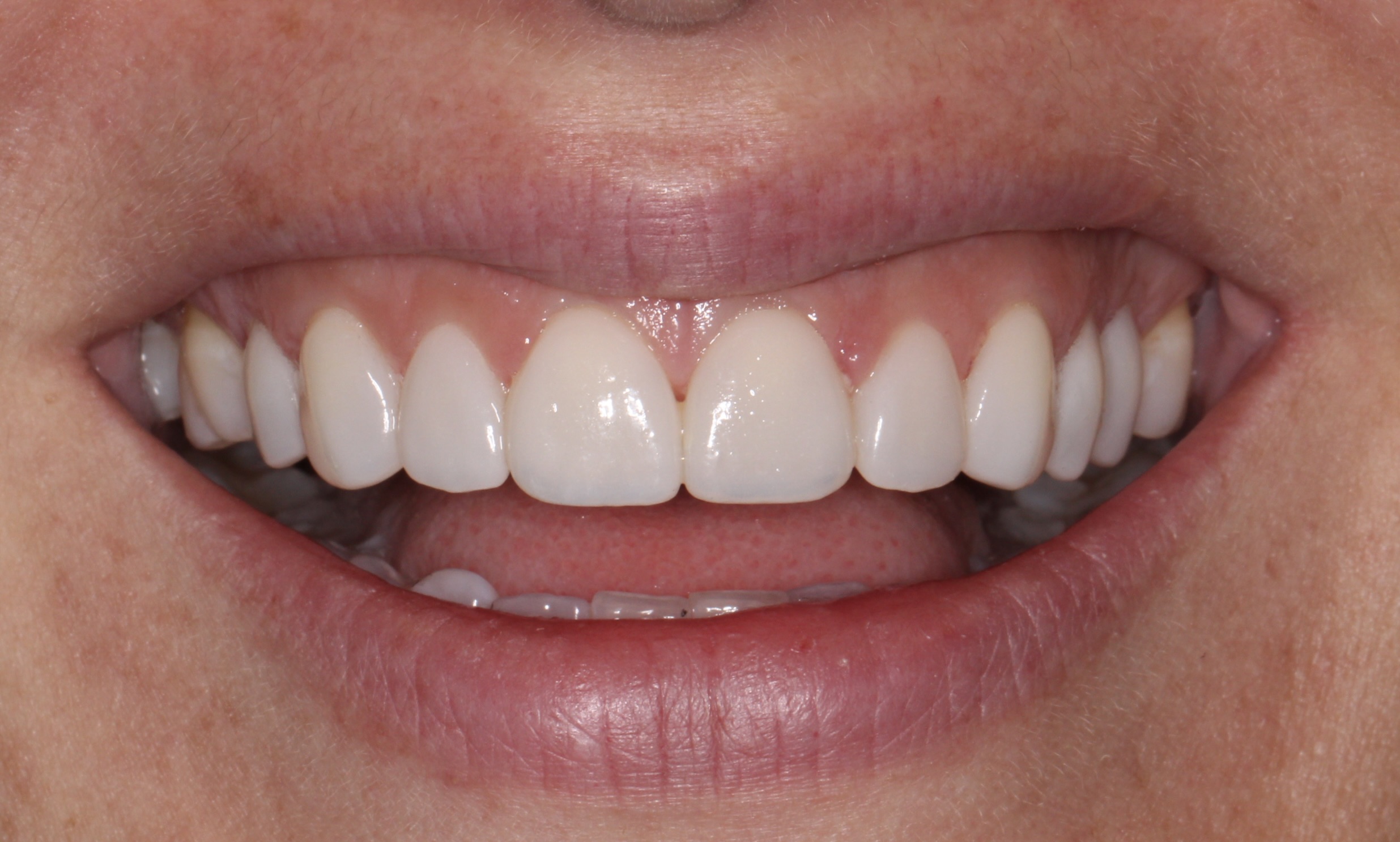
Many of my veneer patients begin with the same words: “I don’t want Chiclets.” I am always glad to hear it. My style is natural beauty. Most of my patients do not want stark, super-white teeth either. They want a smile that is brighter and more refined, one that enhances their face rather than overpowers it.
Well-made porcelain can be difficult to distinguish from natural enamel. Porcelain veneers look artificial when the design, the preparation, or the ceramic work ignores how natural teeth look in a particular face.
Bulk. Veneers placed without enough room become thick. The teeth look pushed forward, the lips can feel full, and the edges at the gumline look heavy. This is one reason no-prep veneers suit some smiles and not others.
Color. Veneers that are too white, or made in bleach shades, look fake.
Opacity. Natural enamel is translucent, especially toward the edges, and its color shifts subtly from one area of the tooth to the next. Veneers that are too opaque or monochromatic read as flat under any light, however carefully the shade is chosen.
Material. Porcelain reproduces the depth and luster of natural enamel. Composite resin cannot match that depth, and it tends to dull and stain over time.
Uniformity. Natural teeth are not identical. The central incisors are dominant, the laterals are smaller and softer in form, and the canines have a character of their own. Identical shapes and a perfectly straight edge line look manufactured.
Proportion. Teeth that are too long, too square, or out of proportion with each other or with the lips rarely look natural, even when every veneer is well made.
The gumline. Veneers sit within the frame of the gums. Uneven gum levels, inflamed tissue, or margins that do not blend leave a visible border between porcelain and tooth.
A natural smile begins with the face, not the teeth. I evaluate the face as a whole: its shape and proportions, the lips at rest and in a full smile, the facial midline, how much of the teeth show in speech, and many other factors that make each smile individual. Tooth length, shape, and position follow from those relationships.
The bite is part of the same design. The edges of the front teeth guide how the jaw moves, so their length and angle are set for esthetics and function together. A veneer that looks right but interferes with the bite is more likely to chip or come off.
The design is then tested in the mouth. A mockup and the provisional veneers allow me to evaluate proportion, length, speech, and the bite before the final porcelain is made. Preparation stays as conservative as the design allows, which I explain in do veneers damage your teeth?
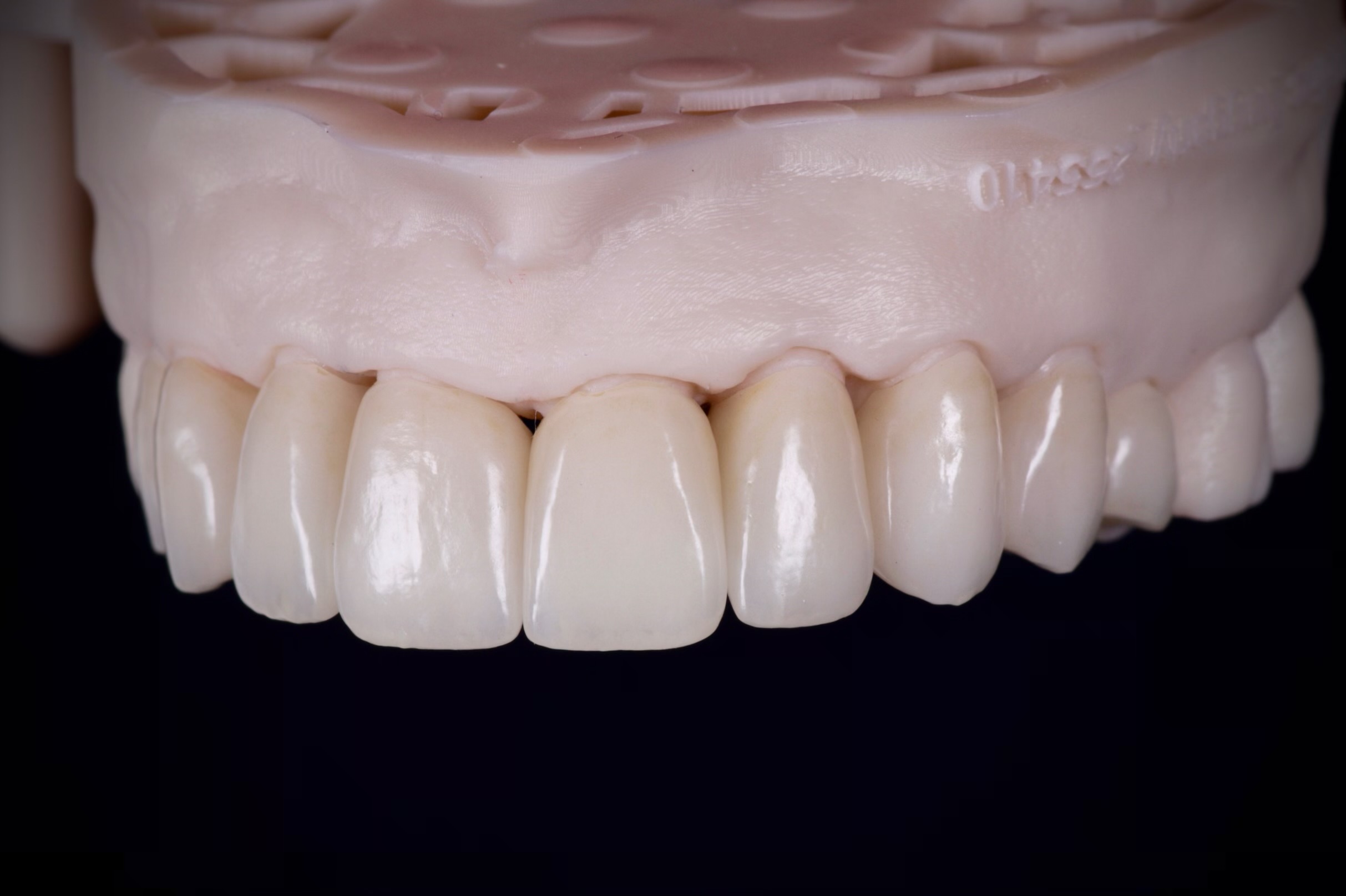
Natural teeth are layered: a more opaque core, translucent enamel, subtle shifts in color from the gumline to the edge, and surface texture that scatters light. Reproducing that is the work of a skilled ceramist.
I direct the design, and the veneers are crafted by a master ceramist. The photographs, the design, and what is confirmed in the provisionals all carry into the final porcelain.
Bright enough to look fresh, natural enough to belong to the face. Skin tone, the eyes, the lips, and the color of any teeth not being restored all guide the shade. With the right translucency and surface character, a bright shade still looks natural. Without them, the same shade looks painted.
Often, yes. Depending on the problem, correction may involve reshaping, replacing some or all of the veneers, treating the gum tissue, or adjusting the bite. The evaluation determines what caused the artificial look and what the teeth underneath allow. I cover related questions in when veneers need replacement and how veneers and crowns are chosen.
Results and treatment needs vary from patient to patient. This article is for educational purposes only and does not replace an individual clinical examination, diagnosis, or treatment recommendation.