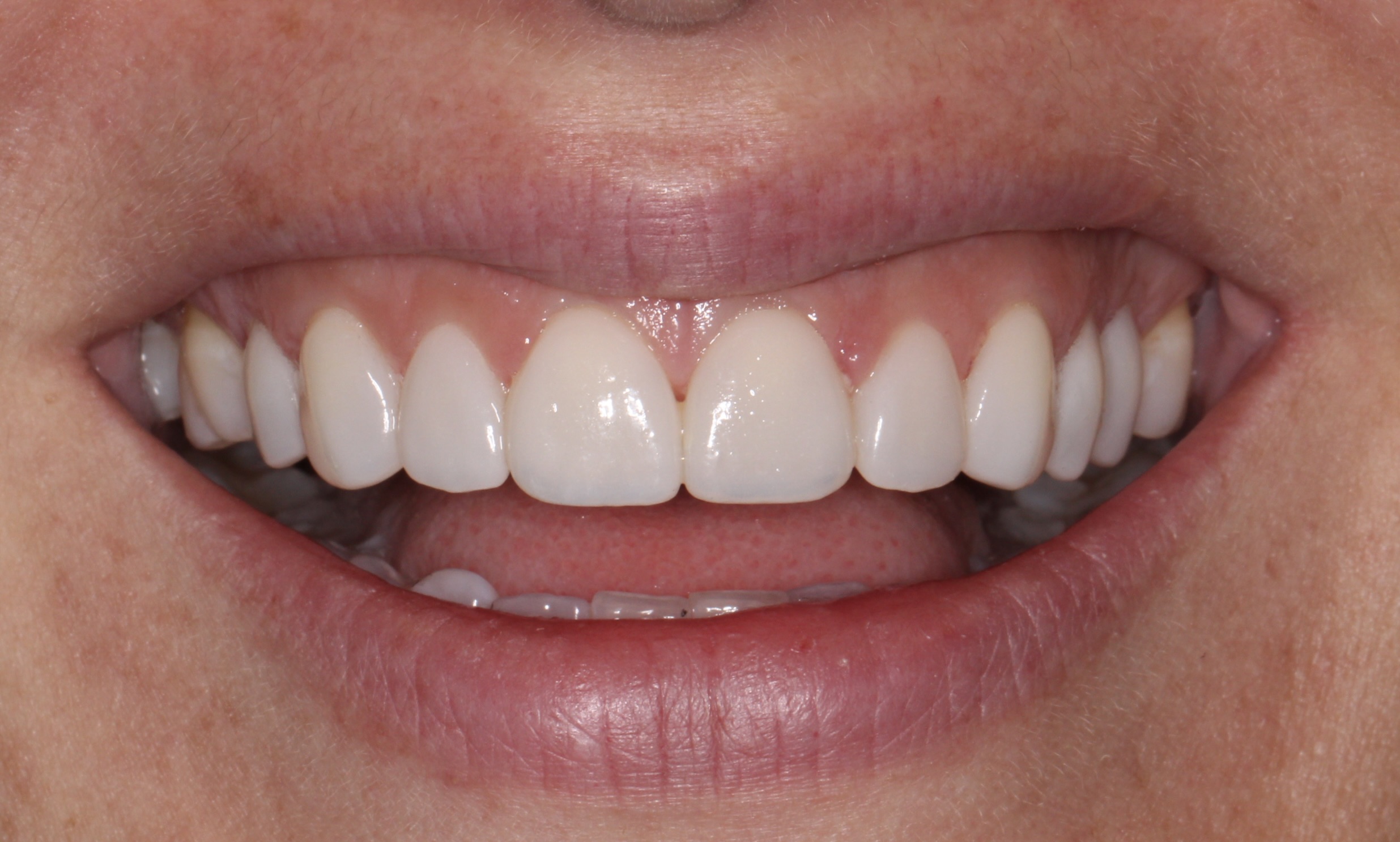
Why Is There a Dark Line Around My Crown?
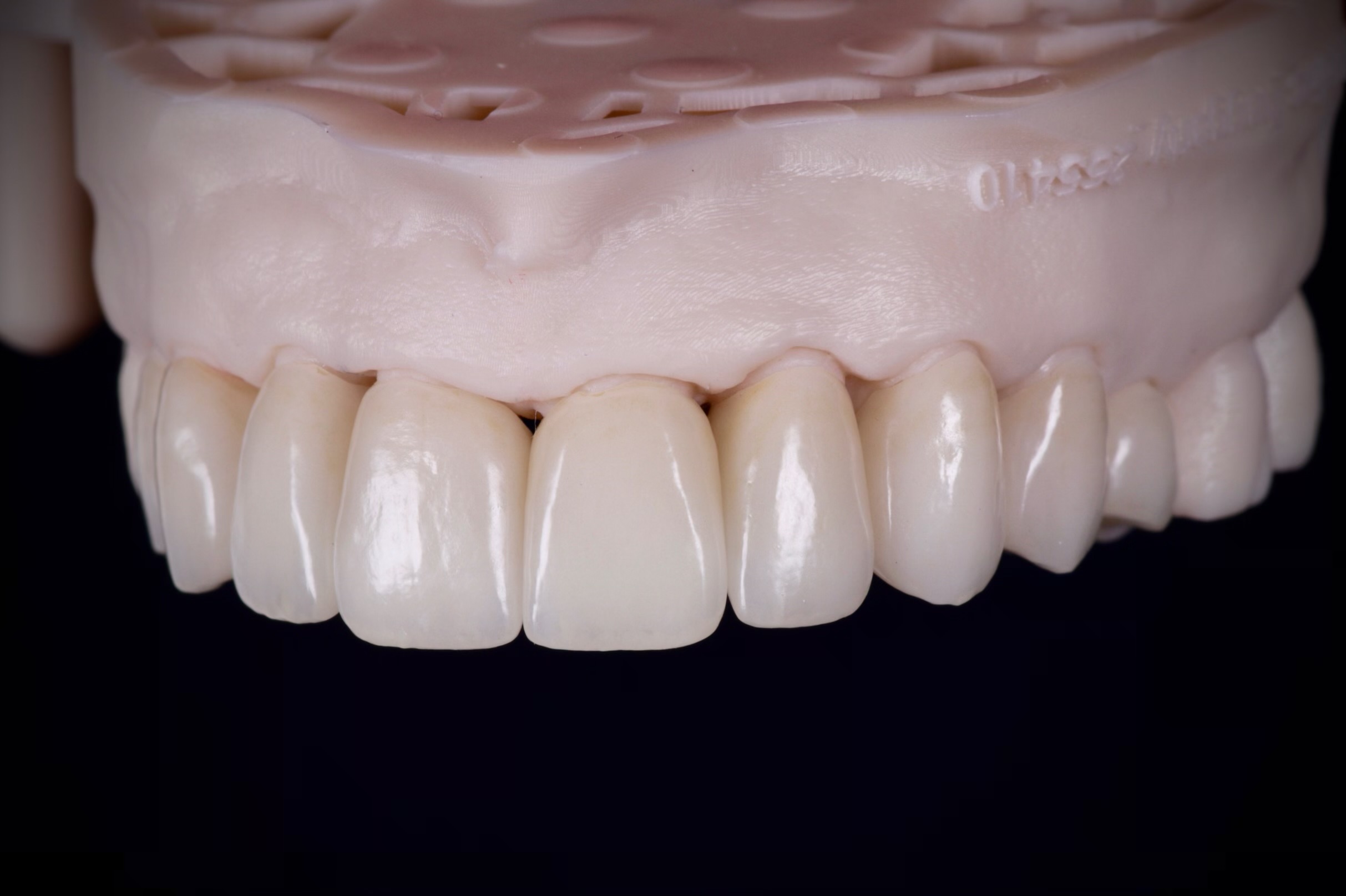
A dark line where a crown meets the gum is one of the most common reasons patients ask about older dental work. It is often noticed in a photograph or a close mirror, and the first worry is usually decay.
Decay is one possible cause, but not the only one. The line can come from the crown itself, from the tooth underneath, or from changes in the gum. Identifying which one determines whether the crown needs attention and how it should be replaced.
A metal edge. Many older crowns are porcelain fused to metal. The metal can show as a gray or dark band at the edge of the crown, and thin gum over metal can take on a gray tint even when the edge is hidden.
Gum recession. When the gum recedes, it can expose the edge of the crown or the root surface beneath it. Roots are darker than enamel, and the junction becomes visible.
A darkened tooth or post. A tooth that has had a root canal can darken over time, and a metal post inside it can show through thin root and gum. Even an all-ceramic crown can look dark at the gumline when the tooth underneath is dark.
Decay, an open margin, or stain. The junction between crown and tooth can collect bacteria and stain. Recurrent decay at the margin may appear as a dark line and needs prompt evaluation, because it can progress beneath the crown without symptoms.
I evaluate the crown margin, the gum tissue, and the tooth, and I take radiographs to assess the fit of the crown and the tooth beneath it. If the tooth has had a root canal, its condition and any post are part of the assessment.
When the line comes from decay, an open margin, or a failing tooth, treatment is a clinical necessity, and the condition of the tooth guides what comes next.
When the line is esthetic, from a metal edge or an exposed margin, replacement is a decision about appearance. All-ceramic crowns avoid a metal edge, and the new margin can be placed in harmony with the gum. When the tooth underneath is dark, the ceramic and the preparation are designed to mask it, which is part of choosing the right material.
Recession may call for gum treatment before the new crown, so the tissue frames it well. A new crown on unhealthy tissue rarely looks natural for long.
When several crowns show the same line, they are worth evaluating together. Older crowns often share the same age, material, and gum changes, and a coordinated plan gives a more consistent result. I explain how restorations are chosen in veneers or crowns, and you can read more about crowns and bridges.
Results and treatment needs vary from patient to patient. This article is for educational purposes only and does not replace an individual clinical examination, diagnosis, or treatment recommendation.