Can Changing Your Bite Cure TMJ? What the Evidence Actually Shows
Patients with jaw pain are sometimes told that their bite is the cause.
They may then be offered occlusal adjustment, orthodontics, crowns, or extensive reconstruction as a way to correct the bite and treat TMD.
The relationship is more complex.
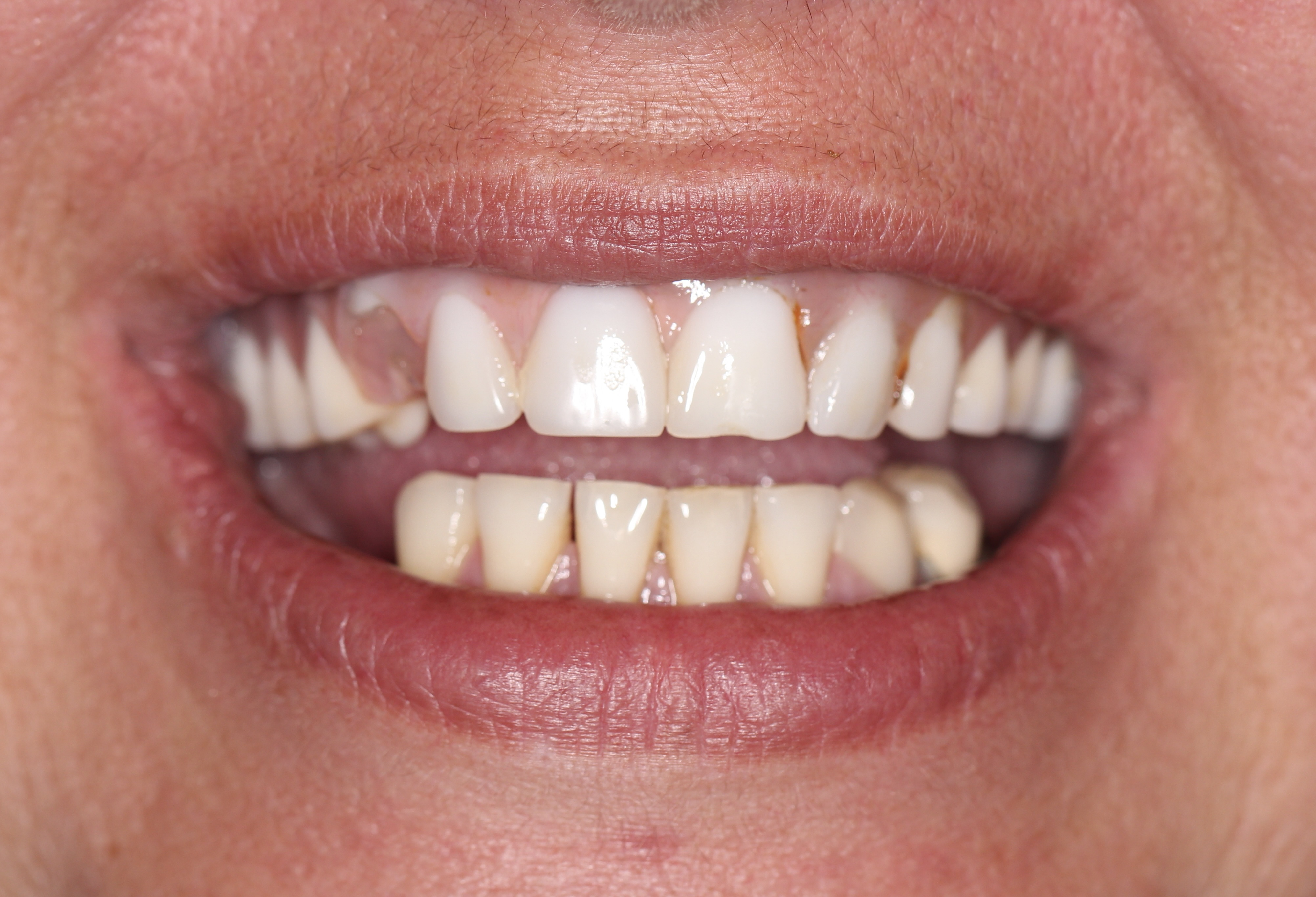
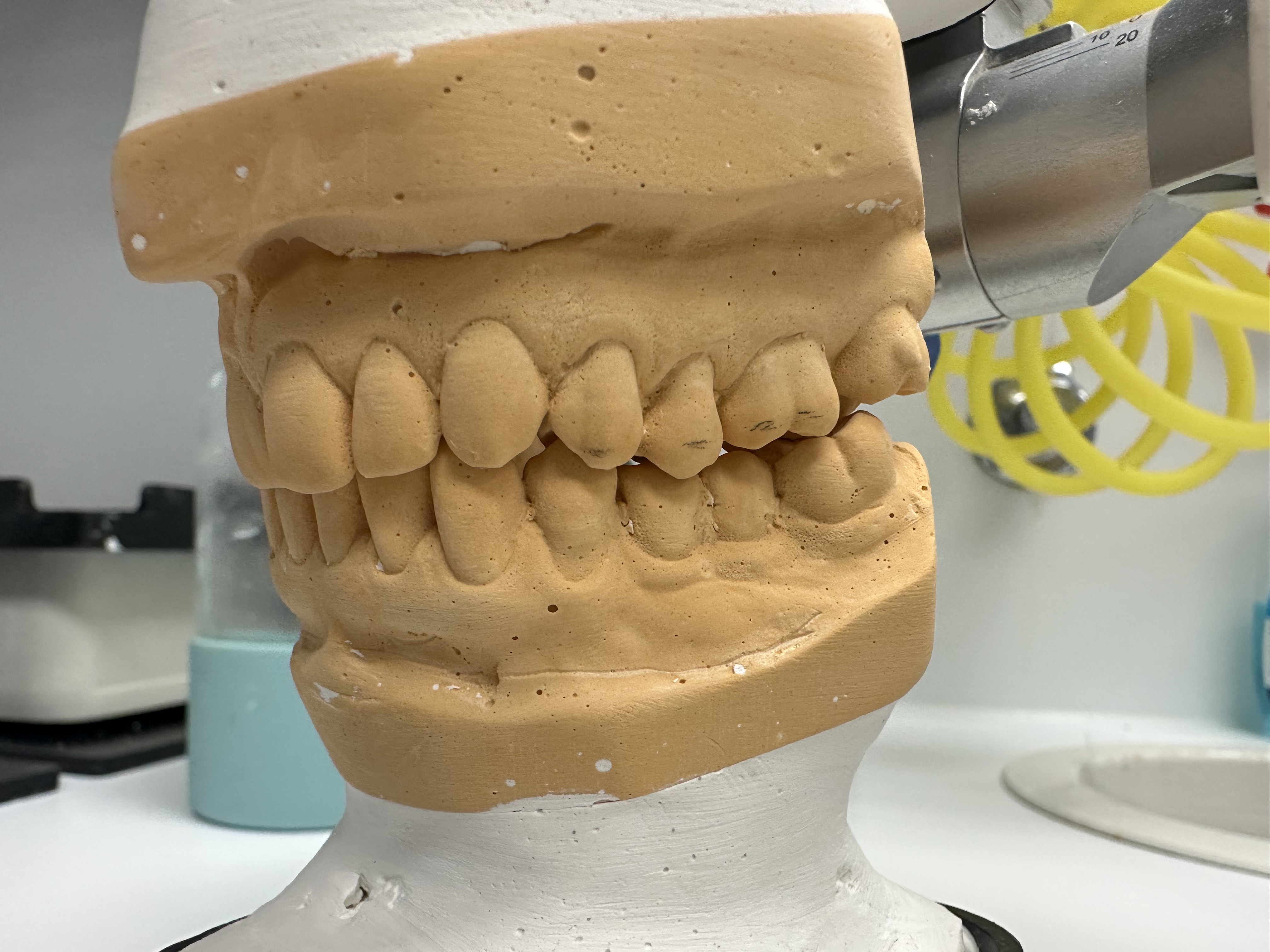
Occlusion, the way the teeth meet, is important in dentistry and particularly important in prosthodontic diagnosis and treatment planning. But finding an imperfect bite, or malocclusion, does not by itself establish why a patient has TMD.
Temporomandibular disorders can involve the joints, muscles, pain-processing systems, parafunctional behaviors, trauma, systemic conditions, and other contributors. More than one factor may be present in the same patient.
A patient can have TMD and an imperfect bite.
A patient can have significant tooth wear and no jaw pain.
And a patient can have an apparently well-aligned bite and still develop TMD symptoms.
The relationship between occlusion and TMD has been debated and studied for decades. The literature has not supported a single occlusal explanation for every TMD patient, but that does not make occlusion clinically irrelevant.
In an individual patient, the relationship among joint position, jaw movement, muscle function, and tooth contacts may be an important part of the diagnosis.
This is territory I studied directly. My master's research was a randomized clinical study of stabilization splint therapy followed by either occlusal adjustment or a mock procedure in patients with TMD, assessed using established dysfunction indices. Patients improved with splint therapy, and the group that received occlusal adjustment showed a measurable difference compared with the mock group.
That was a small study, and its findings do not establish occlusal adjustment as a general treatment for TMD. Current evidence does not support routinely changing the teeth or bite to treat TMD pain.
Those findings became part of the clinical framework I have continued to refine as the evidence on TMD, occlusion, muscle function, and pain has evolved.
A newly placed crown may be noticeably high.
A fractured or missing tooth can change dental contacts.
Progressive tooth wear can alter tooth anatomy and available restorative space.
Loss of posterior support can become part of the functional and restorative problem.
And an occlusion that does not coordinate with a comfortable, reproducible jaw relationship can itself become clinically important.
These are dental, occlusal, and prosthodontic findings. They are diagnosed through the examination rather than inferred from pain alone.
When significant jaw symptoms are present and the relationship among the joints, muscles, jaw position, and tooth contacts is still being evaluated, reversible treatment can provide useful information before the teeth are altered.
Depending on the diagnosis, that may include conservative management, physical therapy, or, in selected patients, a carefully designed stabilization appliance.
The appliance may help alleviate symptoms while allowing me to evaluate changes in muscle tenderness, joint comfort, jaw function, and the repeatability of the patient's closure over time.
The response is clinically useful, but it does not by itself dictate the definitive occlusion.
Structural breakdown is not the only reason a patient may need occlusal or restorative treatment.
Once the joint and muscles are more comfortable and a reproducible jaw relationship has been established, the existing teeth may not meet appropriately in that position.
As the patient closes into the existing bite, the tooth contacts may guide the lower jaw away from the established position. When that discrepancy is clinically significant, the muscles and joints may again have to accommodate the tooth-determined position.
The teeth may be intact even when an occlusal problem is present. A discrepancy alone, however, does not establish that the bite caused TMD or that irreversible treatment is needed.
A particularly clear example can occur after TMJ surgery or disc repositioning. The relationship of the lower jaw may change, while the existing teeth still reflect the previous occlusion. The occlusion may then need to be re-established so the teeth function appropriately with the postoperative jaw relationship.
The treatment depends on the magnitude and nature of the discrepancy.
Some patients may be managed with selective occlusal adjustment. Others may require orthodontic treatment, restorative treatment, or a combination. When the discrepancy involves much of the dentition and cannot be managed predictably with limited treatment, full-mouth reconstruction may be indicated.
Centric relation can provide a reproducible reference for diagnosis and restorative planning in appropriate cases.
I use it as a clinical reference for evaluating the relationship between the jaw and the teeth and for planning an occlusion when the diagnosis calls for it. It is not a claim that one jaw position explains every TMD.
What matters is whether the position is clinically appropriate and reproducible for that patient and whether the existing occlusion is compatible with it.
Changing the bite is not a universal treatment for TMD.
But neither is the bite irrelevant.
The clinical question is whether the examination identifies an occlusal relationship that is contributing to the patient's functional problem or needs to be corrected so the joints, muscles, and teeth can function together appropriately.
When it does, treating the occlusion is not an experiment for unexplained pain. It is treatment of a diagnosed occlusal problem.
Results and treatment needs vary from patient to patient. This article is for educational purposes only and does not replace an individual clinical examination, diagnosis, or treatment recommendation.