
Full Mouth Reconstruction With Full-Arch Implants for a Smile She Had Stopped Showing
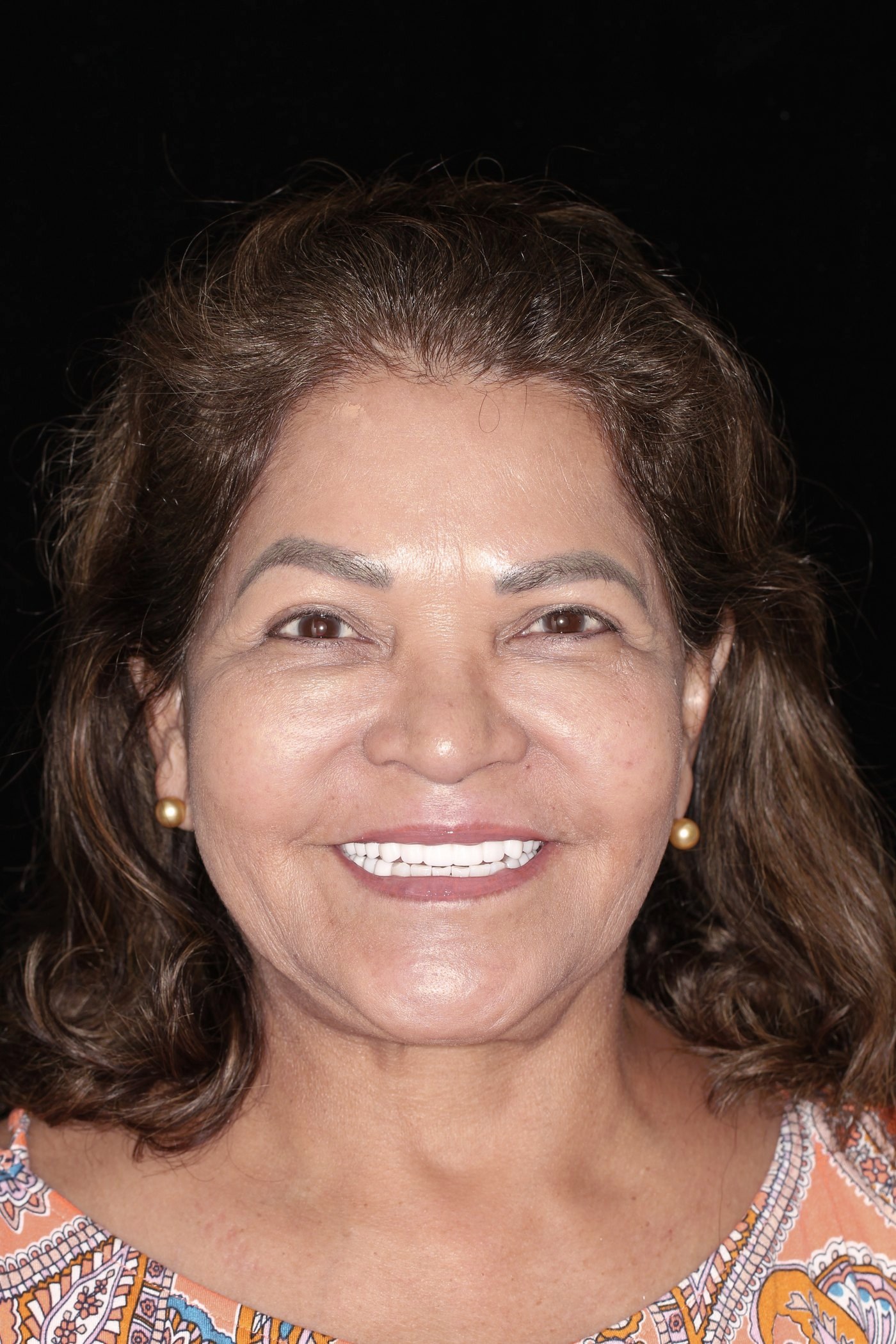
She came in asking for new front teeth. Behind that request were a collapsed bite, an uneven occlusal plane, and failing teeth, rebuilt as a full mouth reconstruction with an upper full-arch implant restoration in monolithic zirconia.

The Challenge
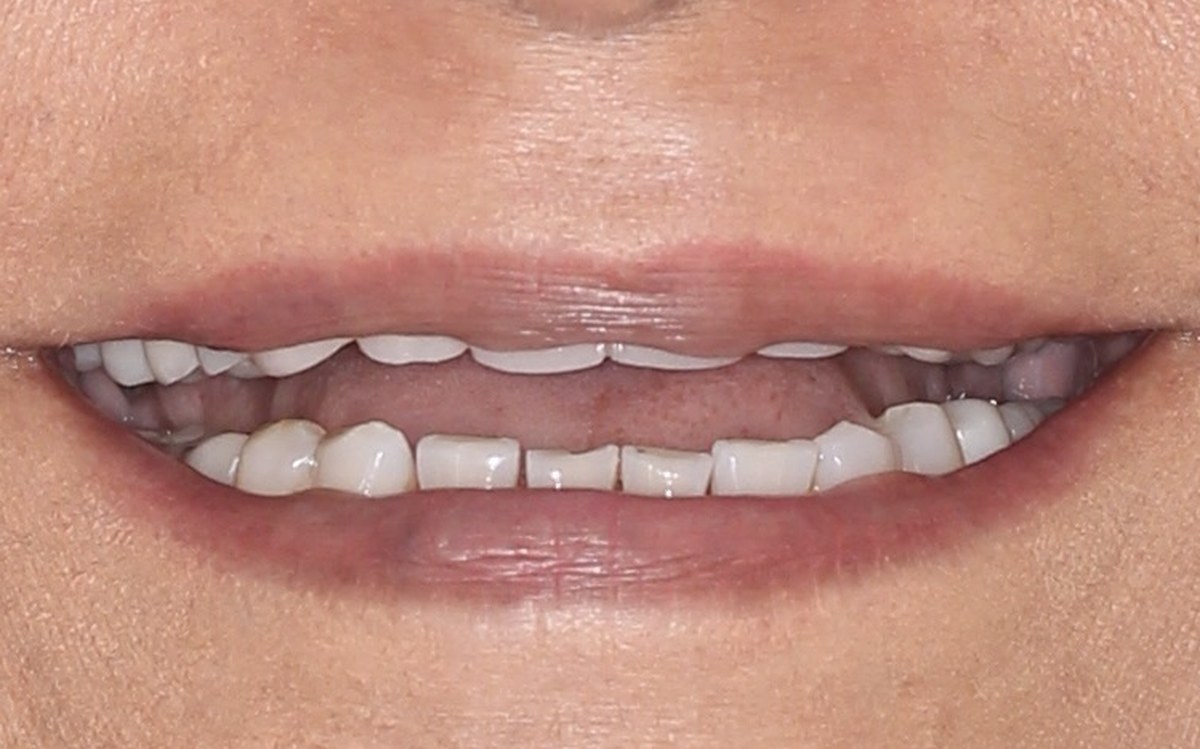
She was 70 when her dentist referred her to me. Her upper front bridge was failing and had been temporarily recemented, and the tooth holding it could not be saved. Her dentist had begun planning to replace it with an implant bridge, but what she wanted was a smile she could show again. “I don’t like my piano key teeth,” she told me. “I don’t smile because it looks like I forgot my dentures at home.”
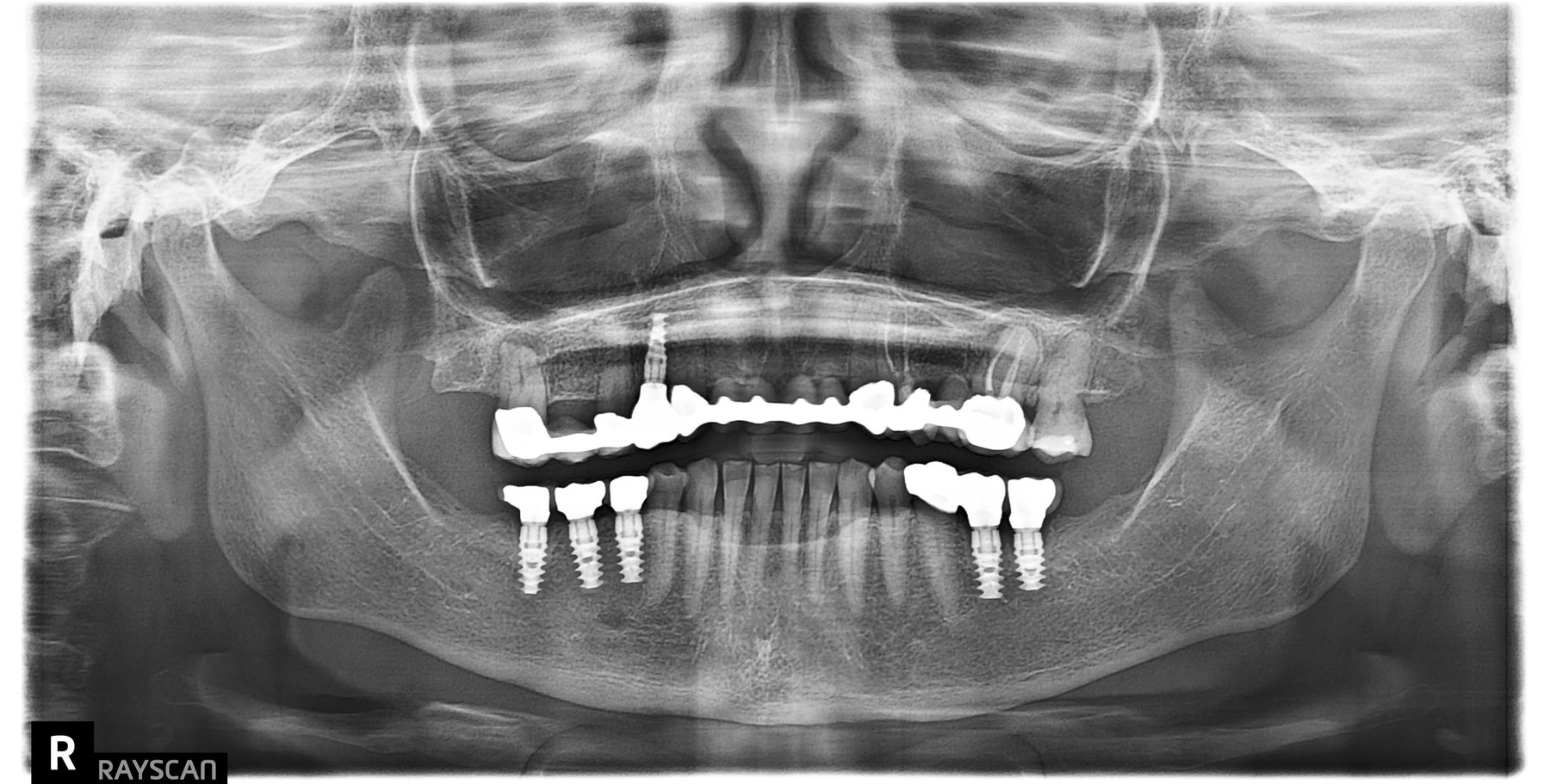
Her dental history was long: extractions, crowns, bridges, root canal treatments, periodontal maintenance, implants, and implant-supported crowns. Her lower back teeth had recently been restored with implant crowns after years of missing teeth. She hoped that restoring only her front teeth would give her the smile she wanted.
My evaluation included a CT scan, intraoral scans, radiographs, an analysis of her bite, and photographs. Her concern was her smile, but the cause ran deeper. Years of collapse had cost her bite its height and shortened her lower face. Her occlusal plane was uneven from right to left. Her teeth collided as her jaw moved forward and to the side, and many of her restorations were failing, with recurrent decay, gum breakdown, and infection at the root tips.
Her front teeth were the part she could see. The problem was the bite beneath them, and a new smile needed that bite rebuilt first.
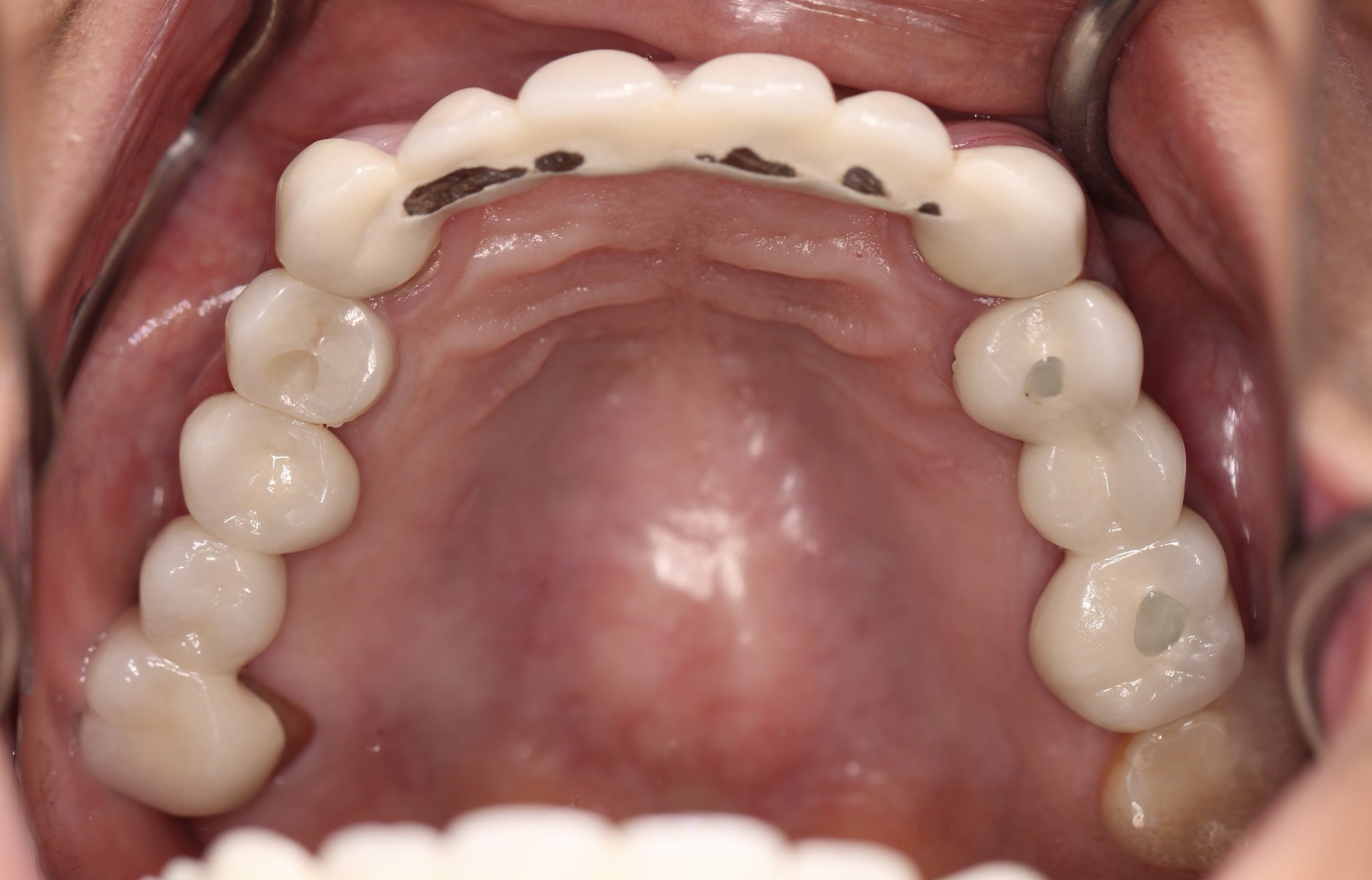
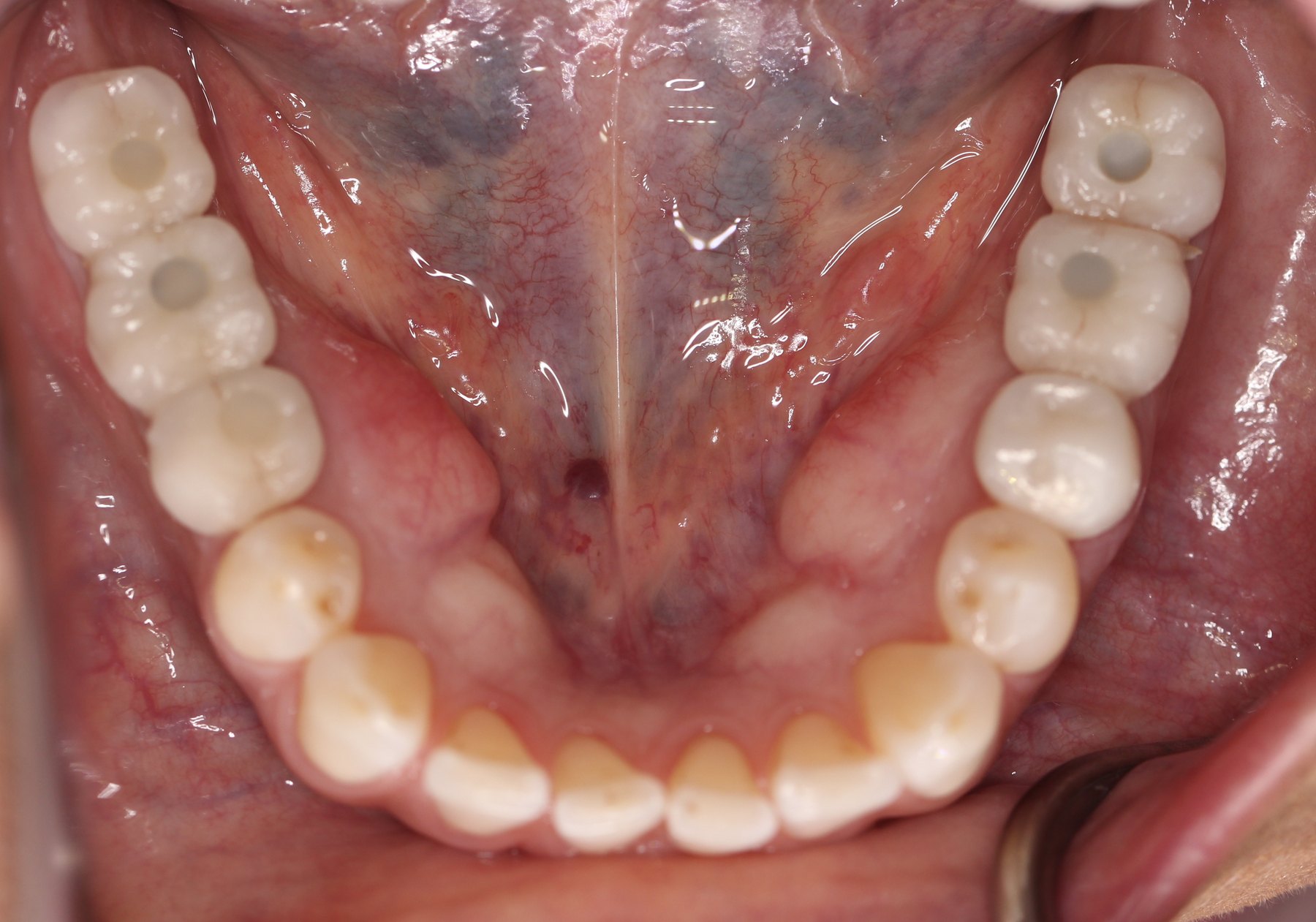
How I Planned It
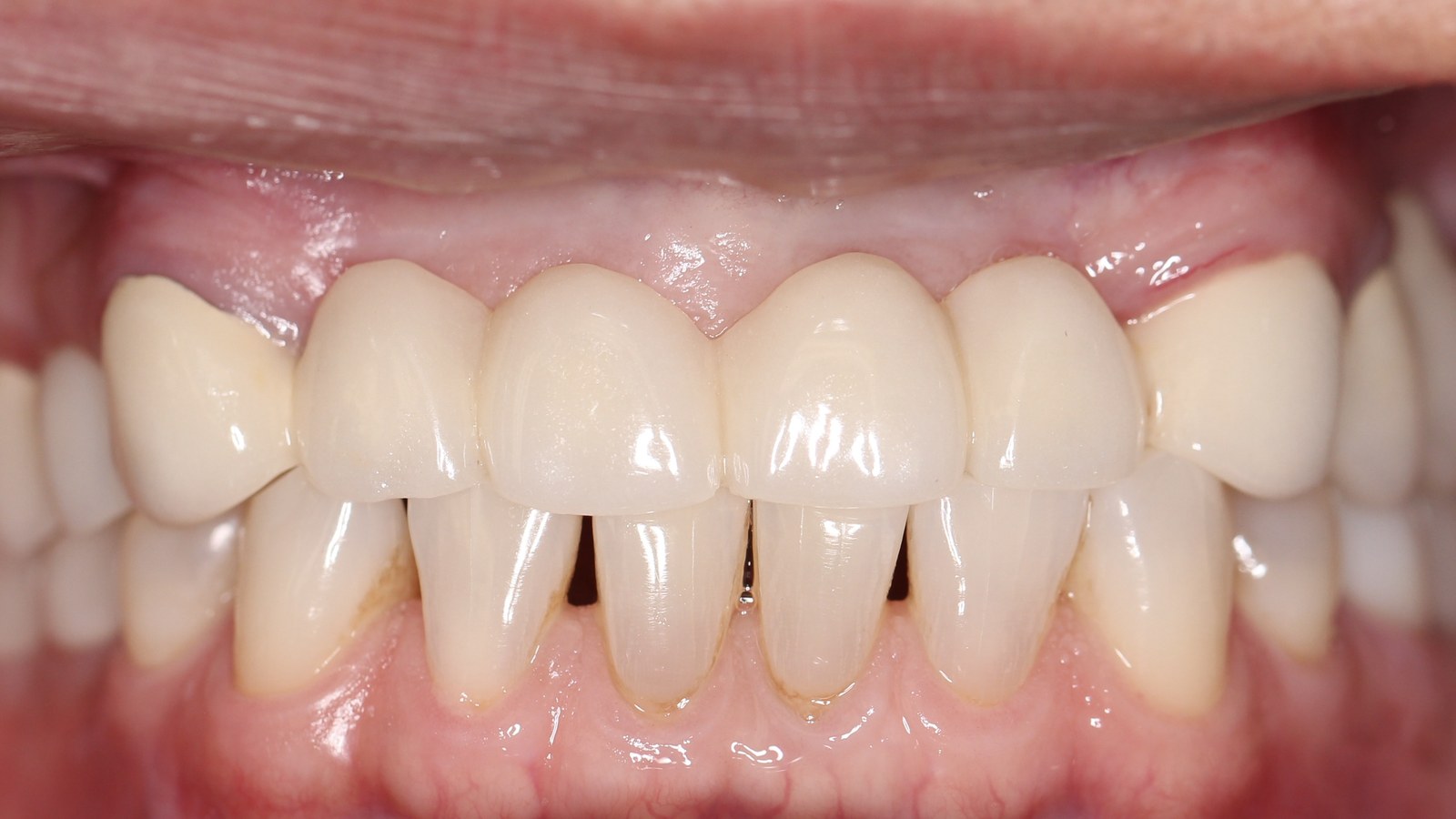
I designed her new smile first. Scans taken in centric relation at the planned bite height became a digital wax-up that set her occlusal plane, her tooth proportions, and her smile line, with a bite in which the front teeth and back teeth protect one another.
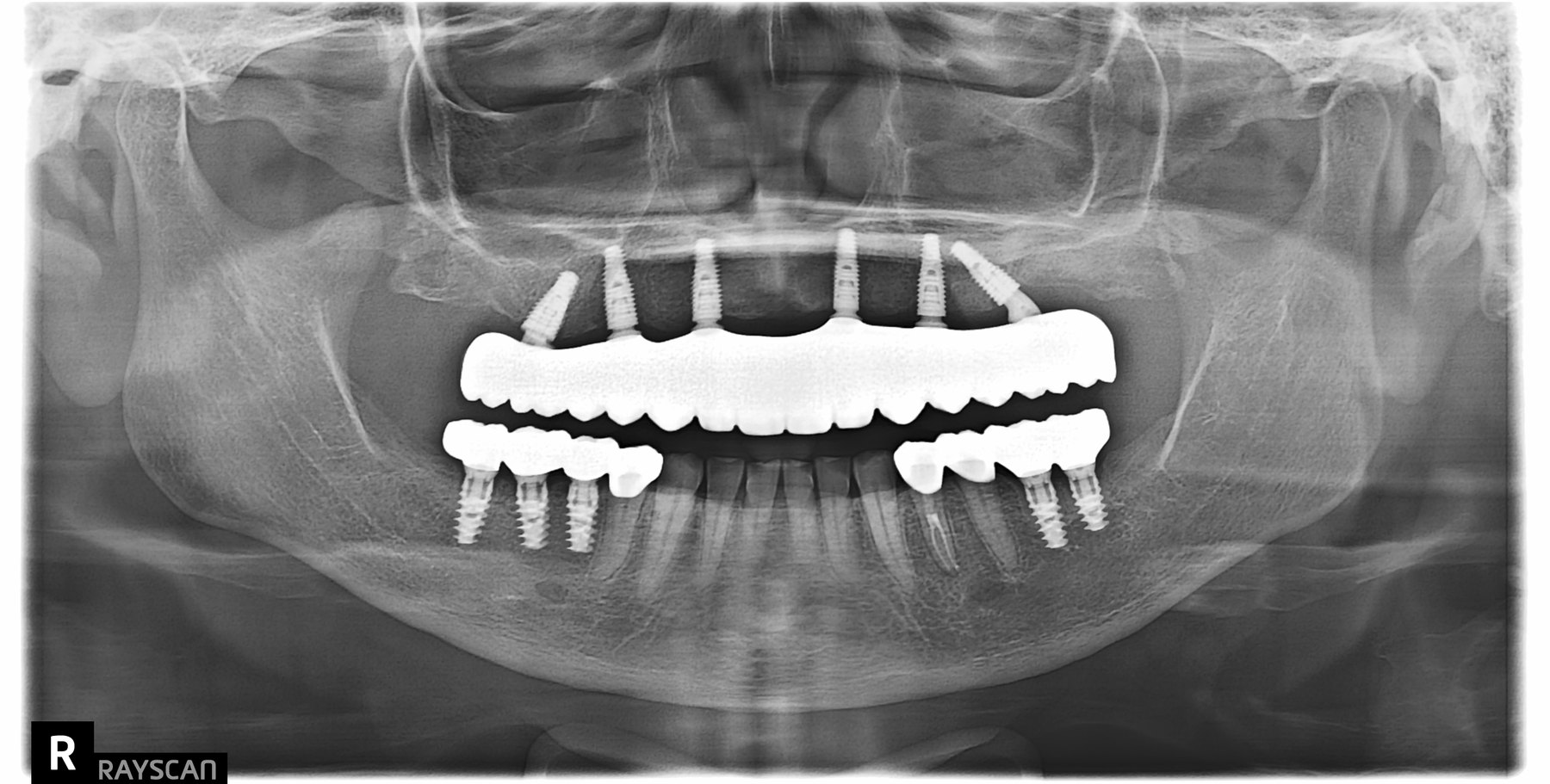
A surgical colleague removed her failing upper teeth and an existing implant, grafted and contoured the bone, and placed six implants in her upper jaw, following the design. She left with fixed provisional teeth the same day.
After healing, I recorded the implant positions with photogrammetry. Lab-processed provisionals then re-established her vertical dimension and refined her occlusion, speech, and esthetics before anything final was made.
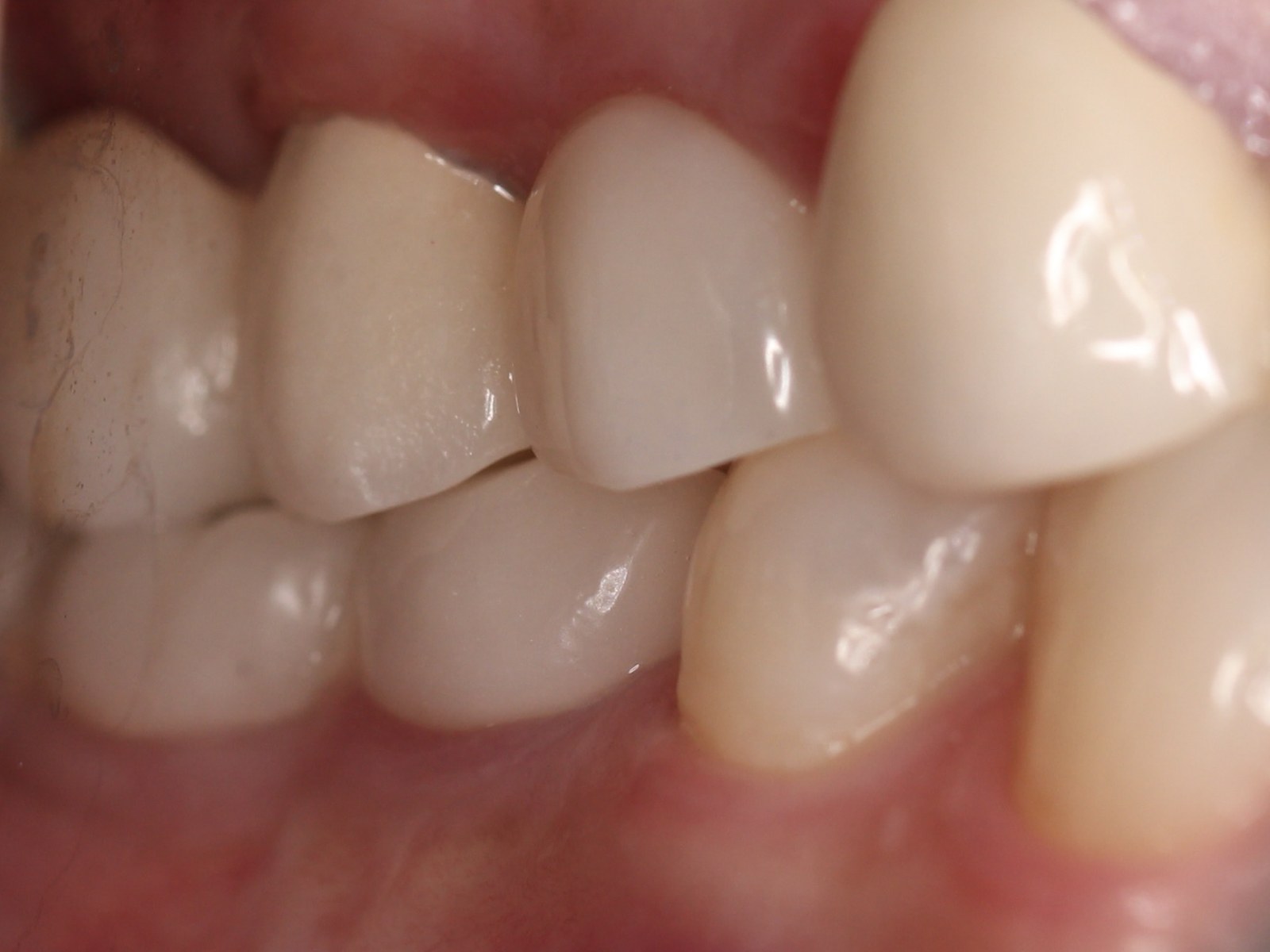
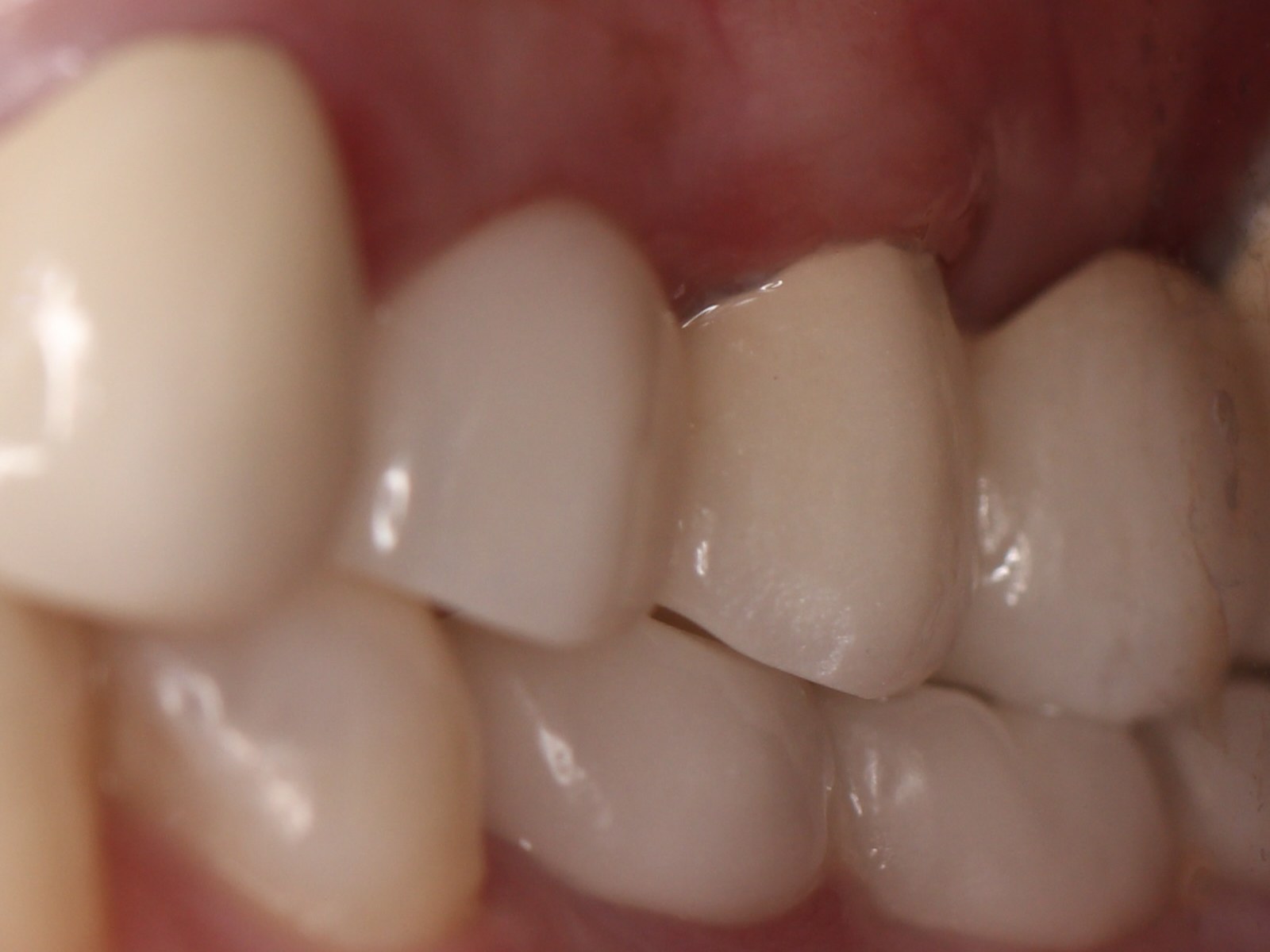
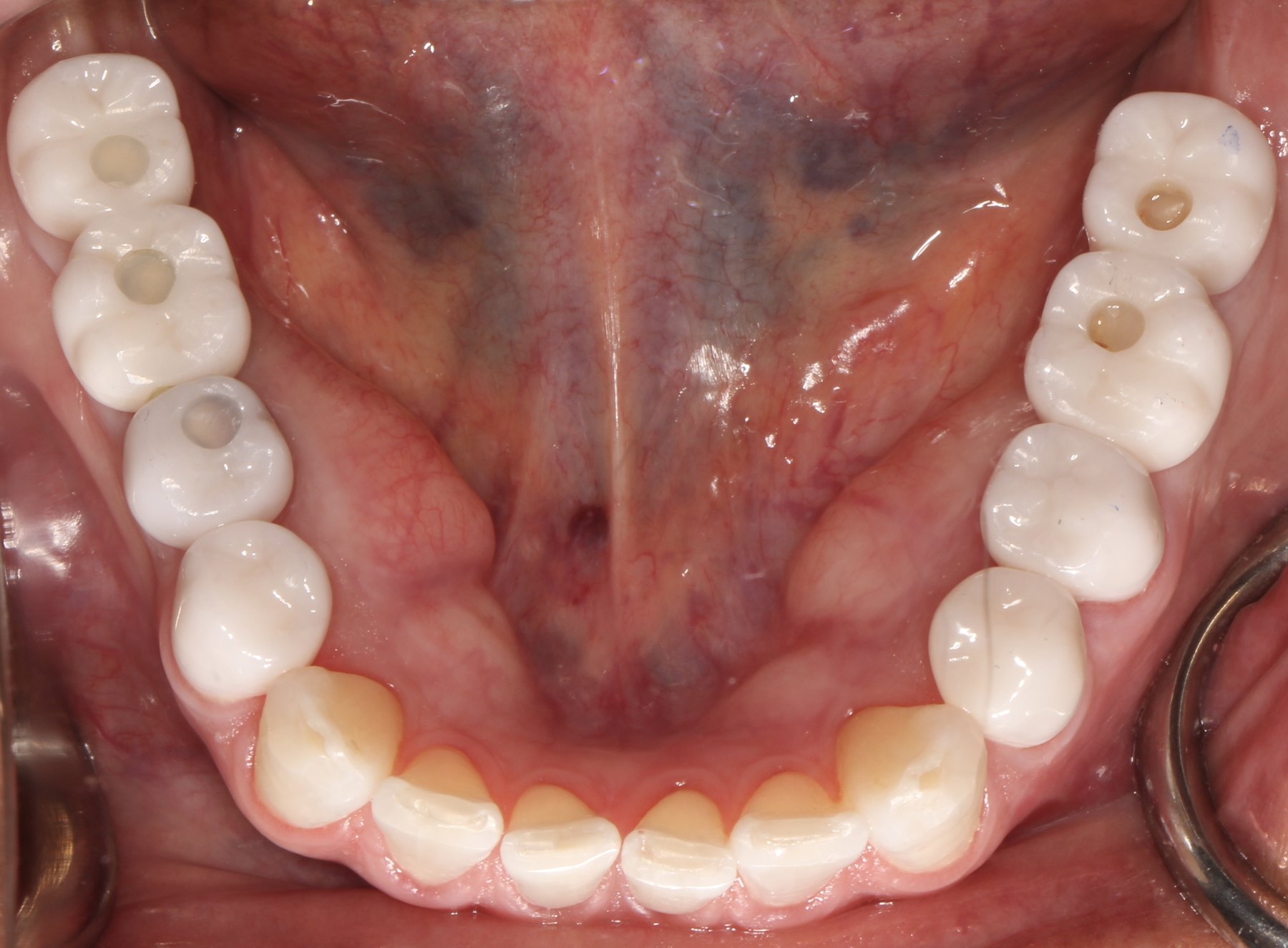
Her definitive upper restoration was made in monolithic zirconia, and her lower back teeth were restored with crowns and implant-supported crowns. At her request, we also whitened her lower front teeth.
The Result
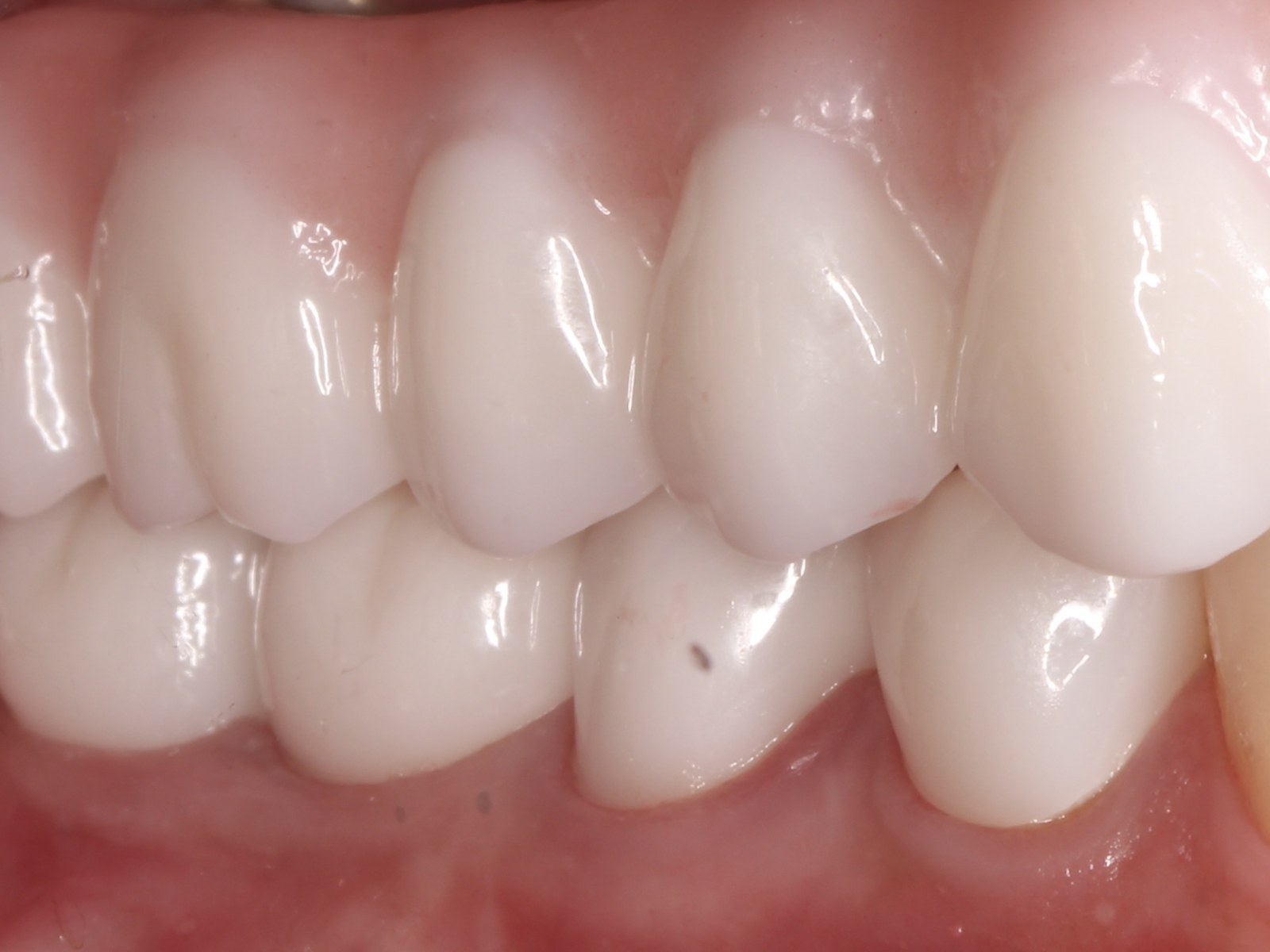
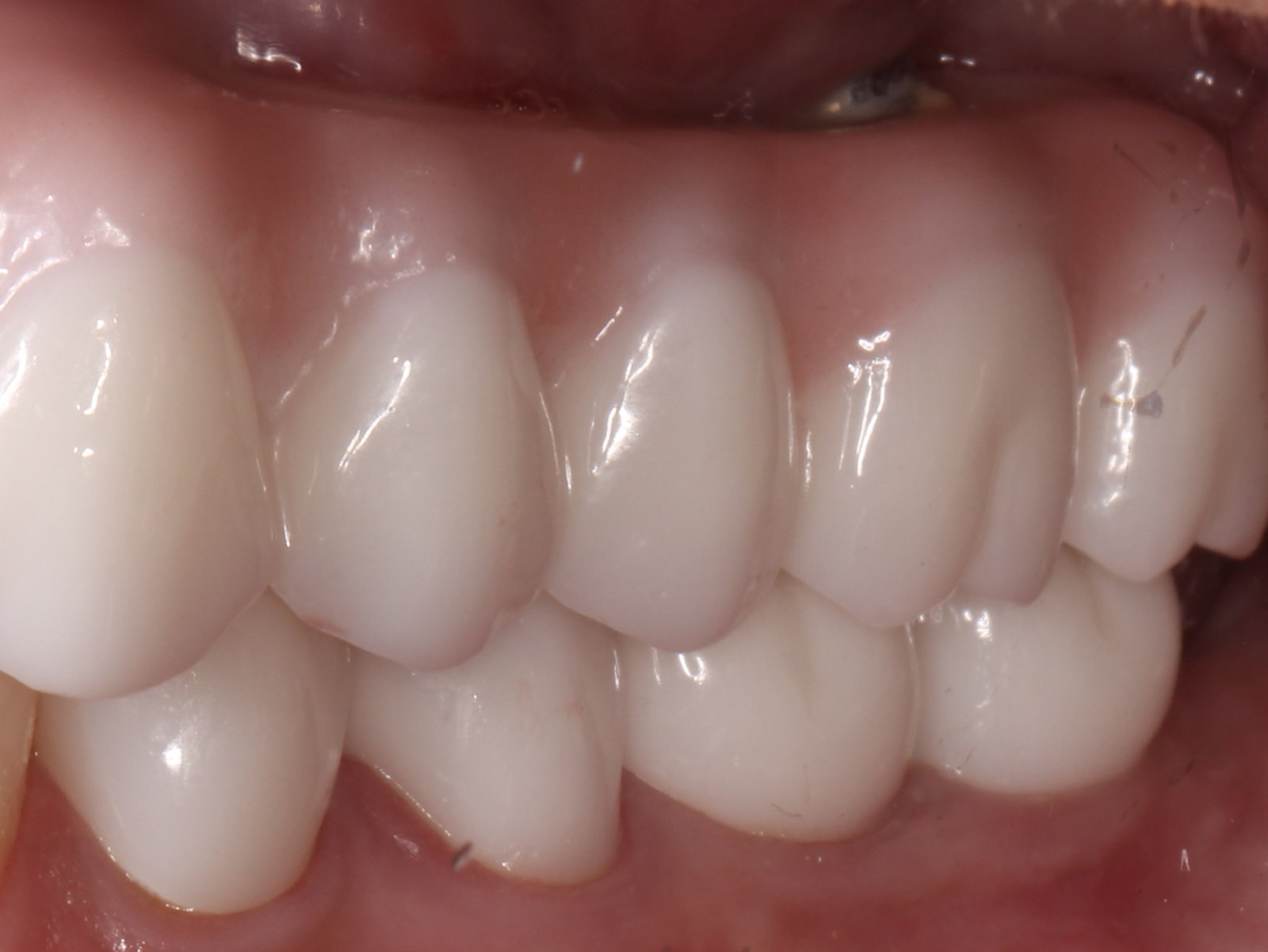
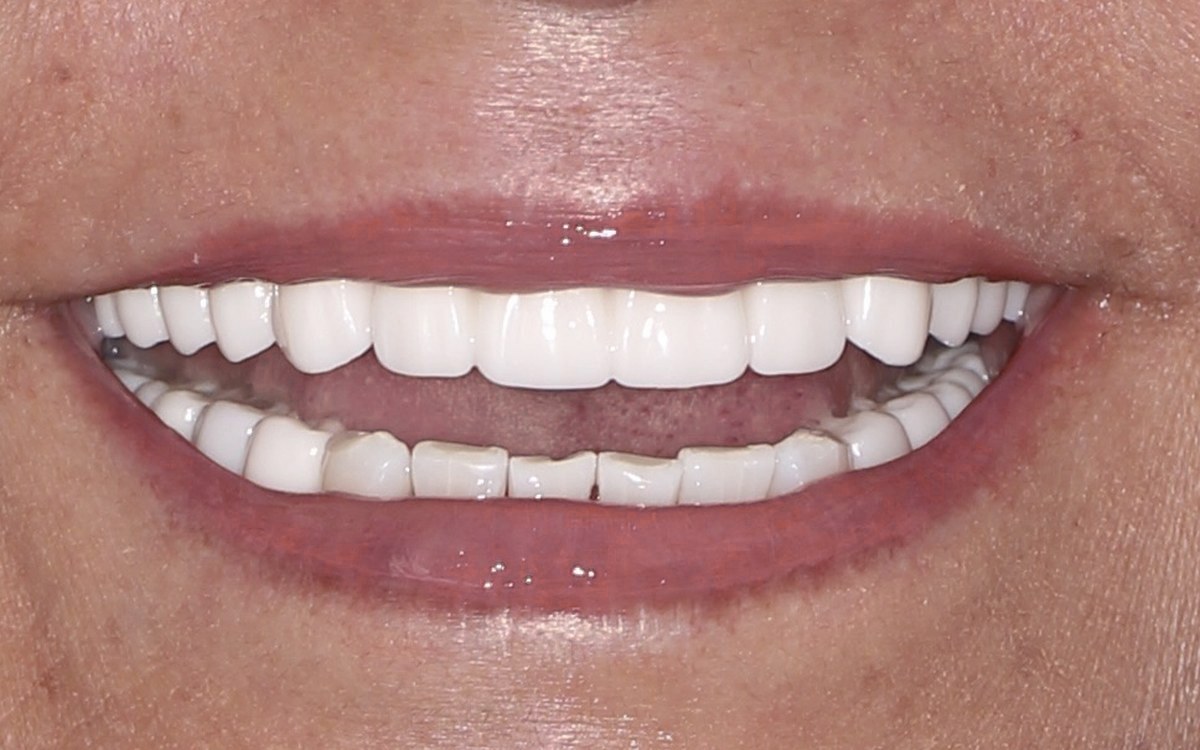
Her full mouth reconstruction restored the height of her bite, leveled her occlusal plane, and gave her teeth in proportion to her face. She adapted well to her new bite. She tells us how comfortable she feels, how natural her teeth look, and how confident she is speaking and smiling again.
She came in asking for new front teeth. She left with a rebuilt bite and a smile she no longer hides.
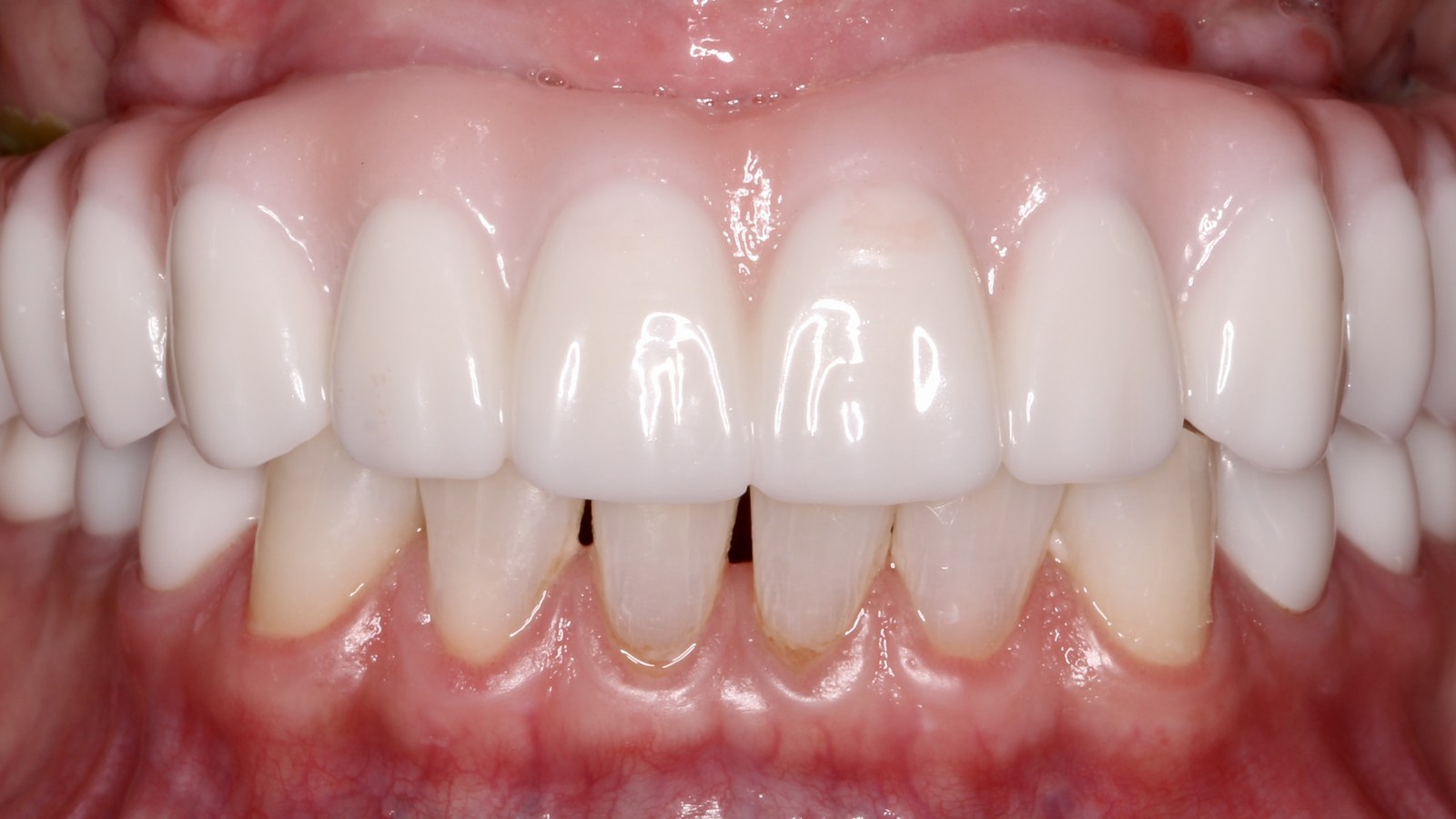
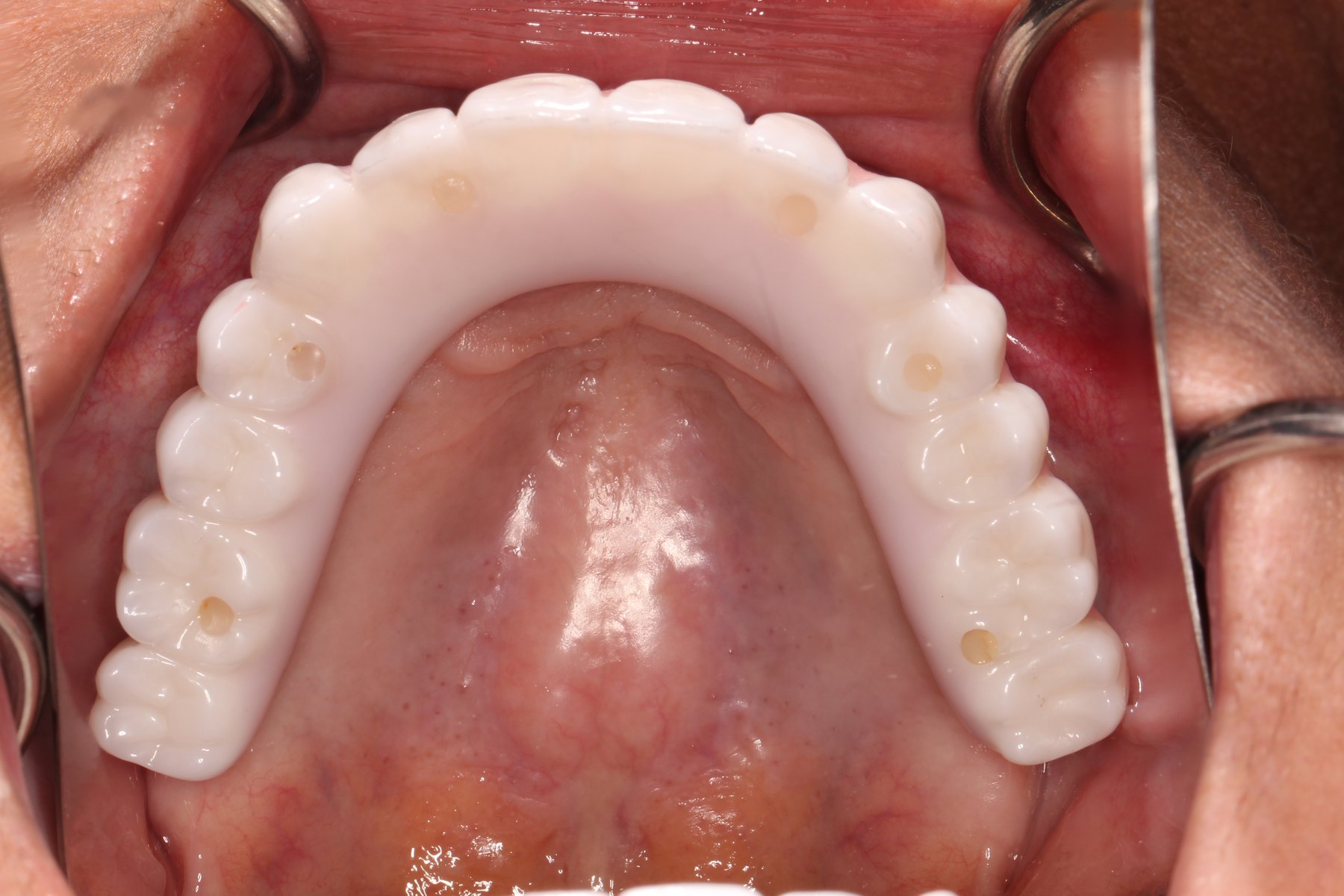
Like anyone with a full mouth reconstruction, she needs daily care, regular maintenance, and periodic evaluation of the implants, the teeth, and the bite.
When a concern looks purely cosmetic, it is tempting to treat only what shows. Lasting results depend on what supports the smile: the bite, its height, the occlusal plane, and the health of the teeth and bone beneath it. A failing front bridge can be the first visible sign of a bite that has been breaking down for years. If you want a better smile and sense that something deeper is wrong, that is a reason to be evaluated as a whole. I explain more about full mouth reconstruction.
Results and treatment needs vary from patient to patient. Photographs are of a patient treated at our practice and are shown with permission. Skin tone in the after photographs is color-balanced to match the before photographs; the teeth are not retouched. This page is educational and does not replace an individual examination, diagnosis, or treatment recommendation.