Full-Arch Implants: Rebuilding a Failing Upper All-on-4 After Twelve Years
A full-arch restoration that had come out, a fractured implant beneath it, and a patient who could not go without teeth. His upper arch was rebuilt in monolithic zirconia, with fixed teeth at every stage.
The Challenge
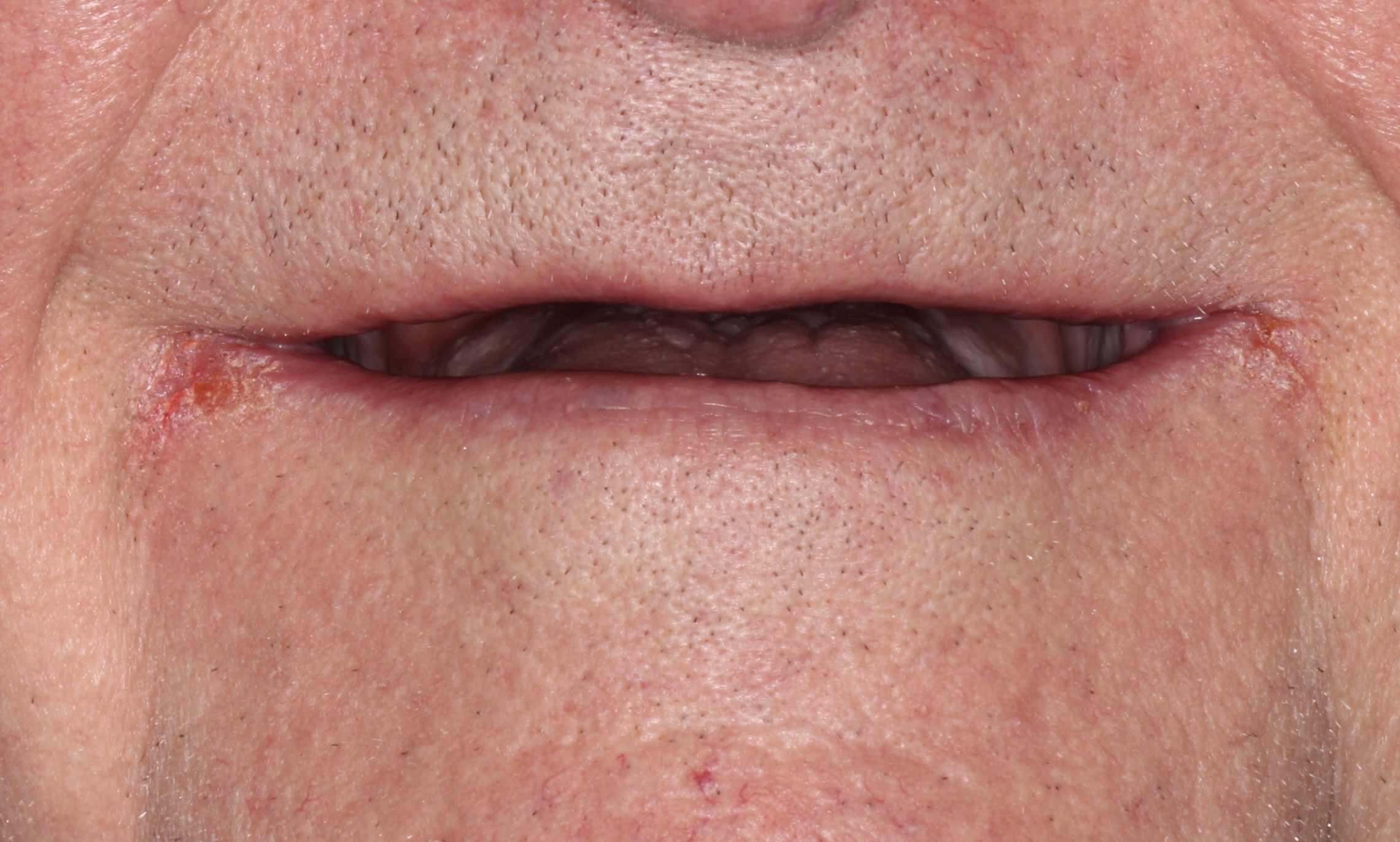
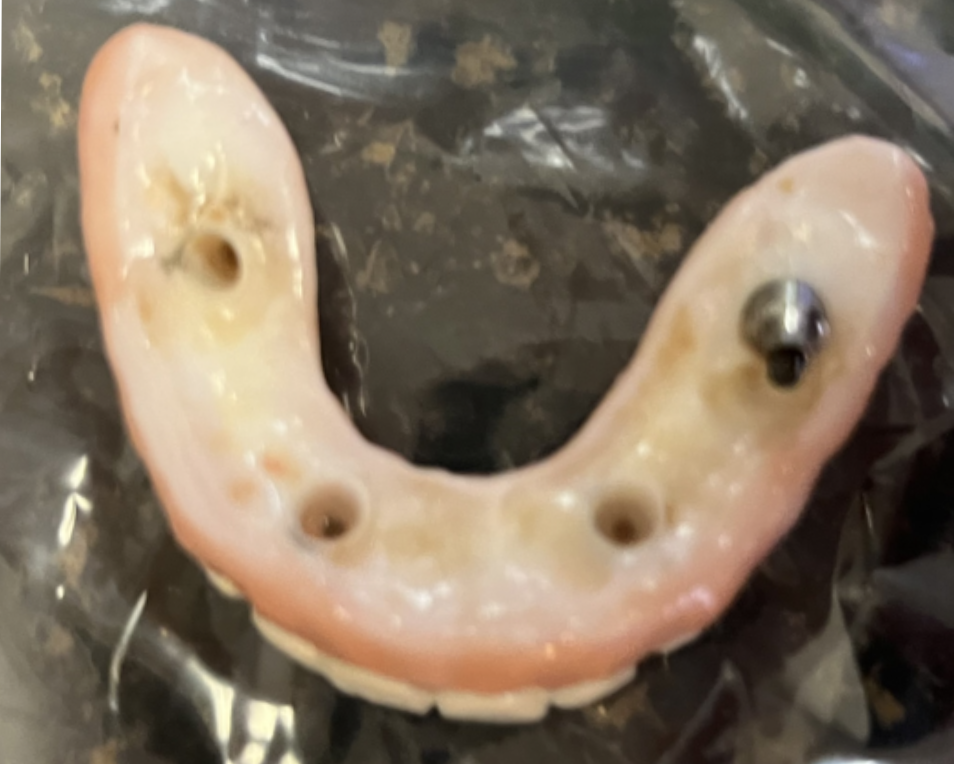
He was 79 when another dental professional referred him to me. About twelve years earlier, his upper teeth had been replaced with a full-arch restoration on four implants, an All-on-4. He arrived holding it in his hand.
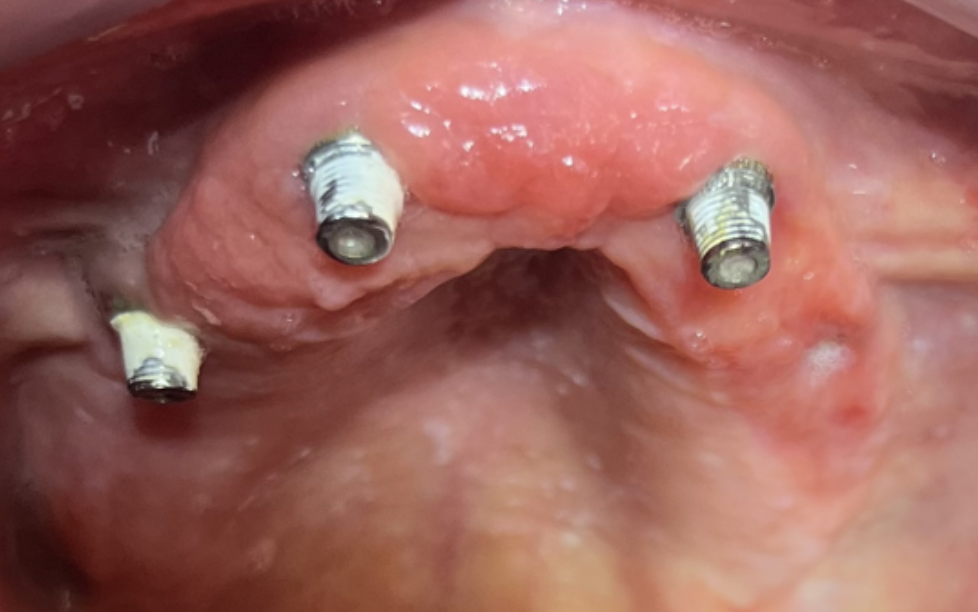
One multi-unit abutment had come out with the restoration, still attached inside it. The other three were still on his implants, but loose. My evaluation included a CT scan and photographs. As I prepared to reseat the restoration, I removed the three loose abutments and found that the implant in his upper right had fractured at the neck. The existing restoration could not be salvaged.
A full-arch restoration can come loose for many reasons. Sometimes it is a single screw, loosened by grinding or missed maintenance. In an older restoration, made before today's digital precision, it can be a fit that was never fully passive or a component that has failed. Finding the cause means examining everything beneath it.

How I Planned It
He could not be left without teeth while the foundation was rebuilt. I recorded his implant positions with intraoral scanning and photogrammetry, and the same day he left with a printed provisional on his three remaining implants.
A surgical colleague removed the fractured implant and placed a larger one in the same position. The new implant carried no load while it healed; the provisional rested on the other three. For three months I saw him every two weeks to maintain it, and when he needed a new provisional, our digital workflow made it the same day.

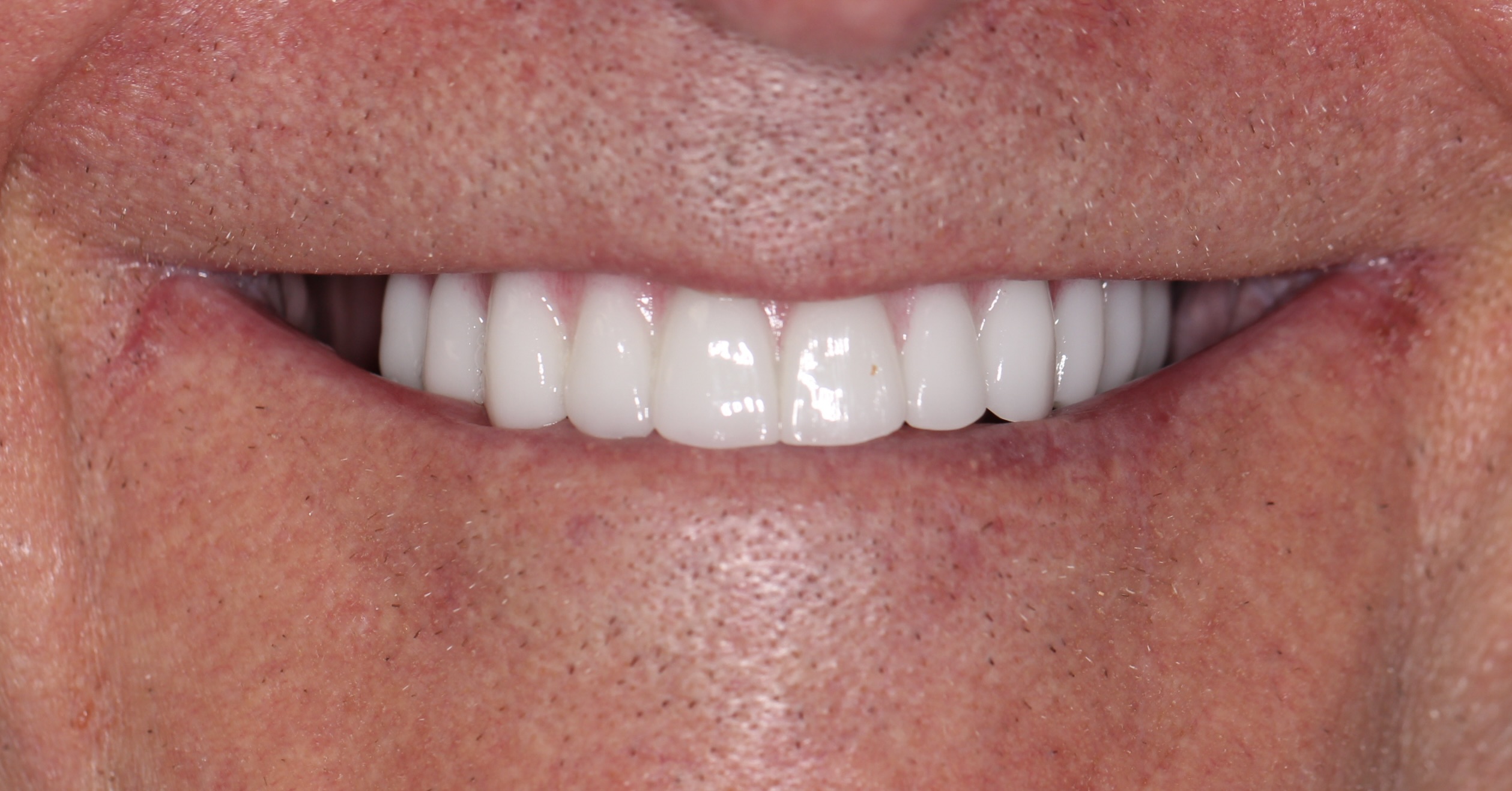
Once the new implant had integrated, I took new digital records and made a prototype of his final teeth, re-establishing his vertical dimension and refining his bite, speech, and esthetics. After two weeks of refining it, his definitive restoration was made.
The Result
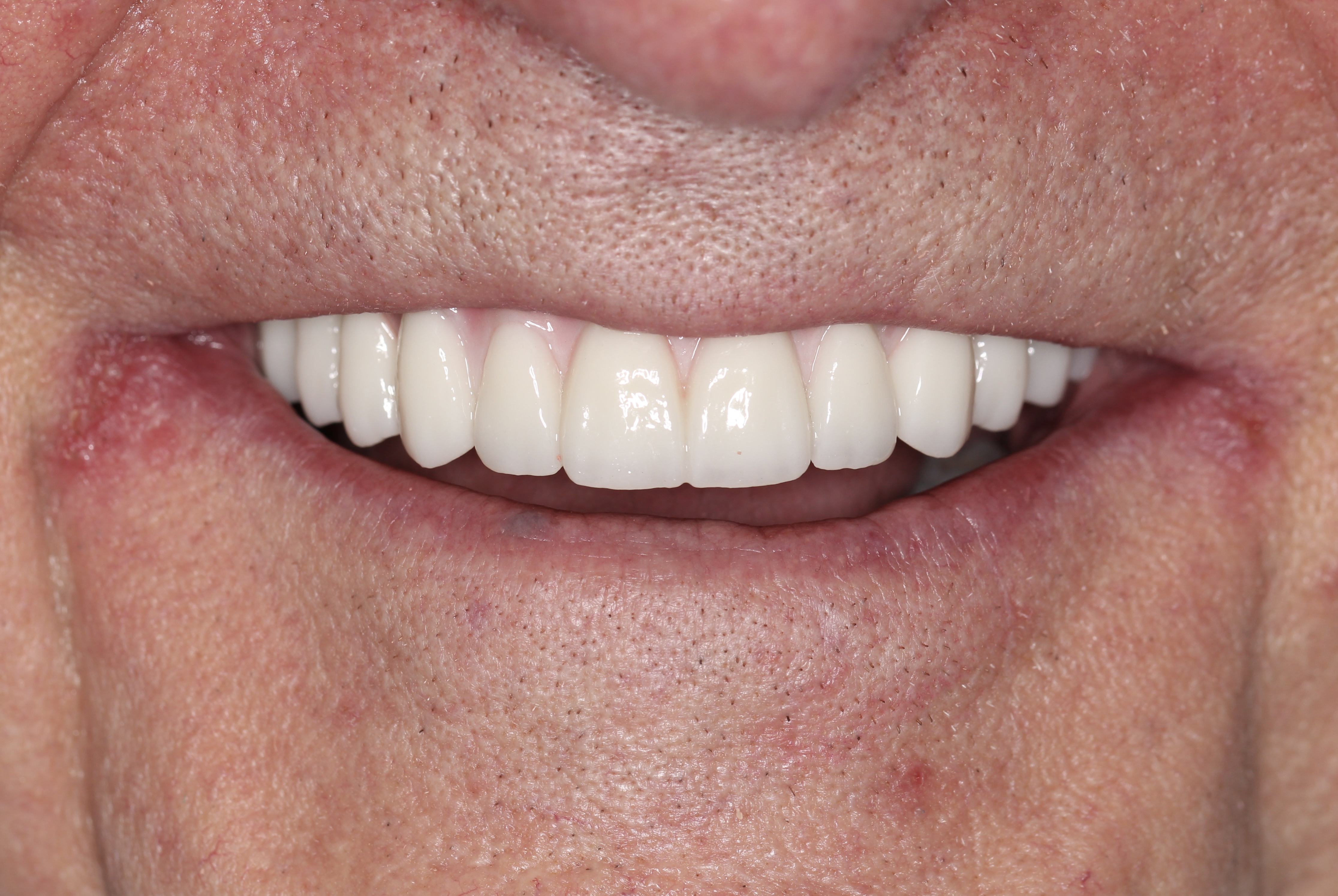
His upper arch was rebuilt as full-arch implants in monolithic zirconia, on four implants, from the design refined in his prototype. The gum tissue around his implants is healthy again, and his new teeth are fixed securely in place.
He came in with a restoration in his hand. He left with a new full-arch restoration on a rebuilt foundation, with fixed teeth at every stage along the way.
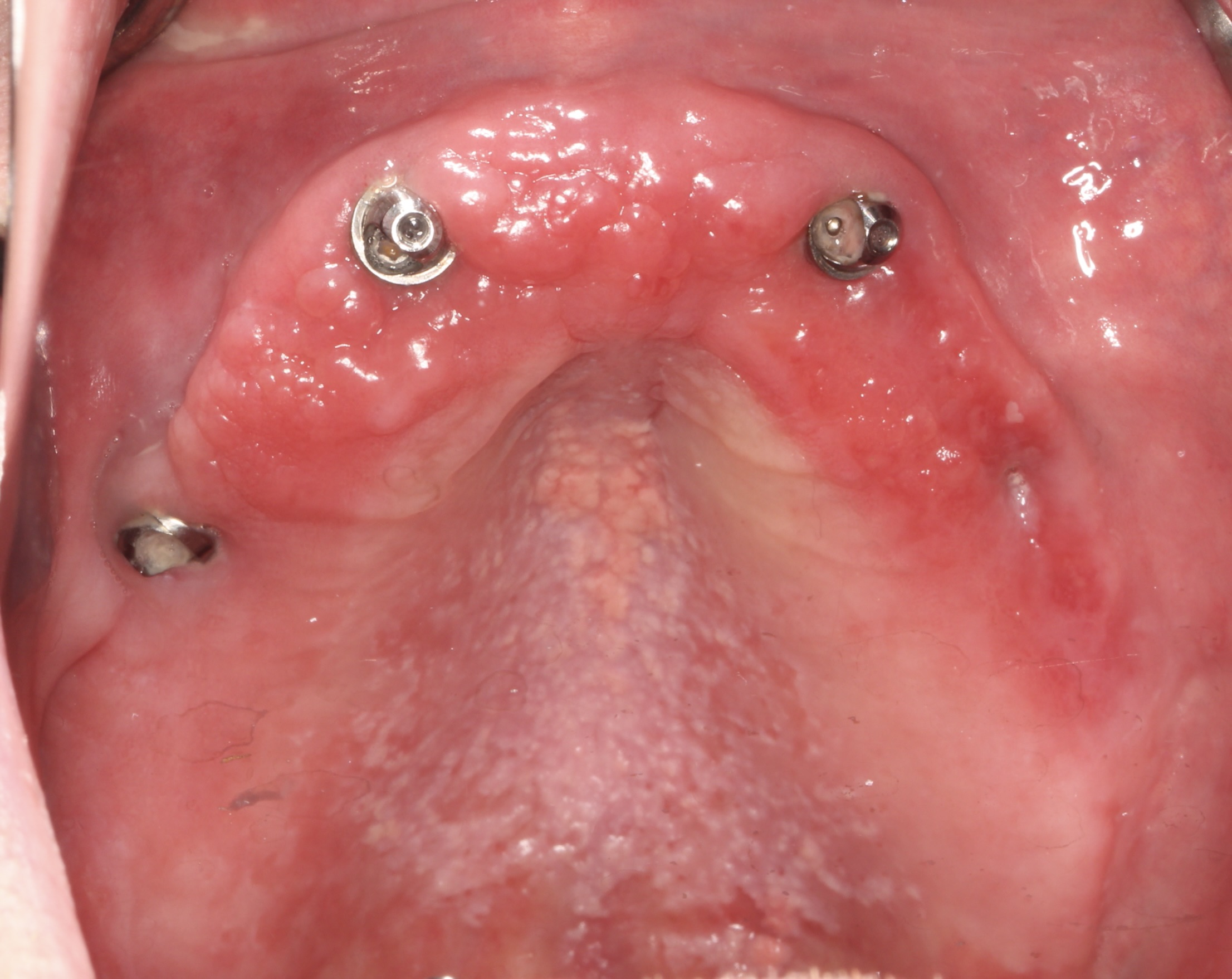
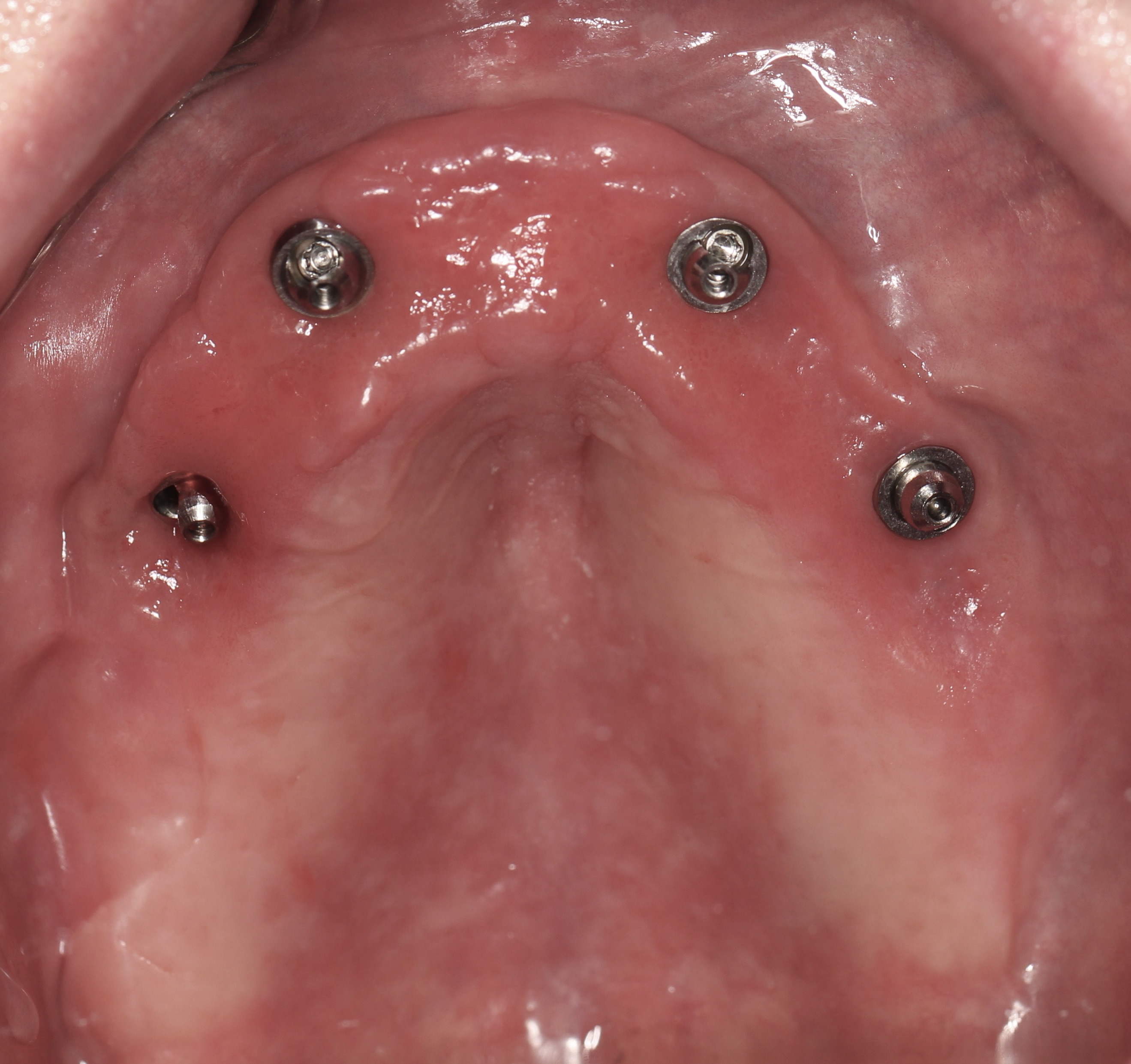
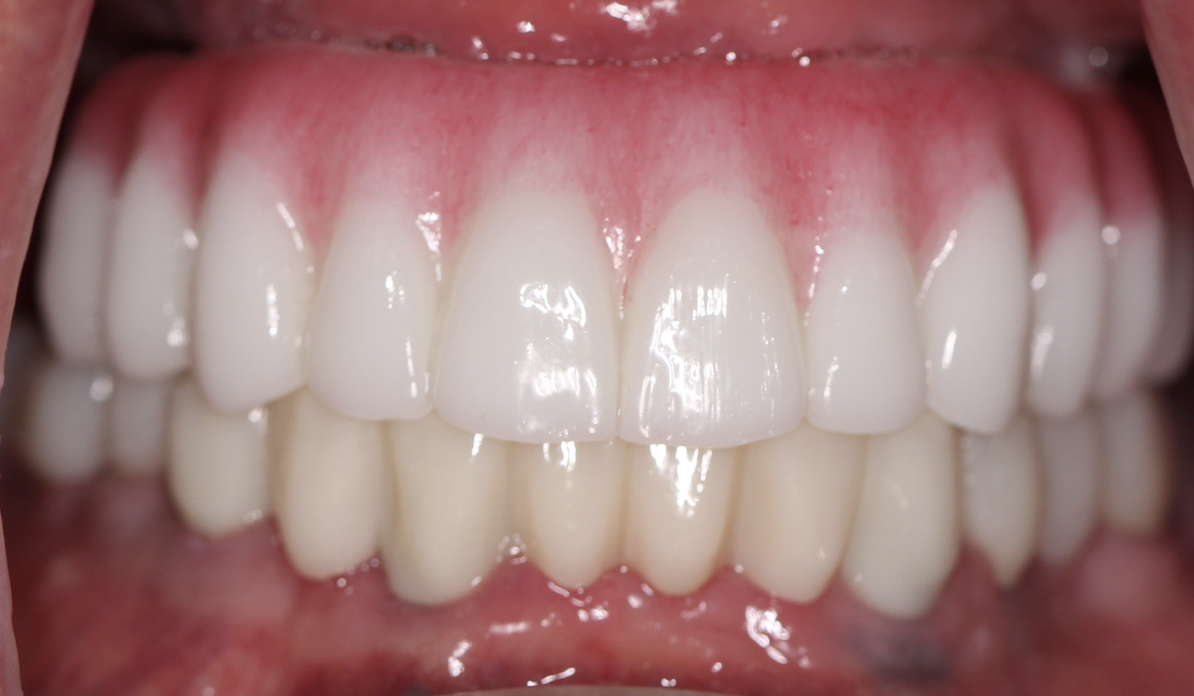
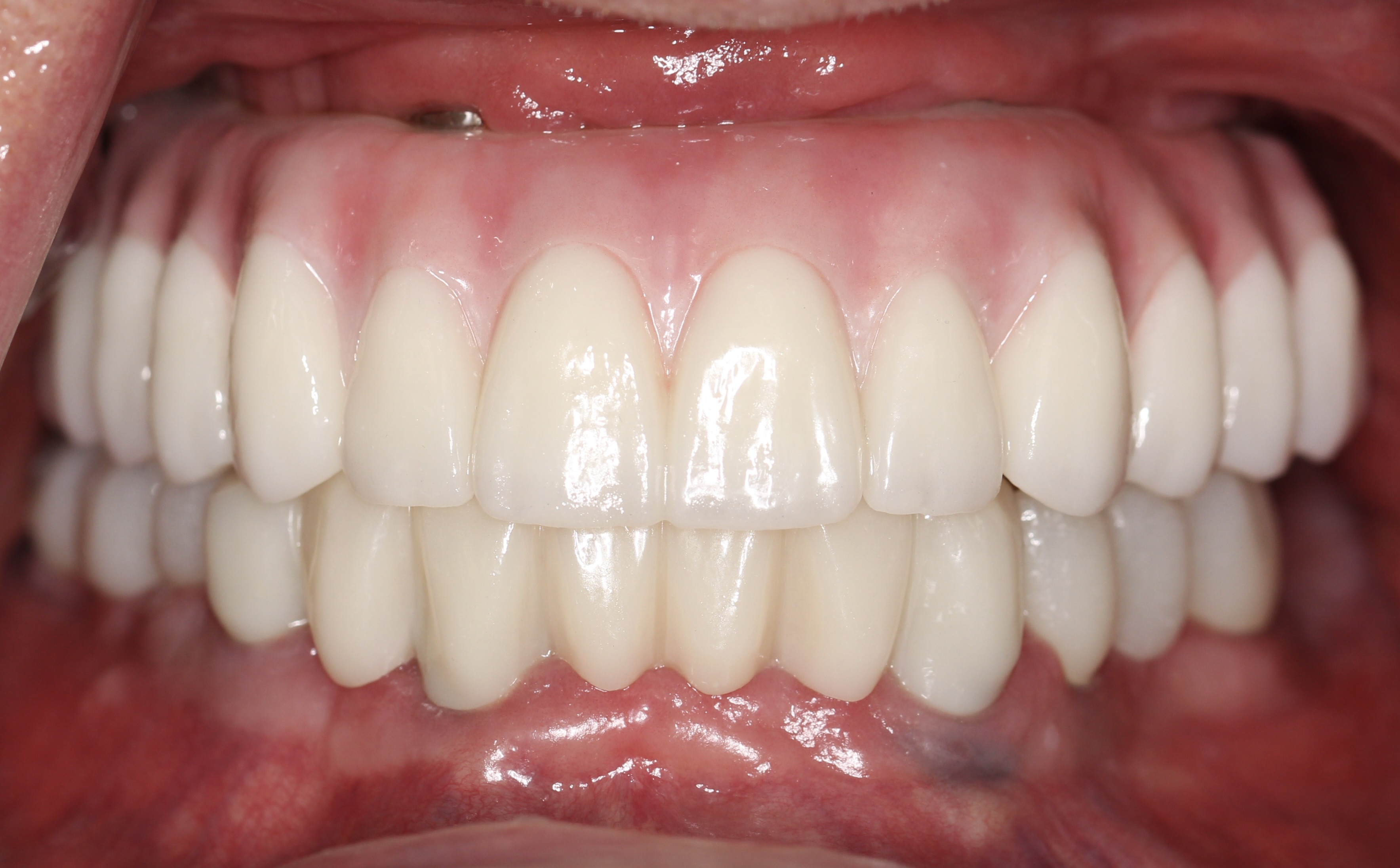


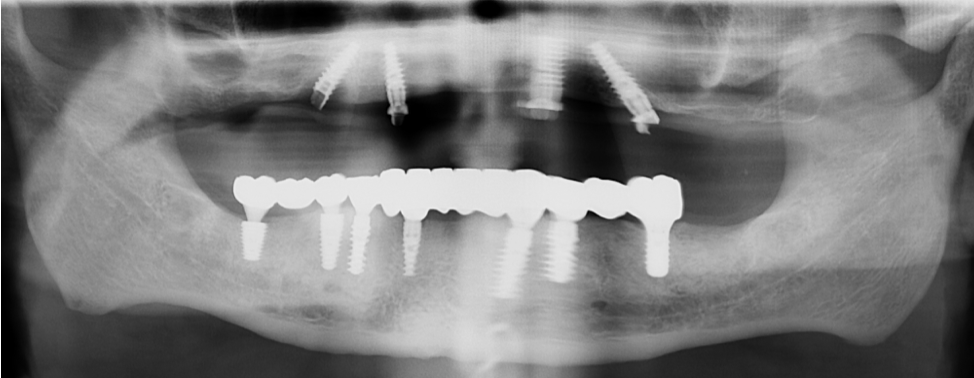
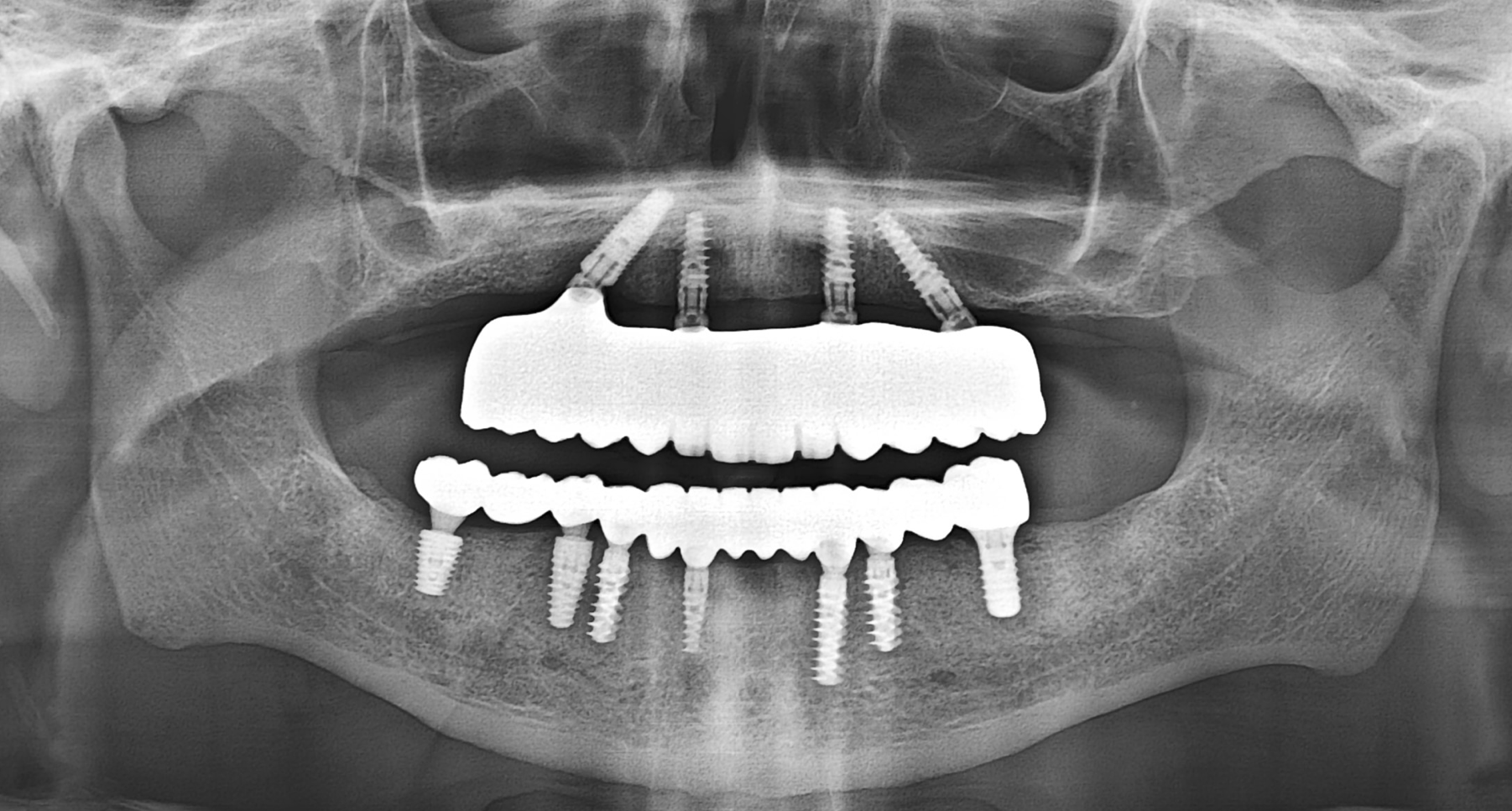
“This is the best I’ve had so far.”
Like anyone with full-arch implants, he needs daily care, regular maintenance, and periodic evaluation of the implants, the components, and the bite.
Full-arch implant restorations are long-term structures, and like any structure they need maintenance. When one loosens, the cause may be a screw, an abutment, or the implant itself, and each calls for a different solution. If your full-arch restoration feels loose, moves, or fits differently than it used to, that is a reason to be evaluated promptly. I explain more about full-arch dental implants.
Results and treatment needs vary from patient to patient. Photographs are of a patient treated at our practice and are shown with permission, without retouching. This page is educational and does not replace an individual examination, diagnosis, or treatment recommendation.