
Rebuilding 25-Year-Old Implant Restorations as Fixed Zirconia Arches
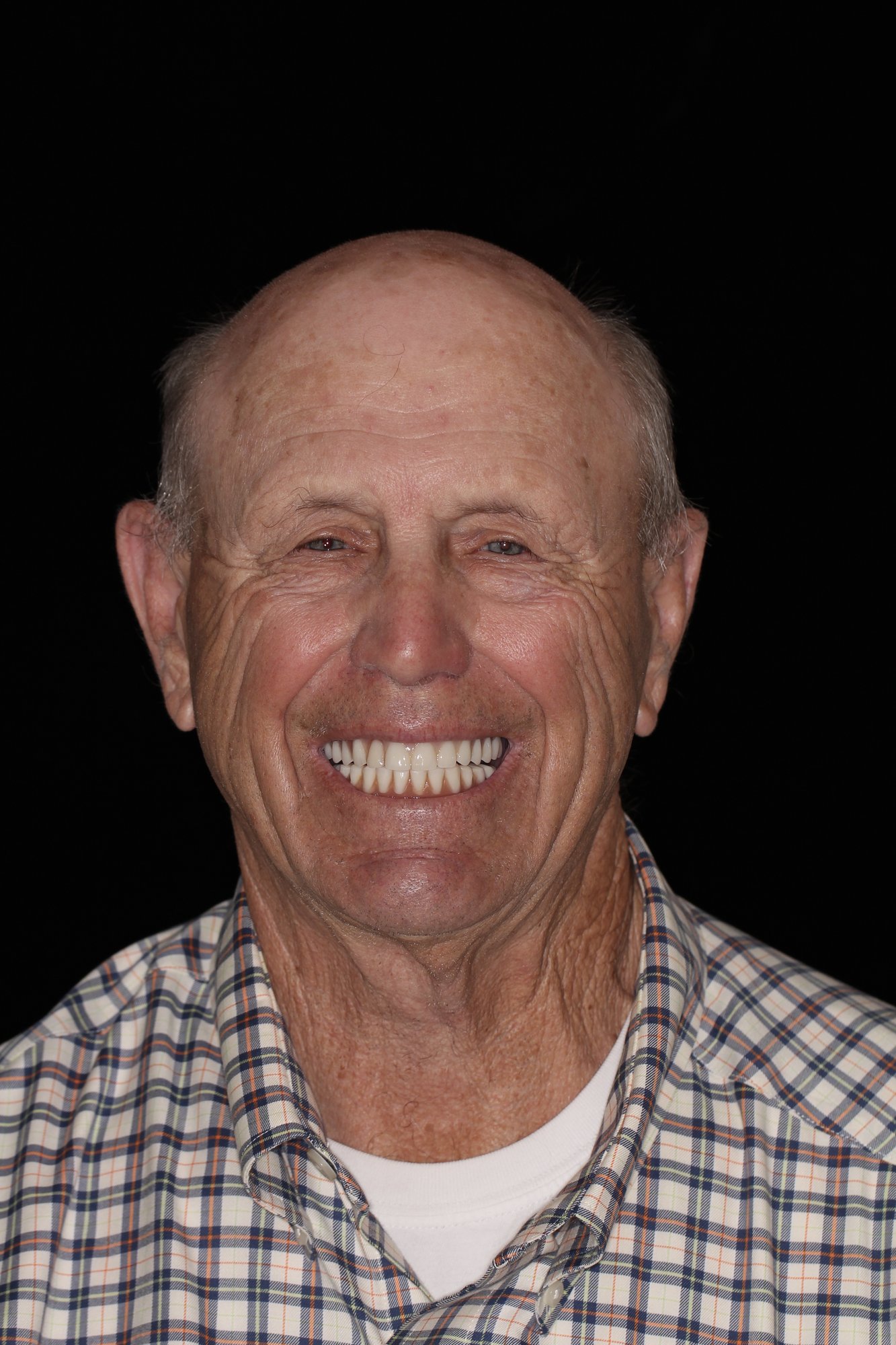
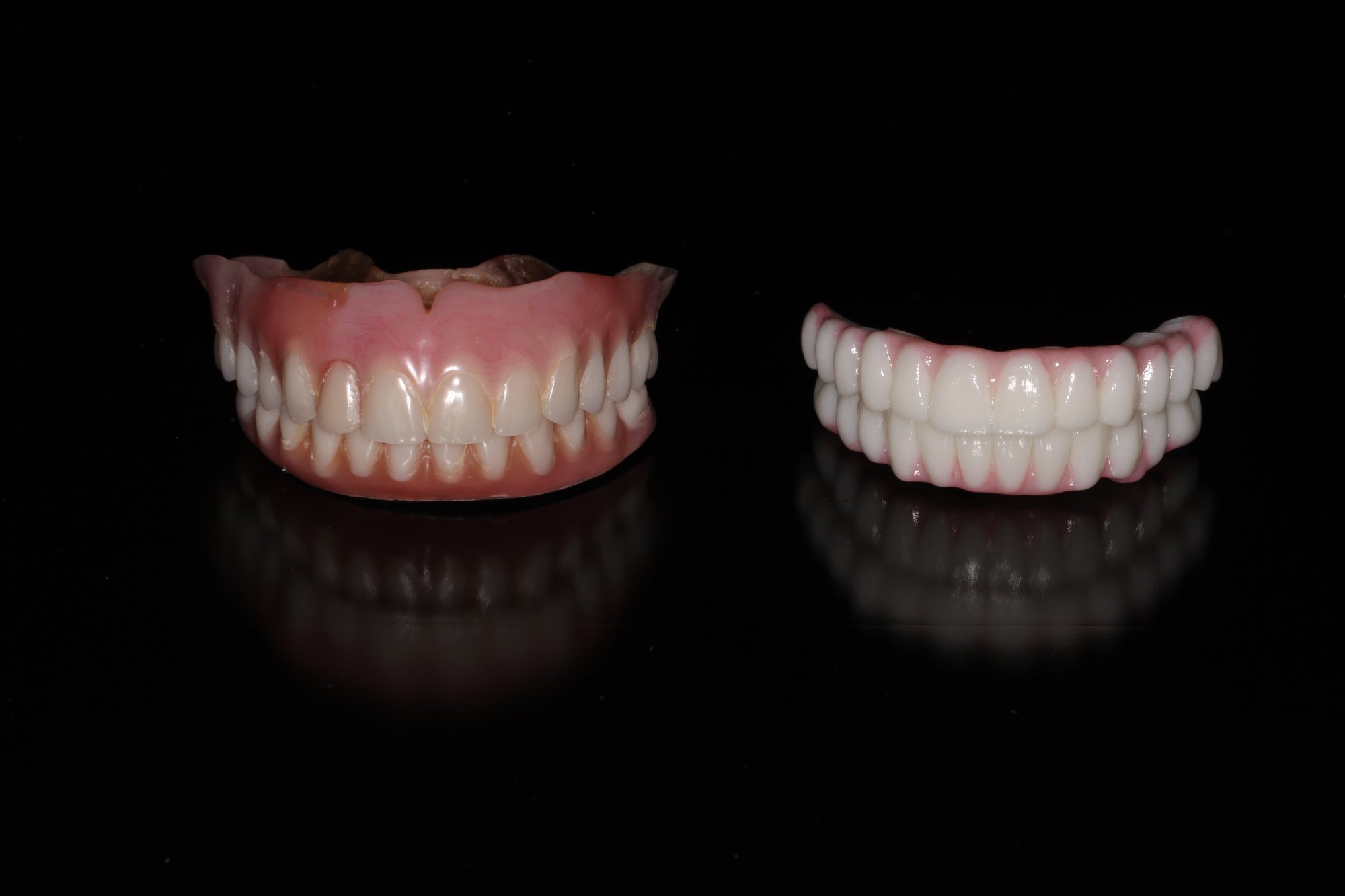
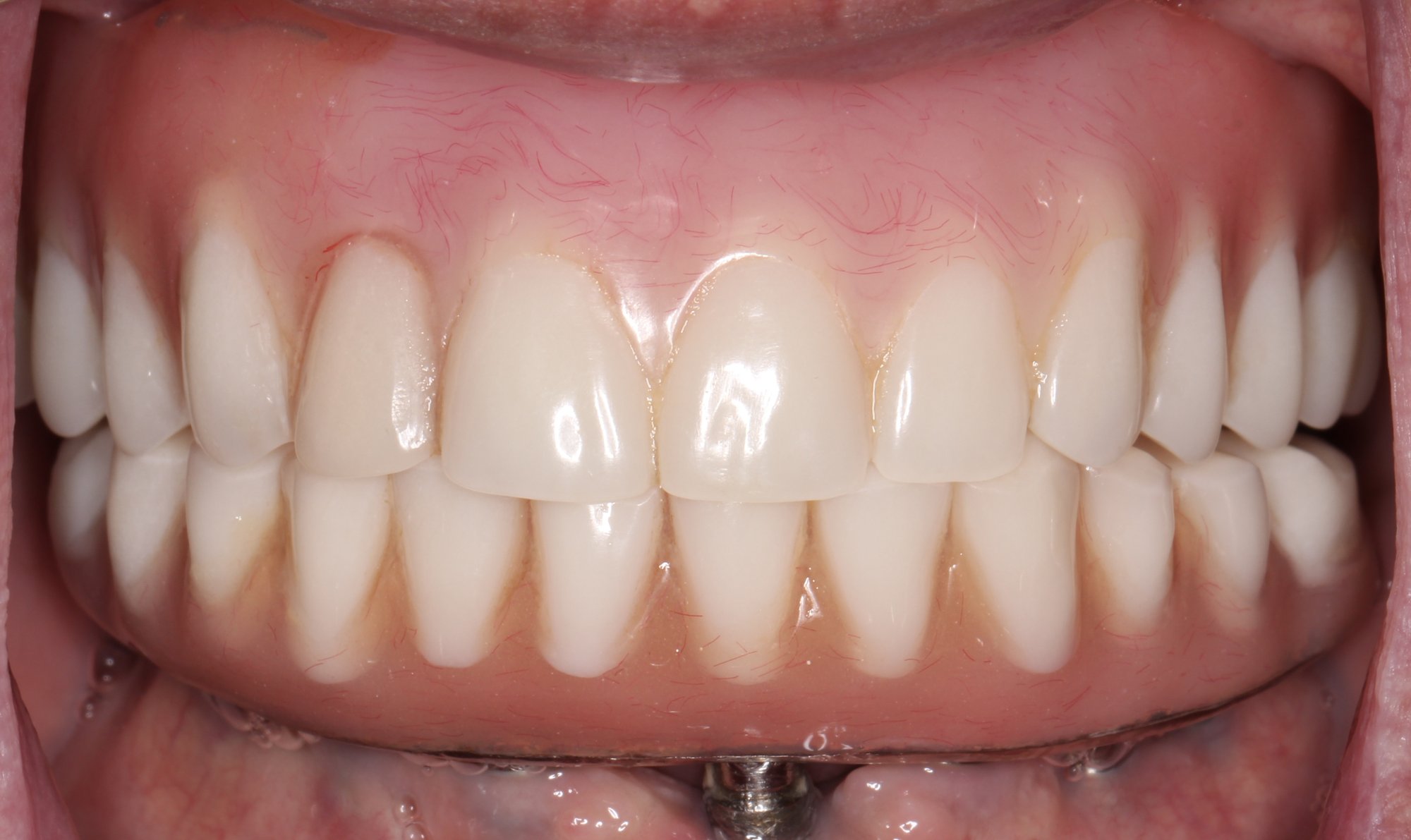
A worn upper overdenture and lower hybrid bridge, 25 years after his first implants, redesigned as fixed zirconia restorations on his existing implants.

The Challenge
Jack, 78, is a veteran who lives on a ranch north of Austin. His dentist referred him to me with a modest request. The teeth on his denture kept coming off, and he wanted them fixed.
His history told a bigger story. He received his first implant restorations more than 25 years ago, before zirconia, digital scanning, or photogrammetry were part of implant dentistry. His upper restoration was an overdenture that snapped onto implants. His lower was a fixed hybrid bridge, acrylic teeth on a framework. About ten years later he had them remade. Over time the acrylic teeth wore down and came loose, and his bite shifted.
With a long drive to his dentist’s office, Jack found a shortcut. He took his restorations straight to the dental lab for each repair. Every fix brought relief, but none of them addressed why the restorations kept failing. When the problems kept returning, his dentist recommended he see a prosthodontist, and Jack made the longer drive to Austin.
“I just want something to last me a few more years,” he told me.
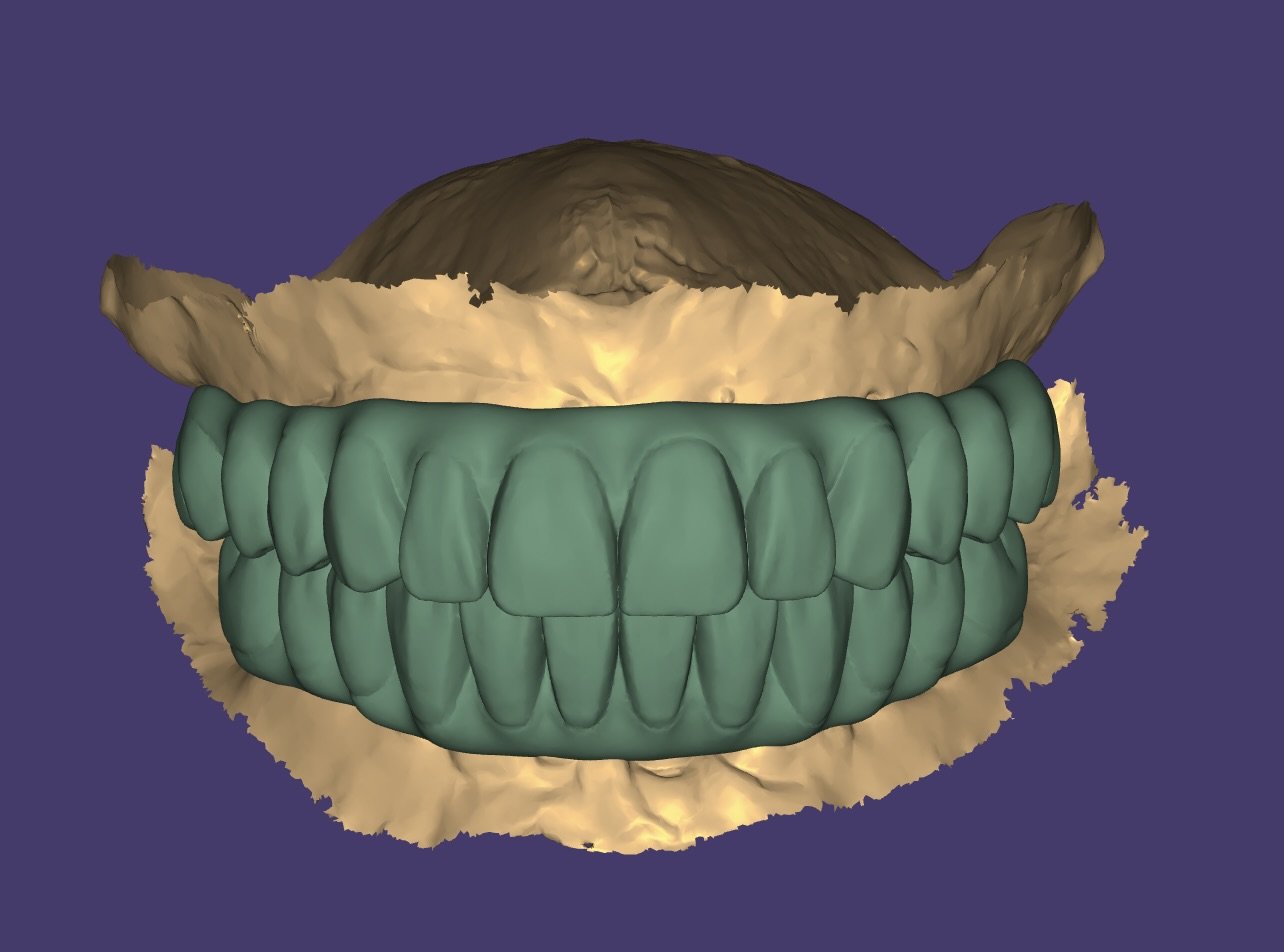
My evaluation included a CBCT scan (a 3D CT scan), digital scans, photographs, an analysis of his bite, and a digital design of the result. He had 17 implants, 8 upper and 9 lower, from an implant system that is no longer manufactured. After all those years, his implants and gums were healthy, with bone loss around only a few implants.
The design itself had reached its limits. His original treatment was planned with the tools of its time, and the space in his upper arch did not allow a fixed bridge. An overdenture was the solution, held by only four of his eight upper implants. To make room for the restorative material, his bite had been opened beyond what was natural for him, and the bulk of the denture pushed his upper lip forward more than it should. Over the years, the acrylic teeth wore unevenly from one side to the other and tilted the plane of his bite.
Fixing the loose teeth would have put him back into the same bite that was breaking them.
How I Planned It
I planned to rebuild both arches as fixed restorations in monolithic zirconia, through a fully digital workflow, designing the final result first and working backward from it.
Zirconia was the answer to the space problem. It is strong in a far thinner profile than acrylic, so his bite could be brought back down and a fixed bridge could still fit where an overdenture had once been the only option. It also resists the kind of wear that had broken down his acrylic teeth.
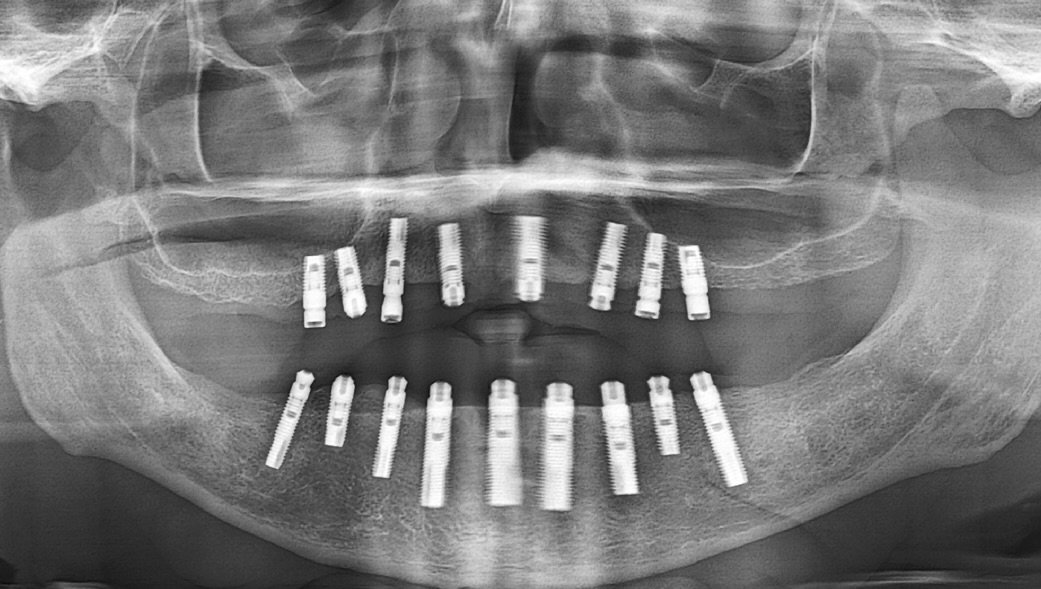
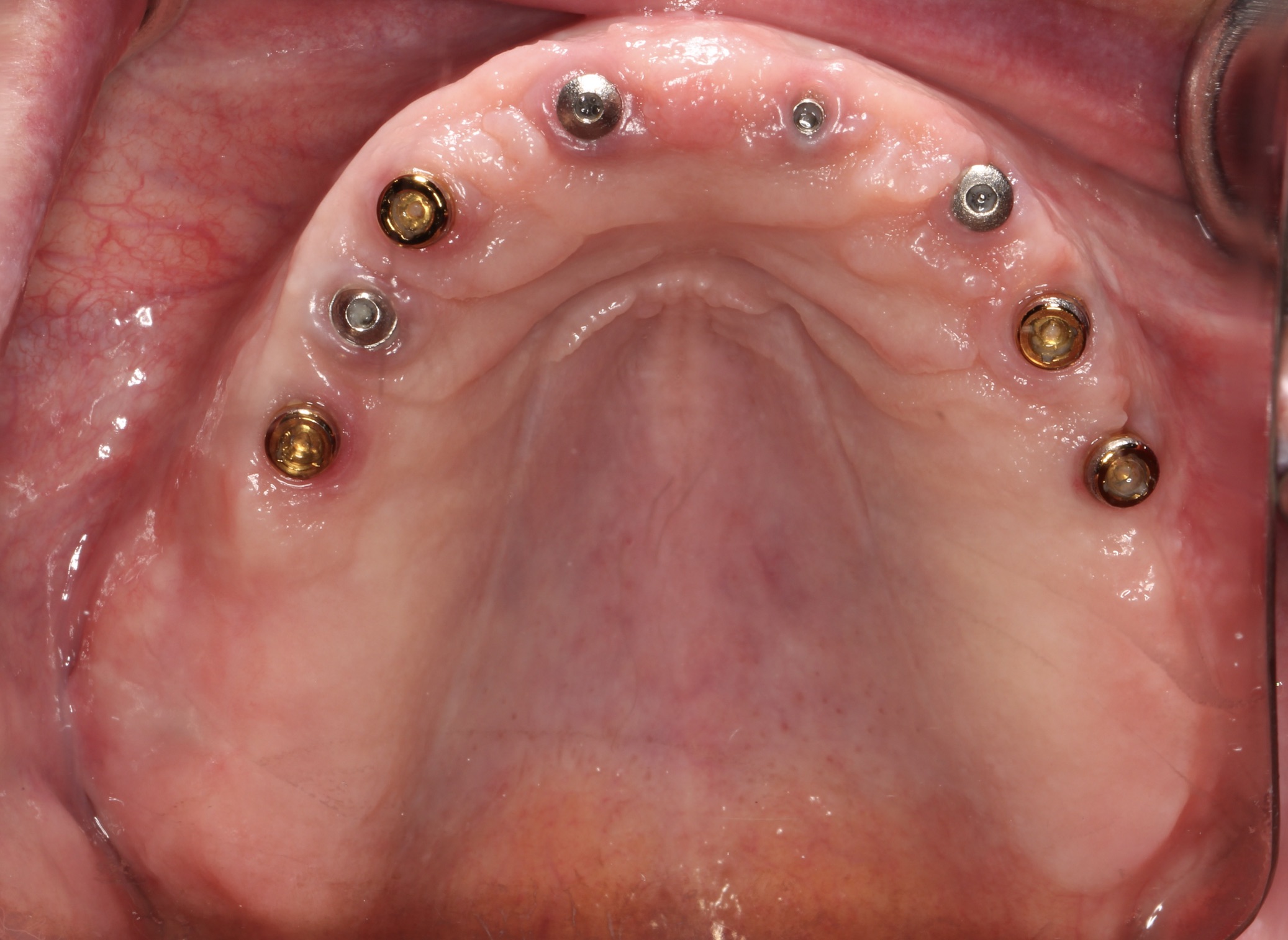
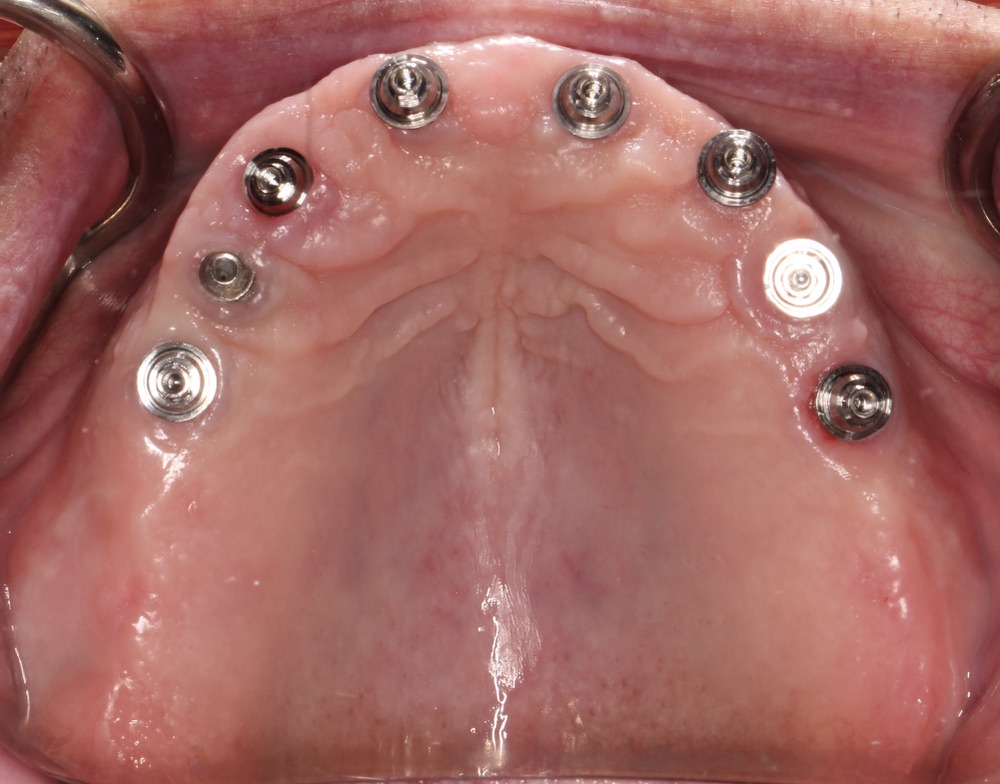
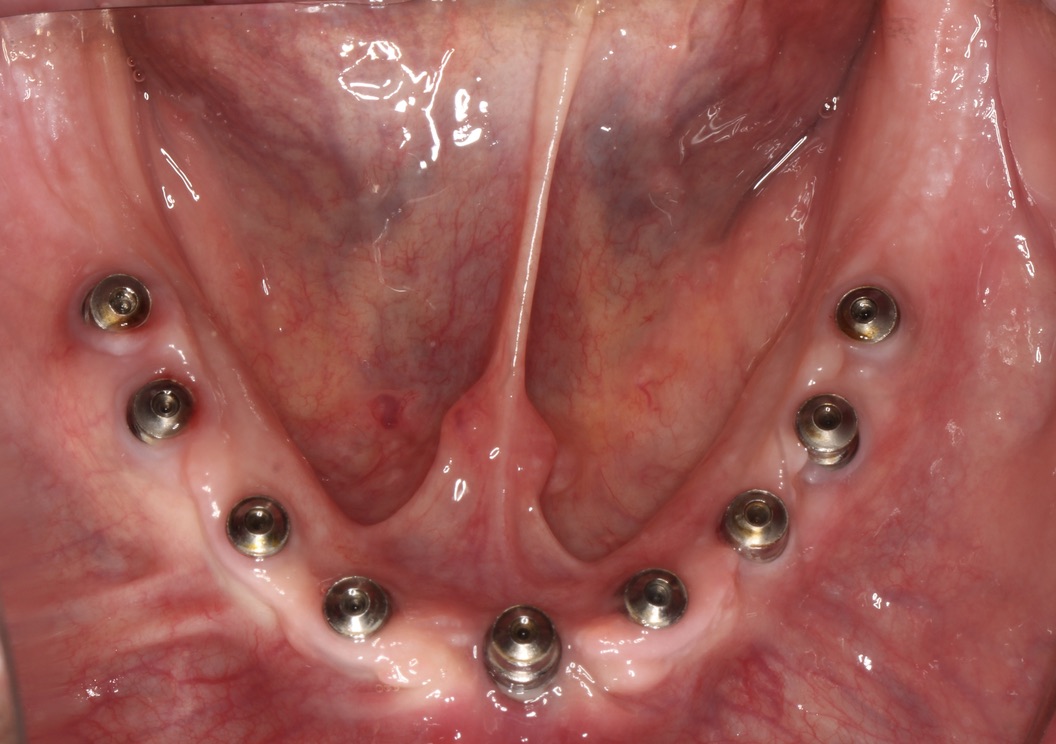
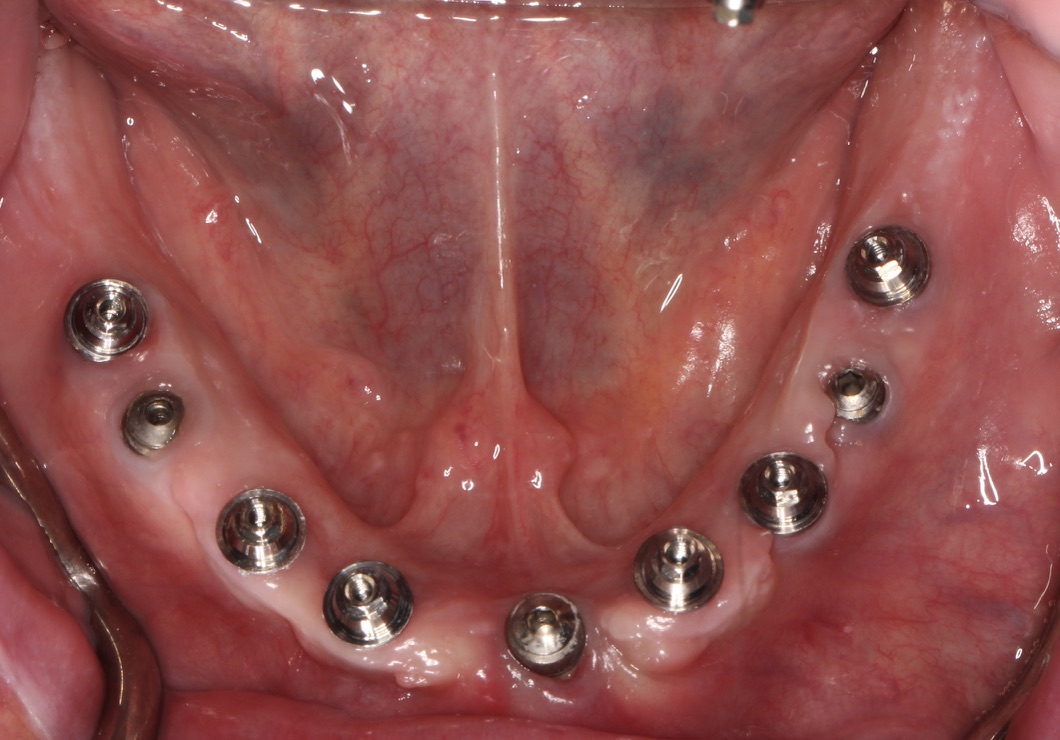
The first obstacle was his implant system. It had been discontinued, and its original components were not compatible with today’s scanning, photogrammetry, or fixed restorative parts. The attachments that held his upper overdenture could not support a fixed bridge either. I removed the old components and sourced compatible ones that let me record his implants digitally and connect fixed restorations to them. Seven implants in the upper arch and six in the lower would support the new restorations. The remaining four were covered beneath the gums and left in place rather than worked into a design that did not need them. Fewer connections meant a simpler, more predictable restoration.
I recorded his implant positions with intraoral scanning and photogrammetry, which I use as part of pursuing passive fit: a restoration that seats on all of its implants without being pulled into place by its screws. Across a full arch, small recording errors add up, and that strain is a common source of mechanical problems later.
From those records, a prototype was designed with a reduced vertical dimension to bring his bite back to a natural height, level the plane of his teeth, give his upper lip natural support, and restore proportion to his smile. Jack wore it as a test drive, so we could evaluate comfort, speech, chewing, and appearance before anything definitive was made. Our in-house dental lab worked from the same records throughout, which let me refine the design closely.
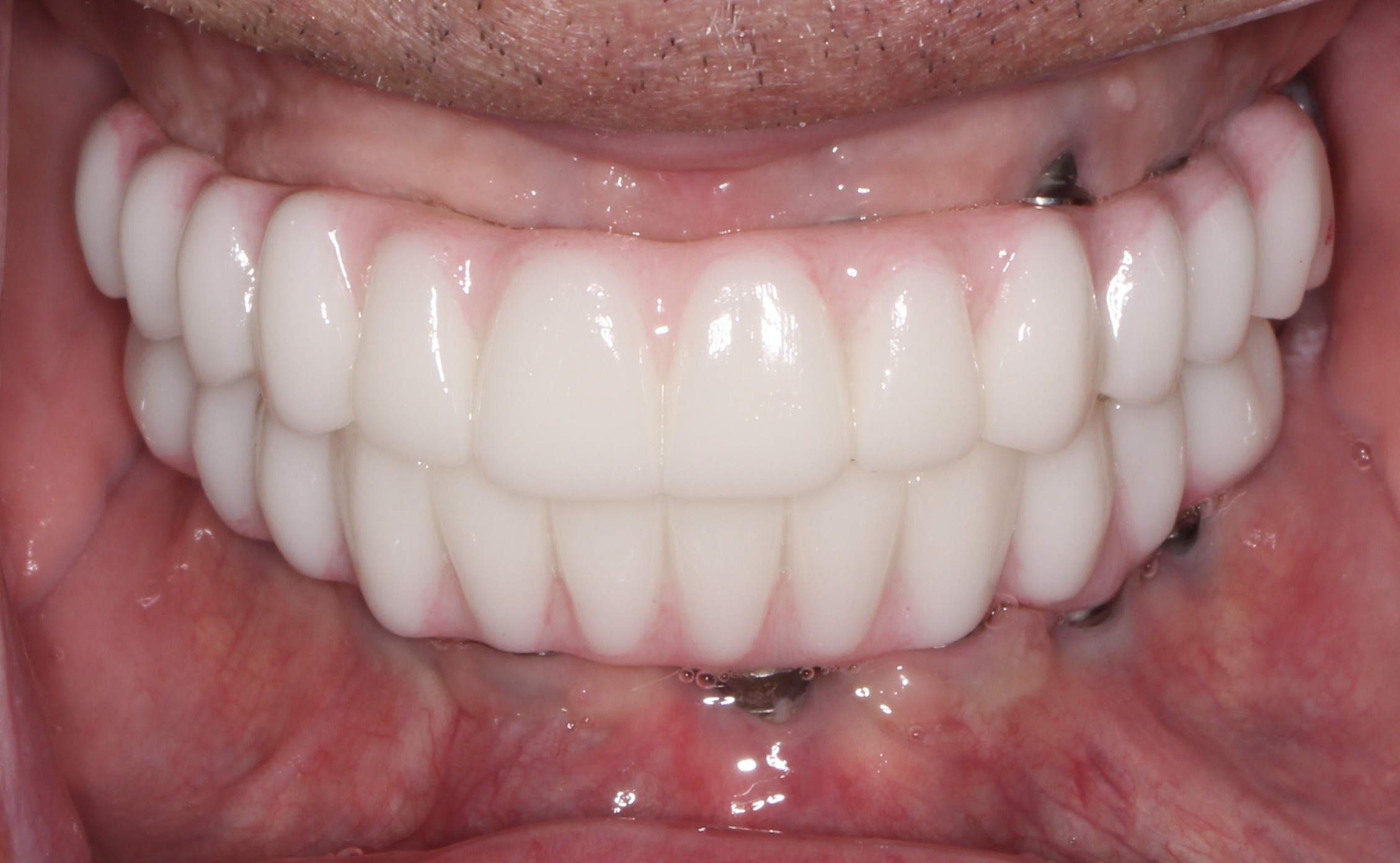
The Result
Jack’s definitive restorations were milled in monolithic zirconia, fixed in both arches. He no longer has a removable upper denture, and I designed his bite so chewing forces are shared across the front and side teeth as his jaw moves.
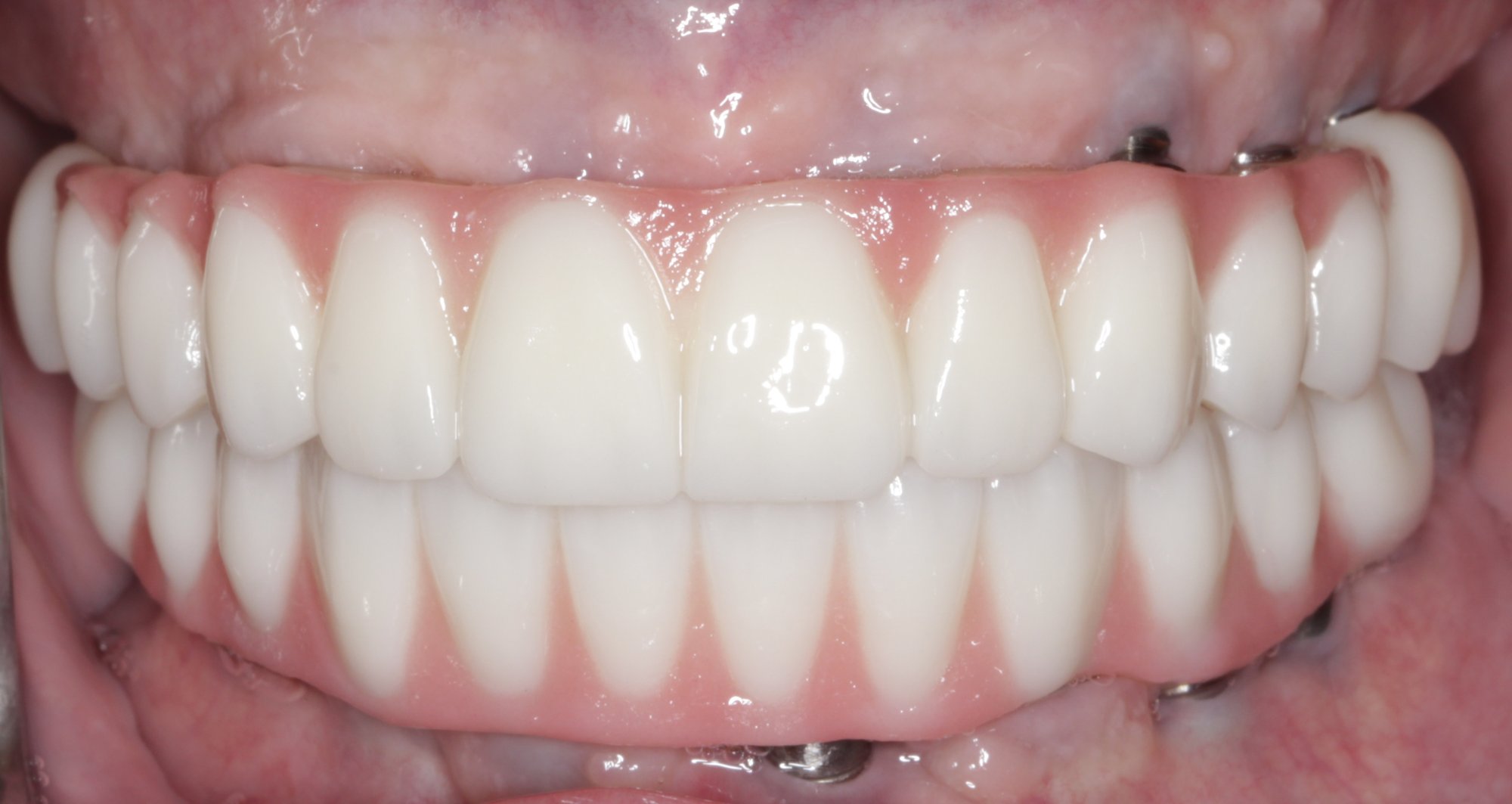
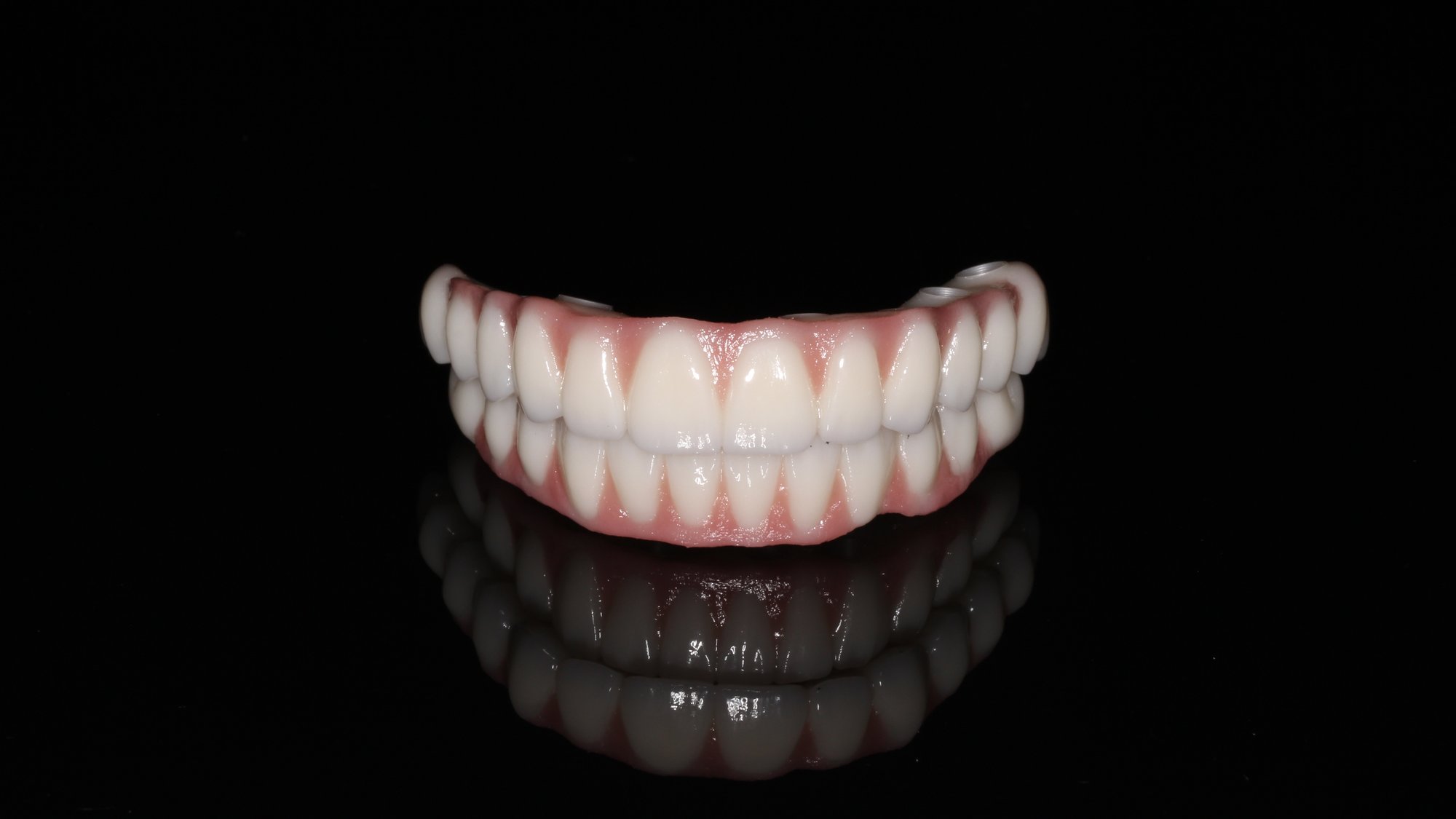
When he felt them for the first time, he ran his tongue across his new teeth and said they felt like his own.
Like any restoration, his restorations need daily care, regular maintenance, and periodic evaluation of the bite and the components.
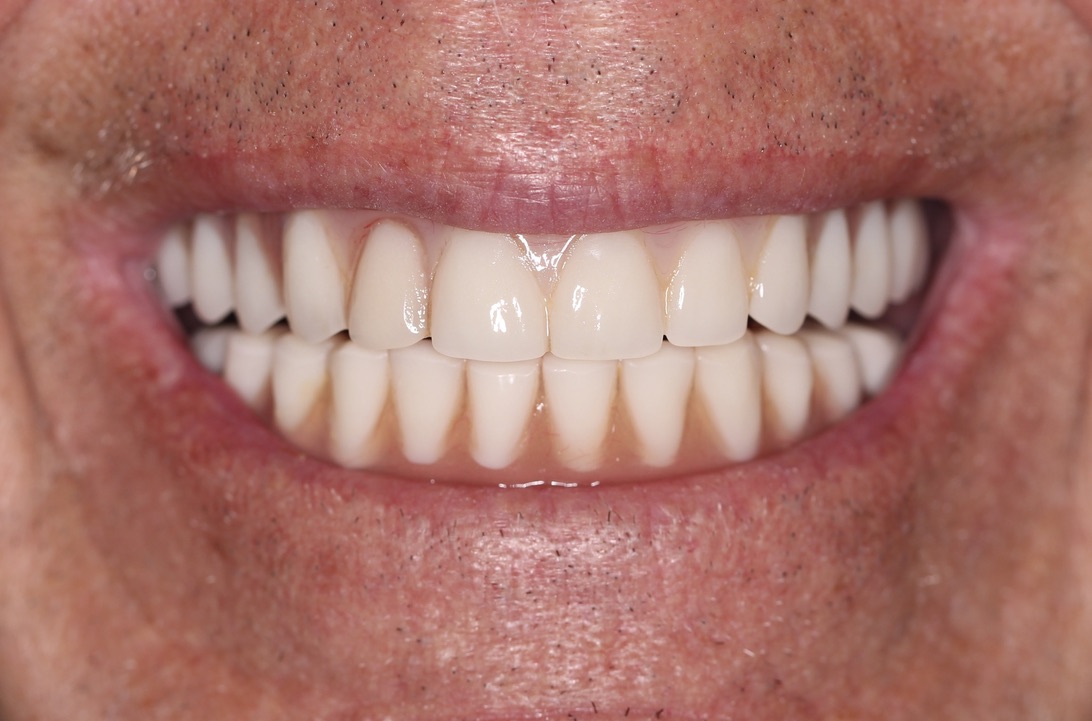
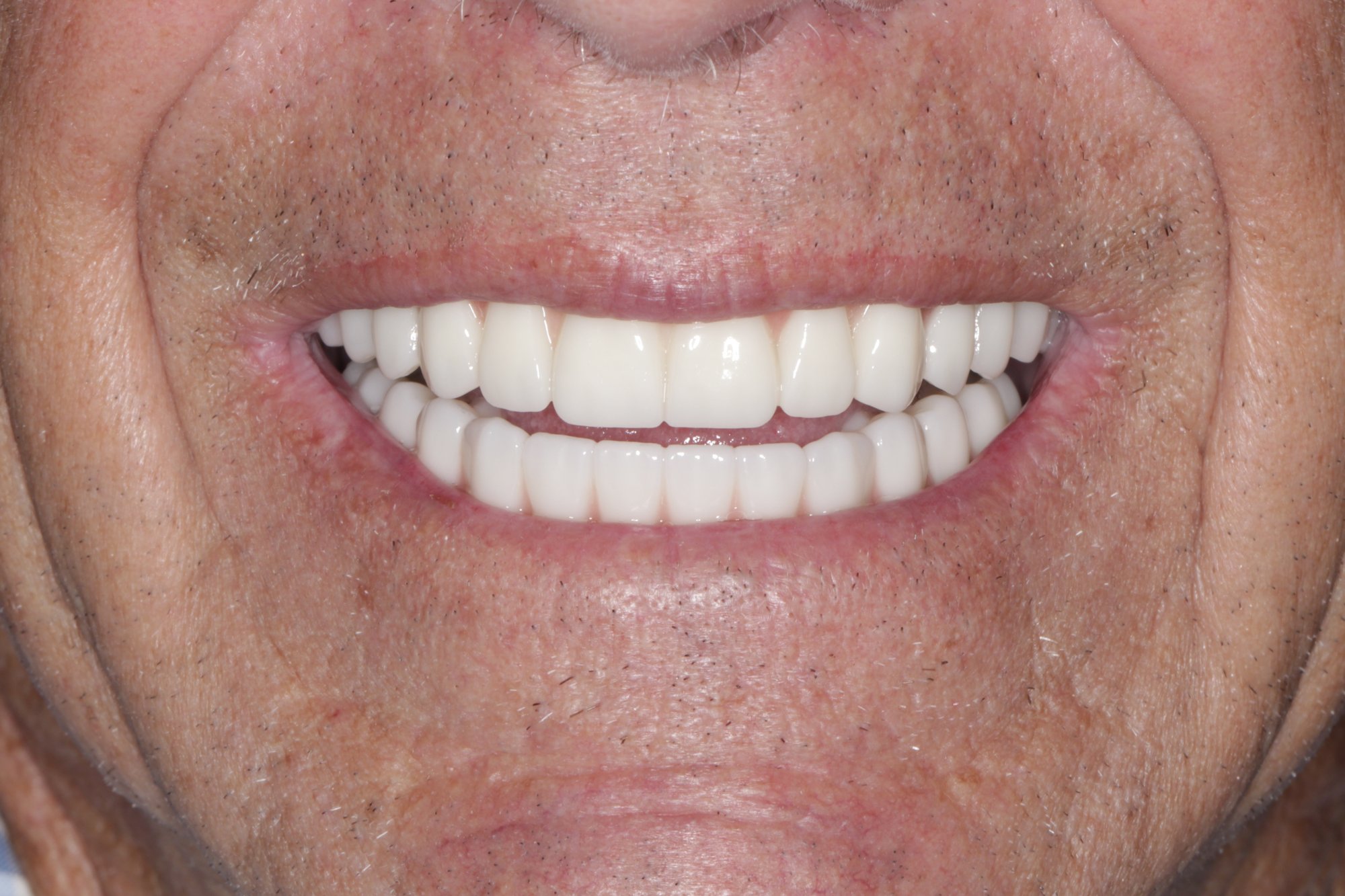
“It feels like they’re truly mine.”
A repair that keeps failing is a symptom, not a solution. When the same restoration breaks again and again, the useful question is not how to fix it one more time, but why it keeps failing. For Jack, the loose teeth were the visible part of a worn, tilted bite and a design that had reached its limit. If your implant restoration keeps needing repairs, that pattern deserves a full evaluation. I explain how I make that decision in repair or remake.
Results and treatment needs vary from patient to patient. Photographs are of a patient treated at our practice and are shown with permission, without retouching. This page is educational and does not replace an individual examination, diagnosis, or treatment recommendation.