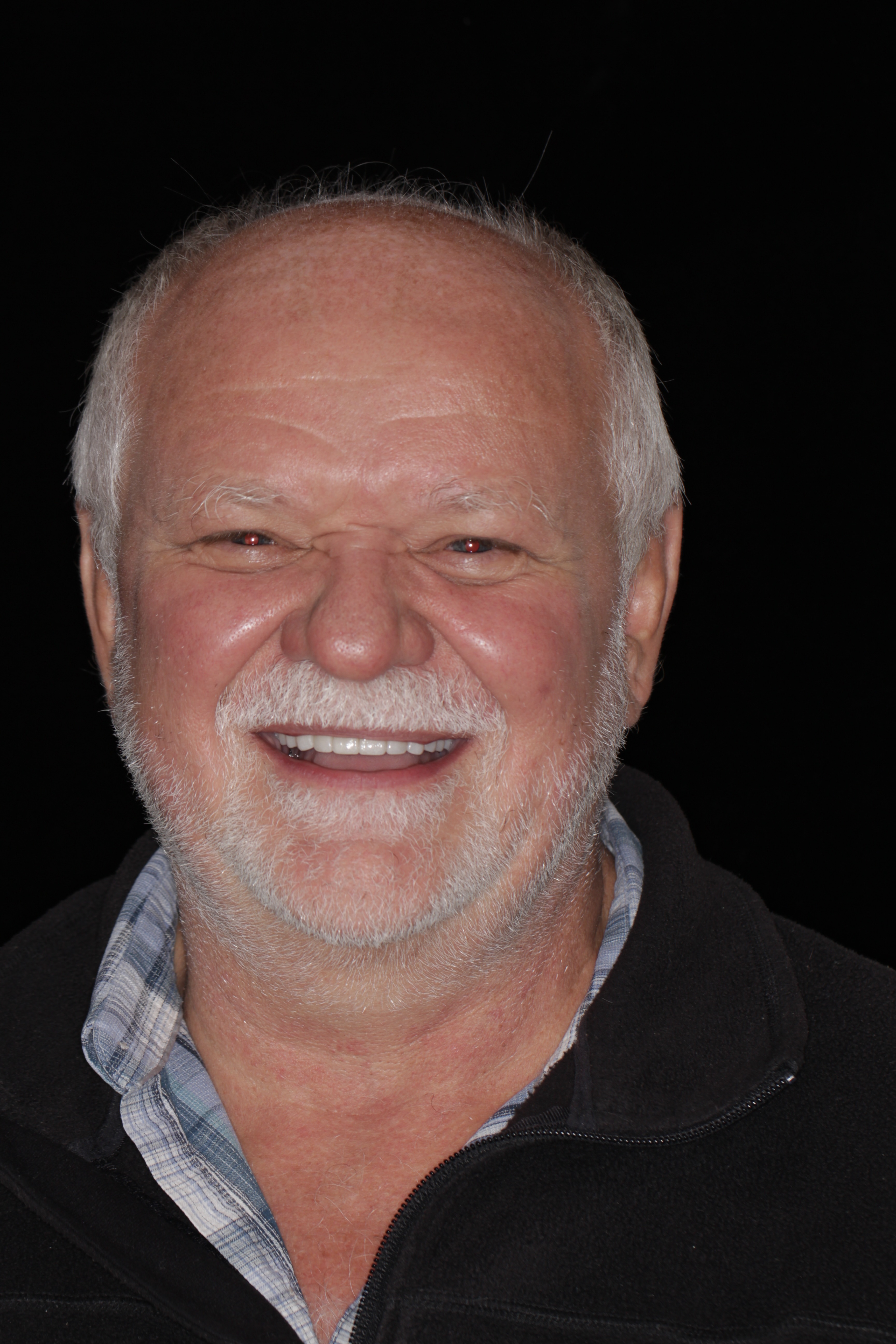
Full Mouth Reconstruction for a Worn, Collapsed Bite That Saved His Natural Teeth
Advanced wear, a collapsed bite, and an offer of full-arch implants elsewhere, rebuilt instead with a full mouth reconstruction: his natural teeth saved with zirconia crowns, and four implants placed only where teeth could not be saved.
The Challenge
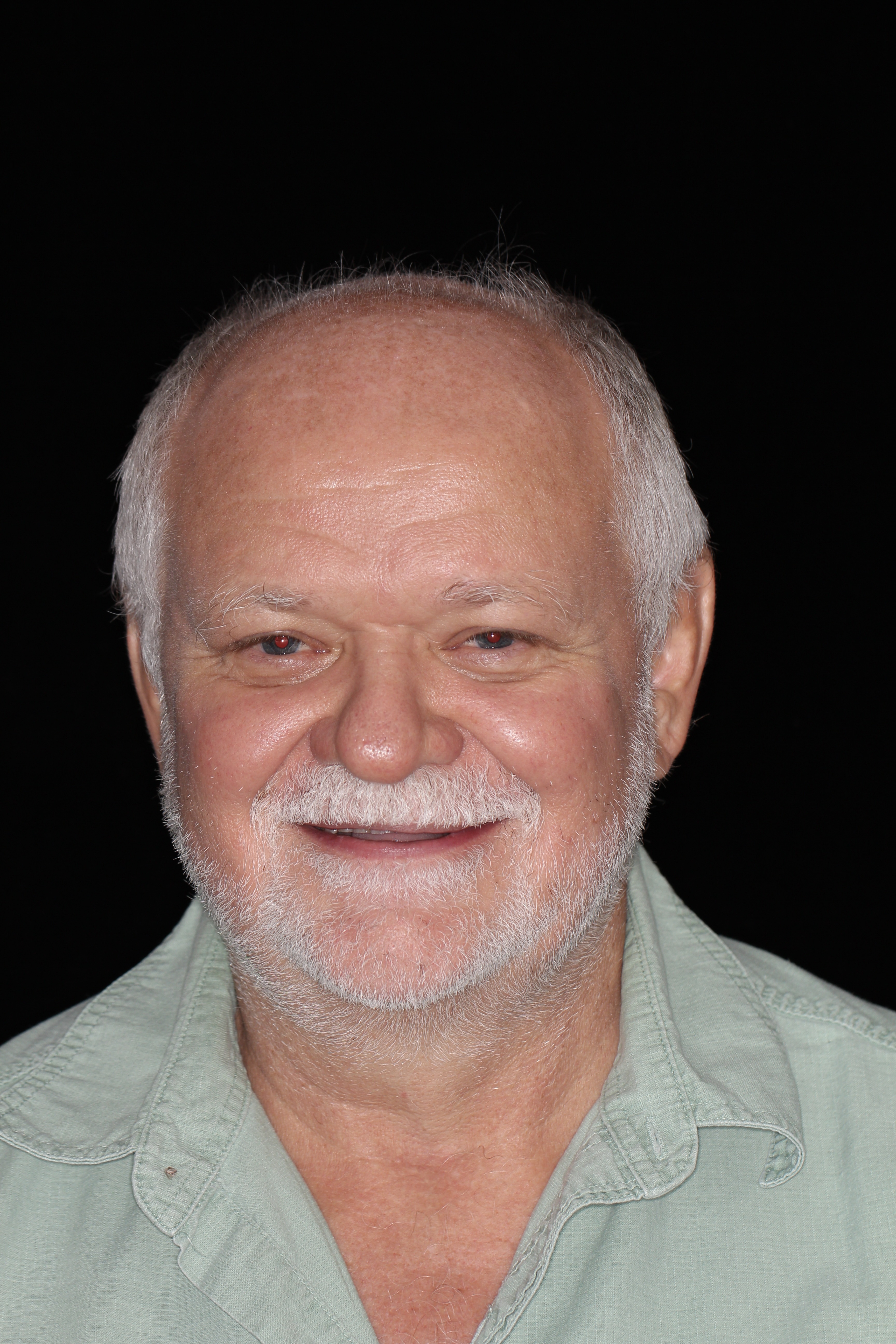
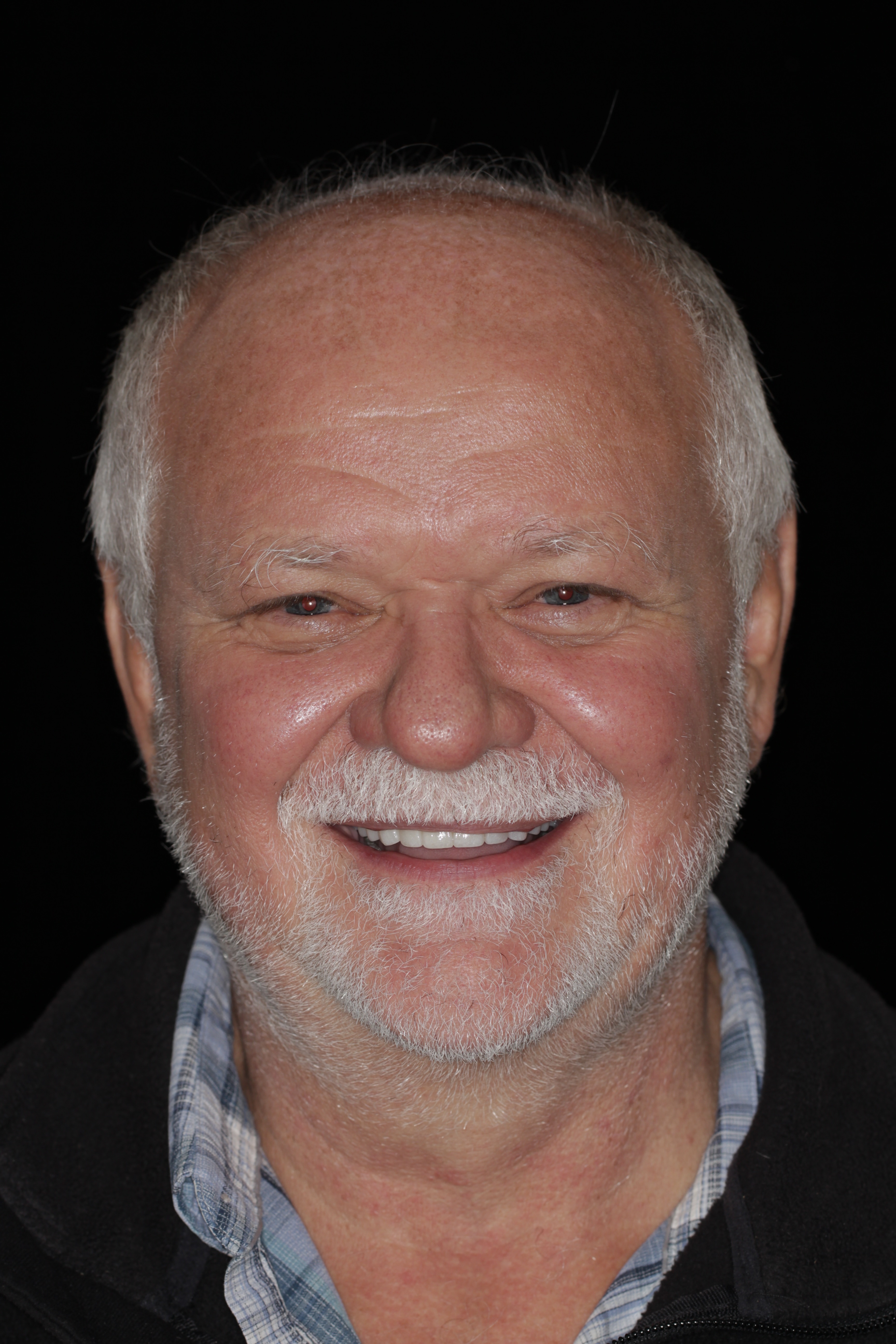
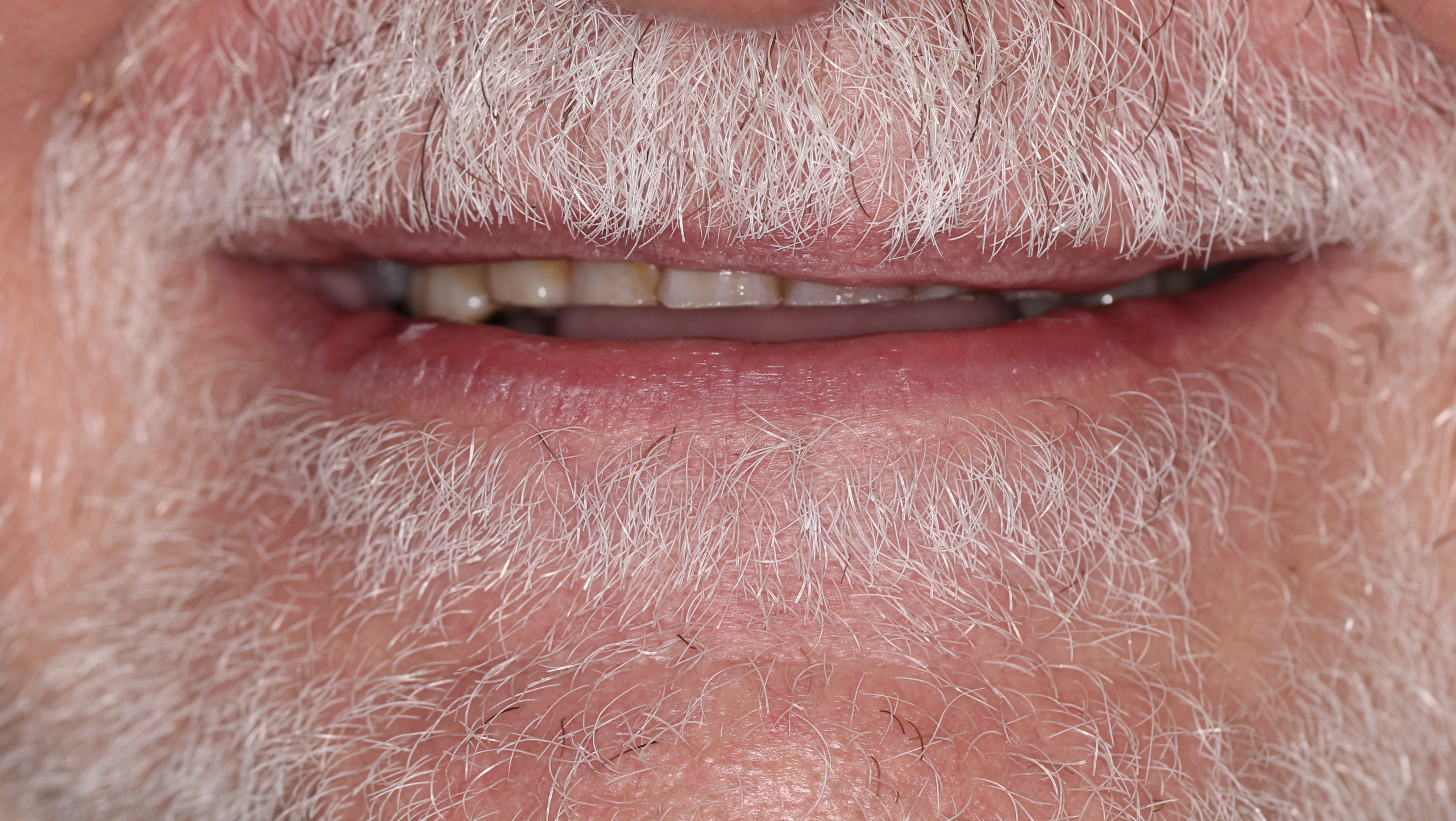
Herman, 65, came to me with pain in his lower back teeth and growing difficulty chewing. He lives in a remote part of West Texas, far from regular dental care. Over the years, problems were repaired as they came up, one visit at a time. During the pandemic, a crown came off and could not be put back. By the time I saw him, chewing hard food was no longer possible.
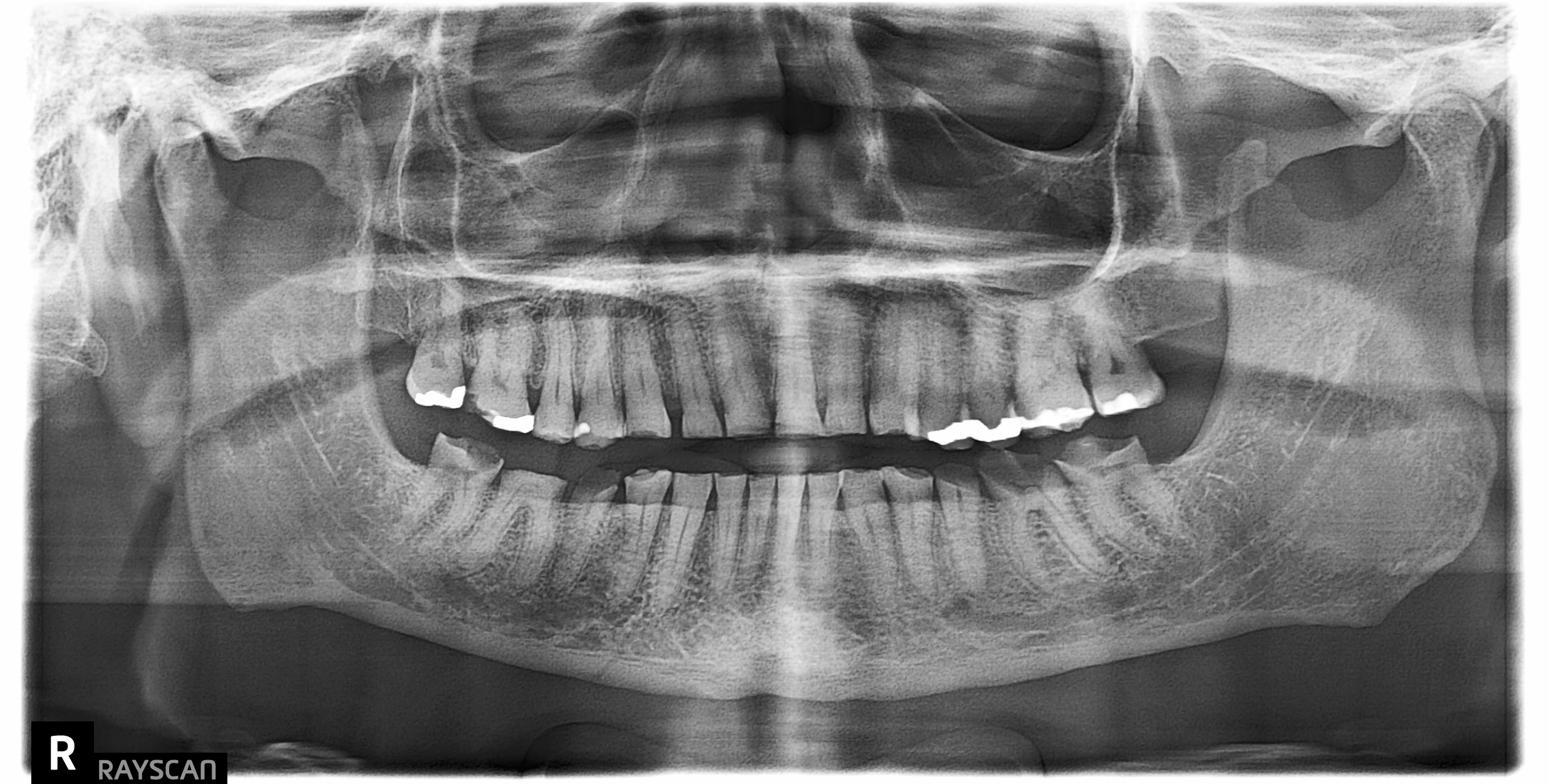
Before he saw me, he had been offered full-arch implants, including All-on-4. He still had 28 of his own teeth, and he wanted a prosthodontic opinion before removing teeth that might still be saved.
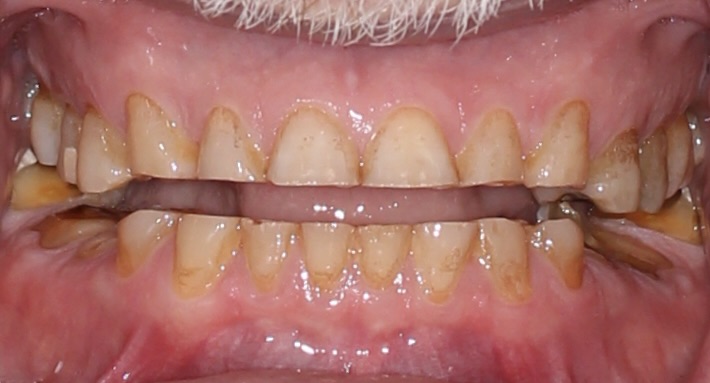
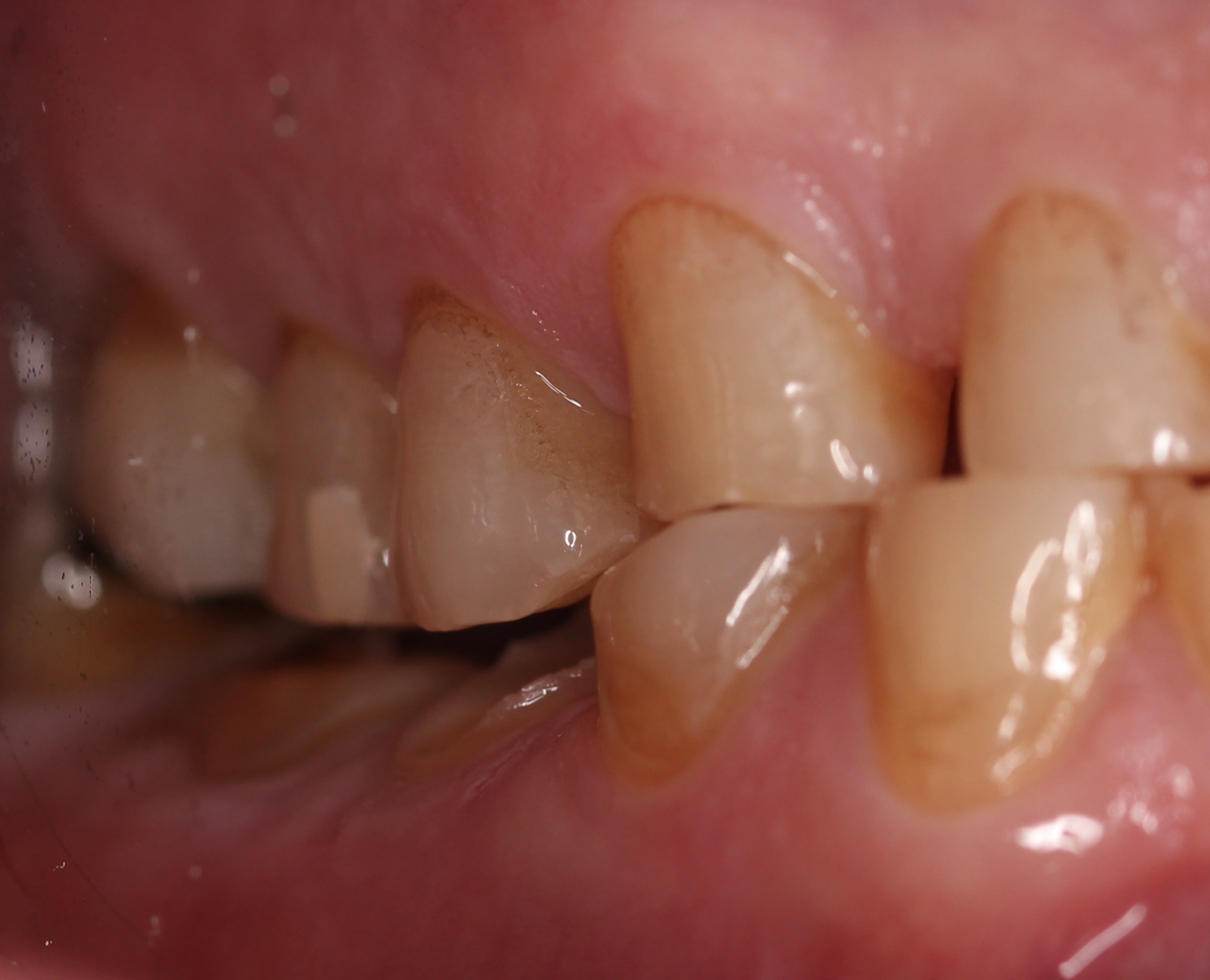
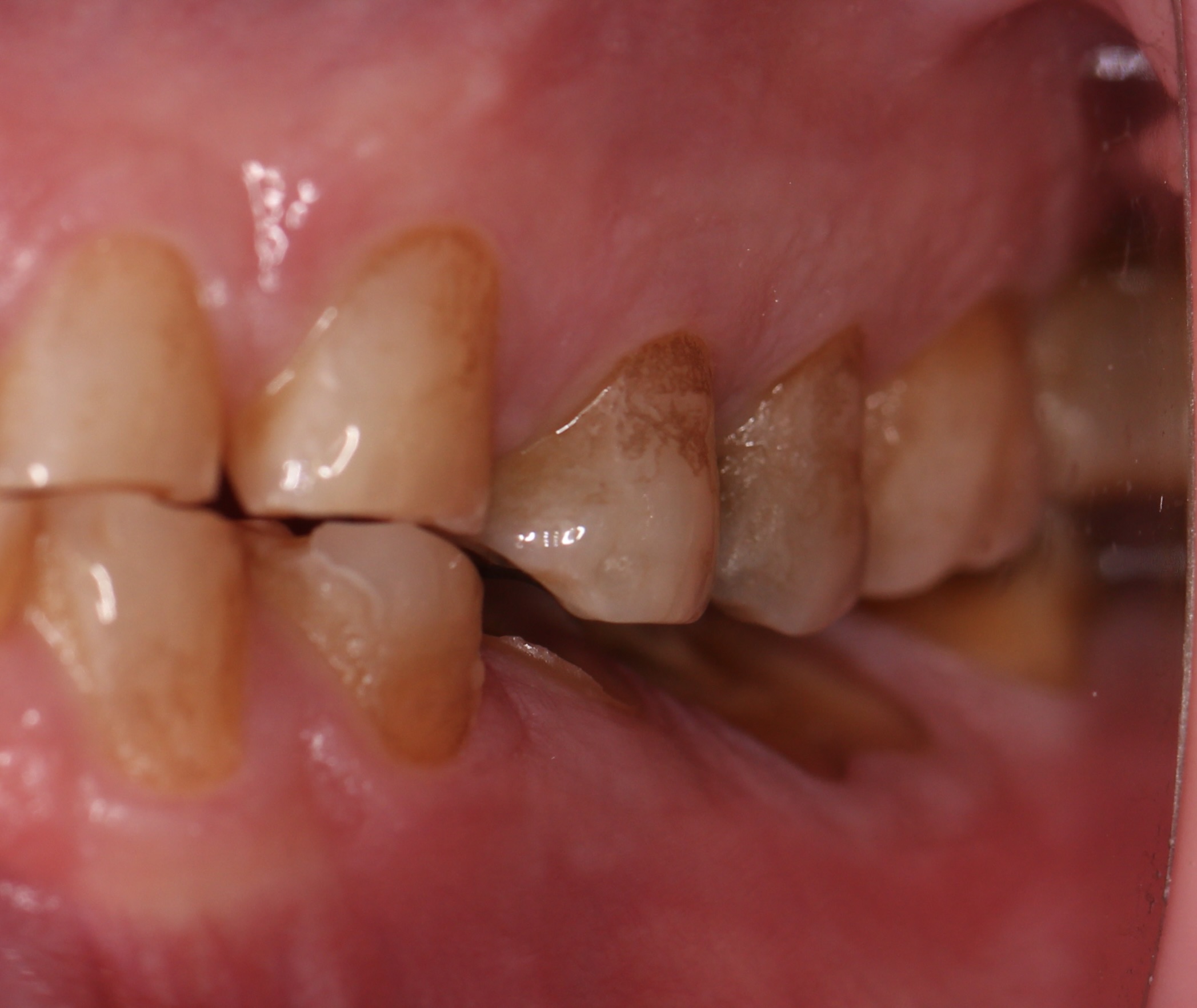
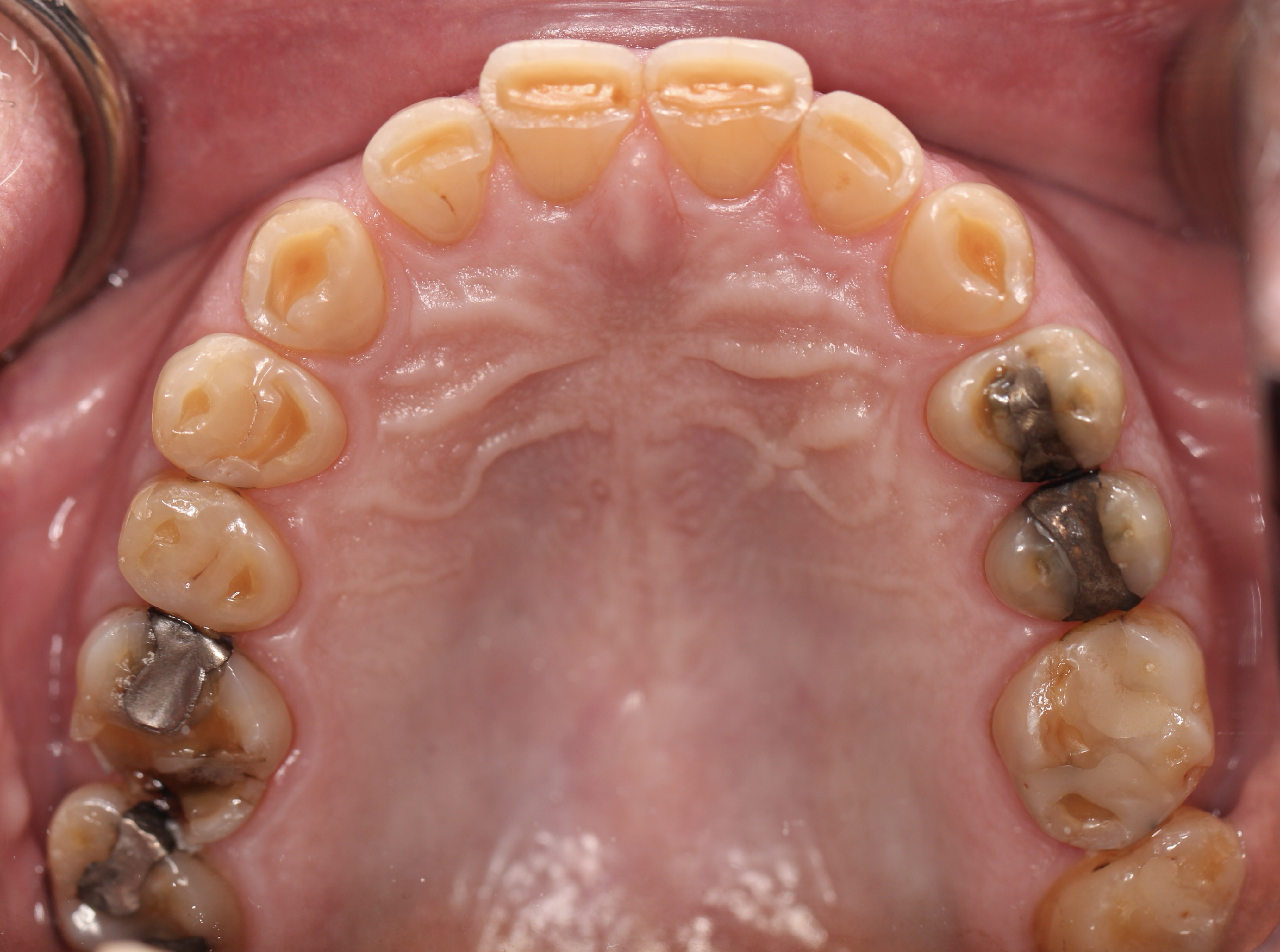
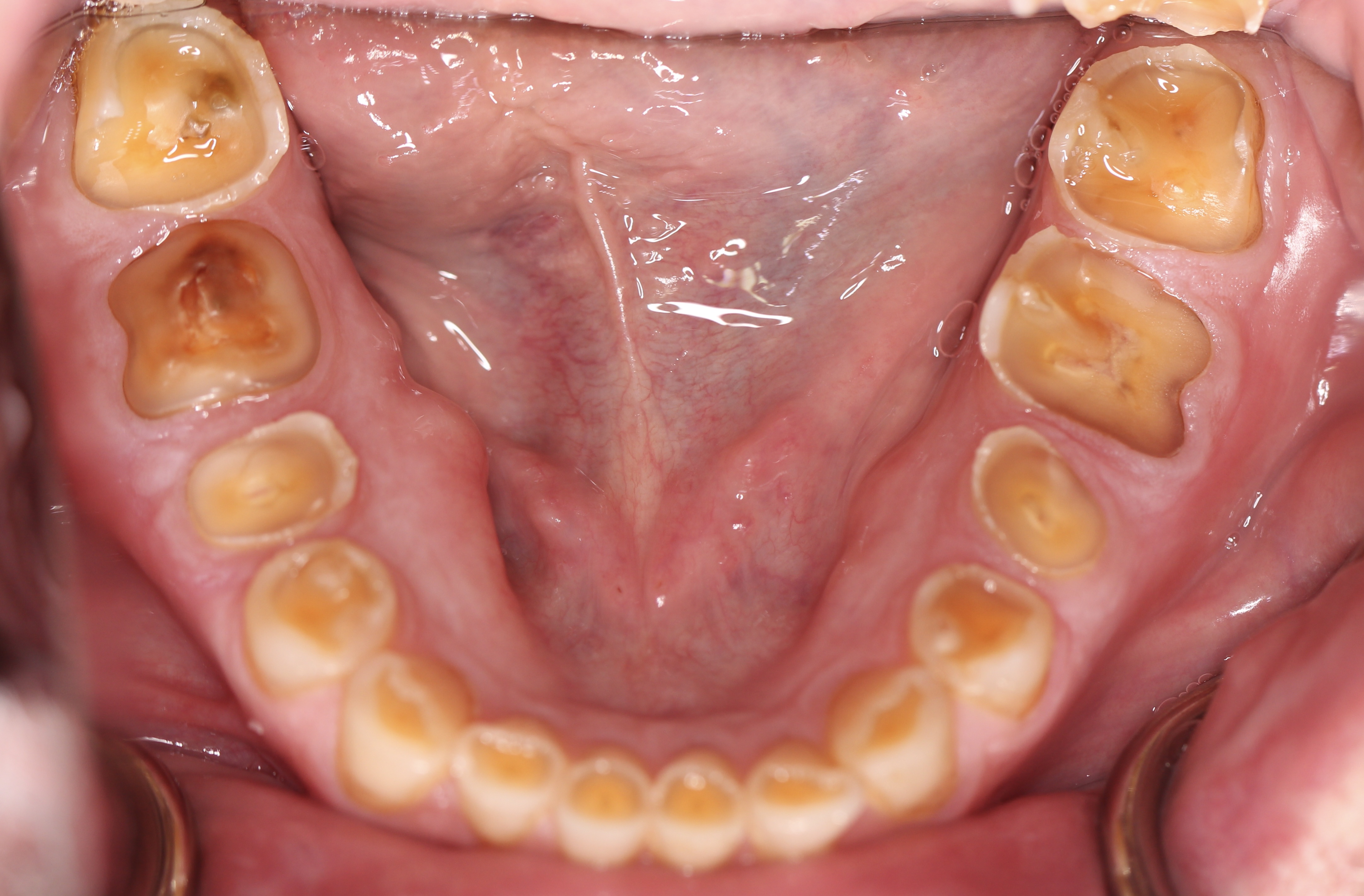
My evaluation included a CT scan, digital impressions, X-rays, photographs, and an analysis of his bite. Nearly every tooth was severely worn, and his lower back teeth were worn down to the gumline. His bite had lost height, his upper back teeth had drifted down into the space, and the plane of his teeth was uneven from front to back.
The problem was not a few failing teeth. It was a bite that had collapsed, and every tooth was paying for it. Yet most of his teeth could still be restored, and when teeth can be restored, they should be.
How I Planned It
I planned his full mouth reconstruction around his bite first: how much height it needed to regain, where his teeth should meet, and how they should guide one another. A digital wax-up, built from scans taken at the planned height, previewed the result before any tooth was prepared.
His teeth were then prepared and fitted with provisional crowns made in our in-house dental lab. These provisionals served as a prototype: Herman tested his new bite, chewing, speech, and appearance in daily life while we confirmed that his muscles and jaw joints accepted the new height, and refined the design before anything final was made.
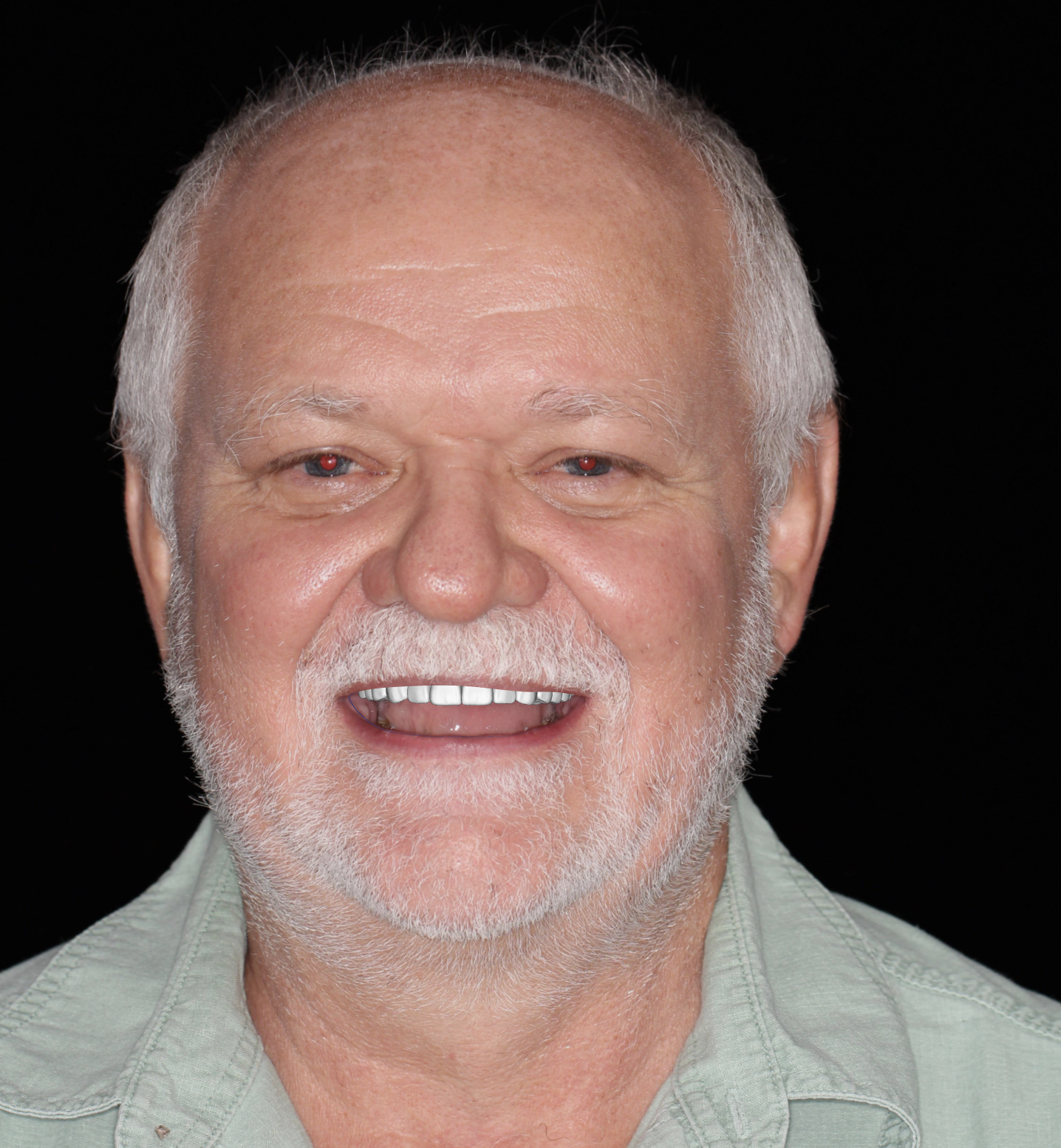
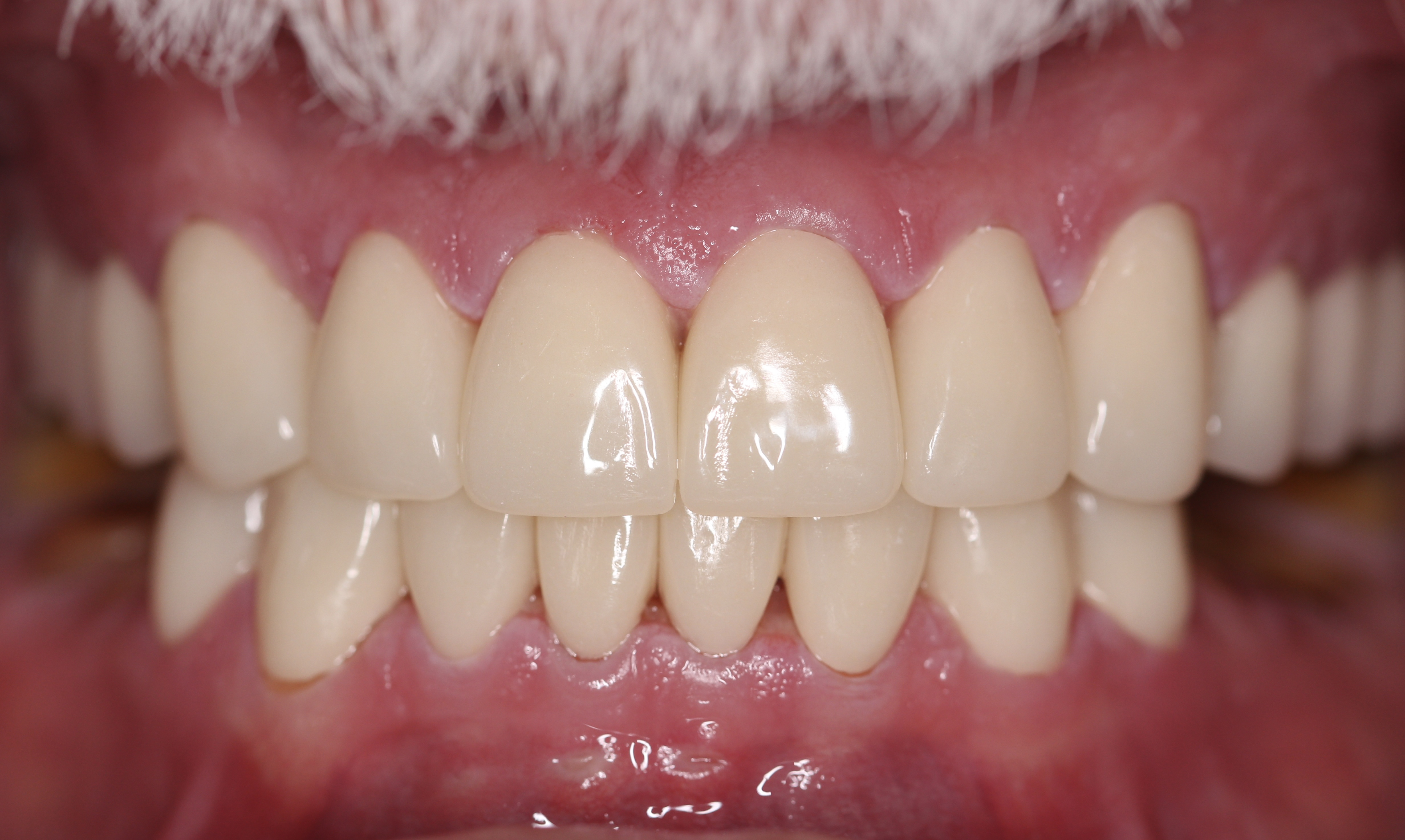
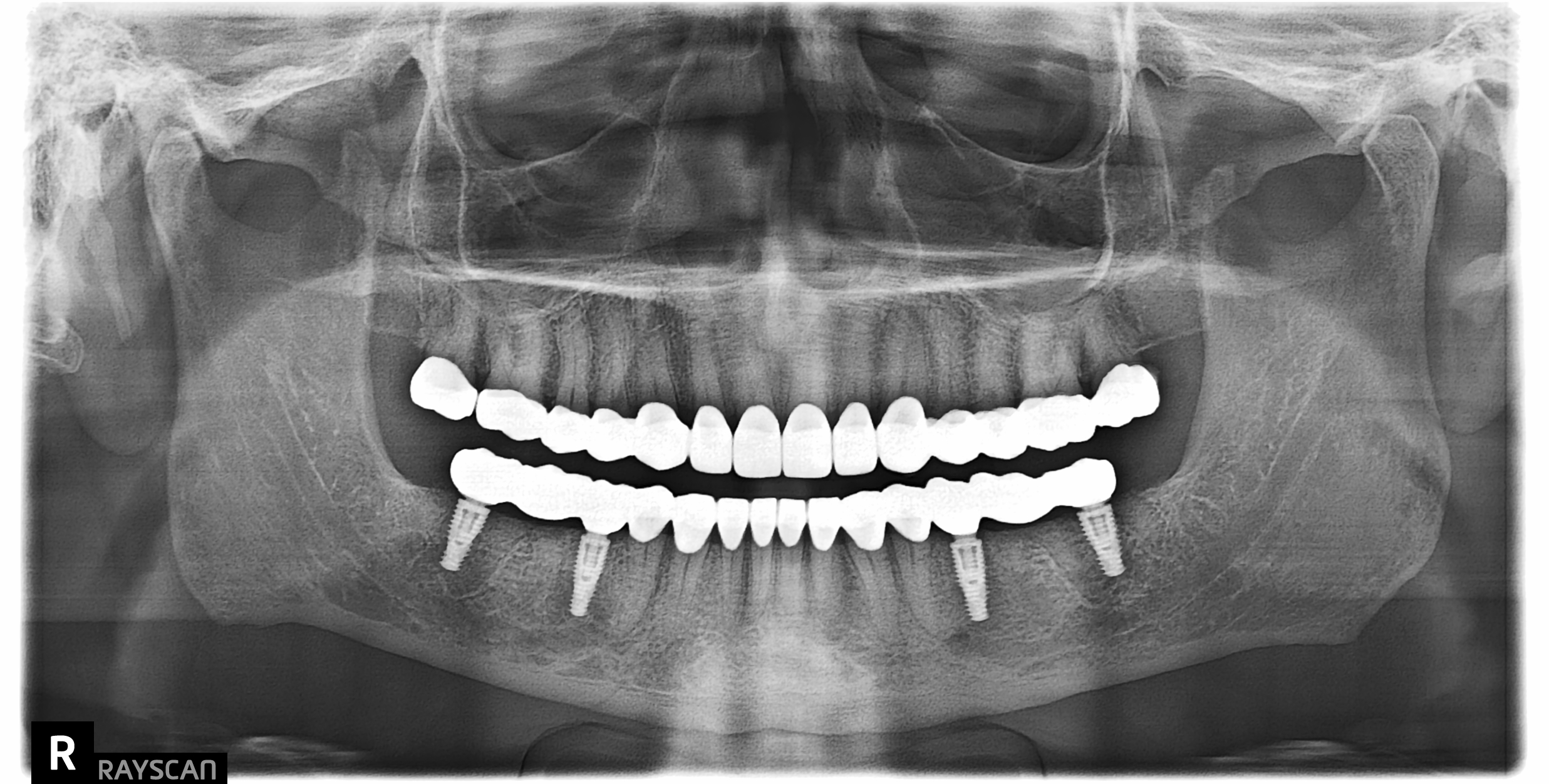
Only the lower back teeth that could not be restored were removed, and the sites were preserved for implants. A surgical colleague placed four implants in the back of his lower jaw, their positions following the design of his new teeth. Every tooth that could be saved was kept.
The new bite was designed so his front teeth and canines guide his jaw as it moves, and his back teeth and implants share the load without colliding, so each part is designed to protect the others, natural teeth and implants alike.
The Result
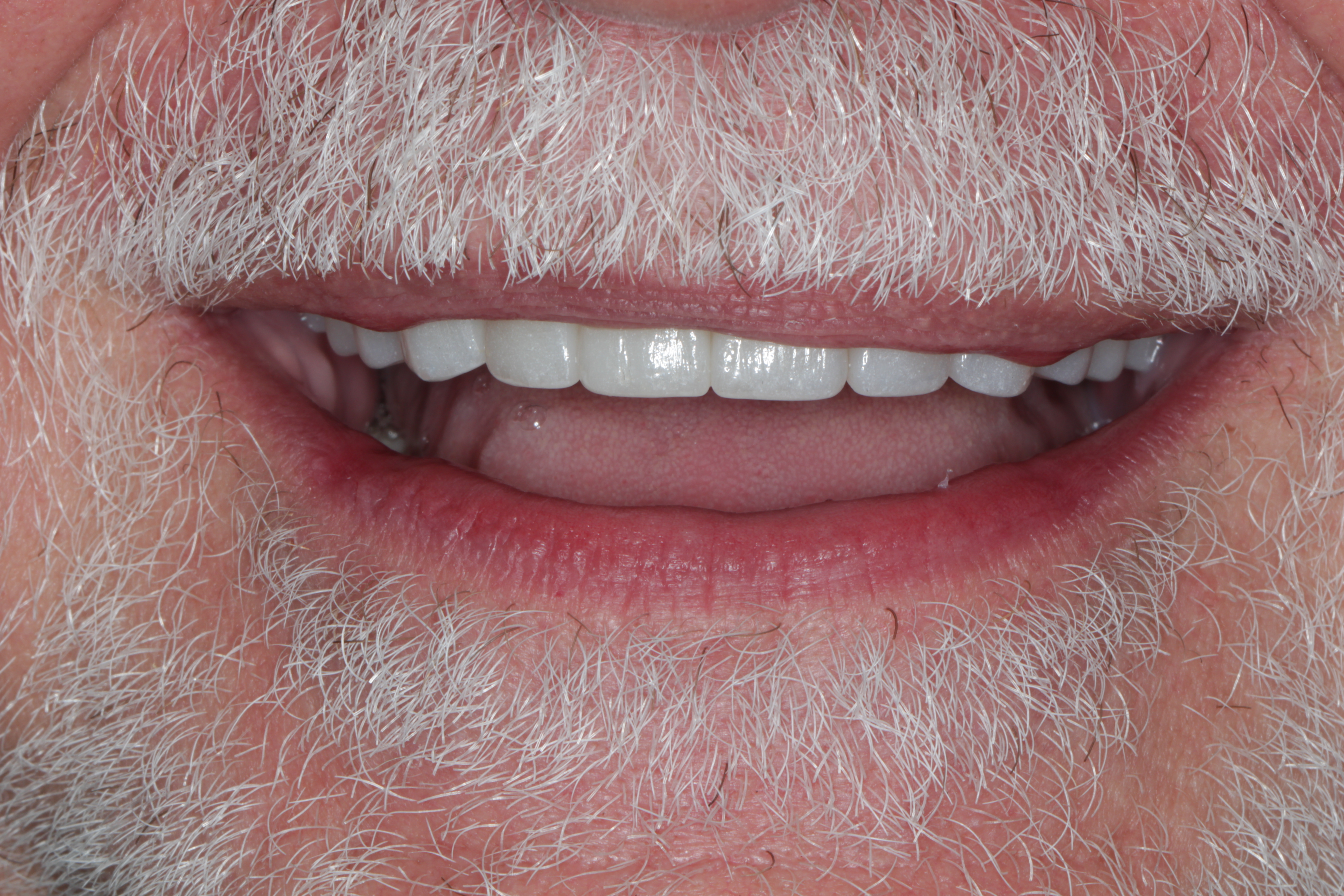
Herman's full mouth reconstruction was completed in monolithic zirconia, made from the design refined in his prototype: crowns on his natural teeth and implant bridges in the lower back. He adapted to his restored bite well. His pain resolved, he chews and speaks comfortably again, and his bite remained stable at his one-year follow-up.
He came in with an offer to replace all of his teeth. He left with his own teeth restored, and implants only where a tooth could not be saved.
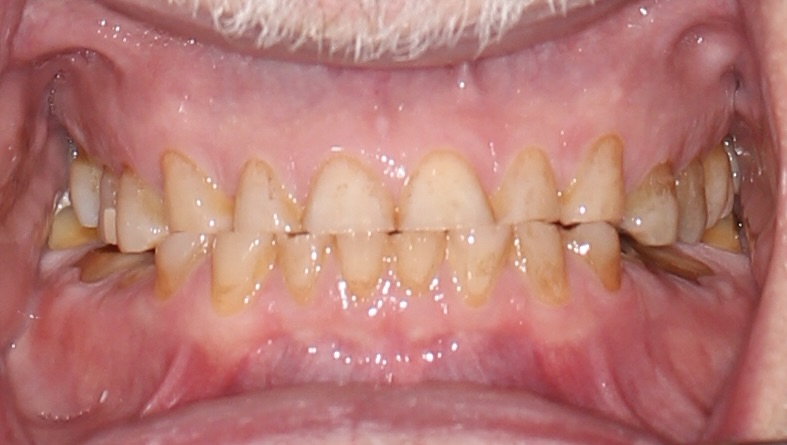
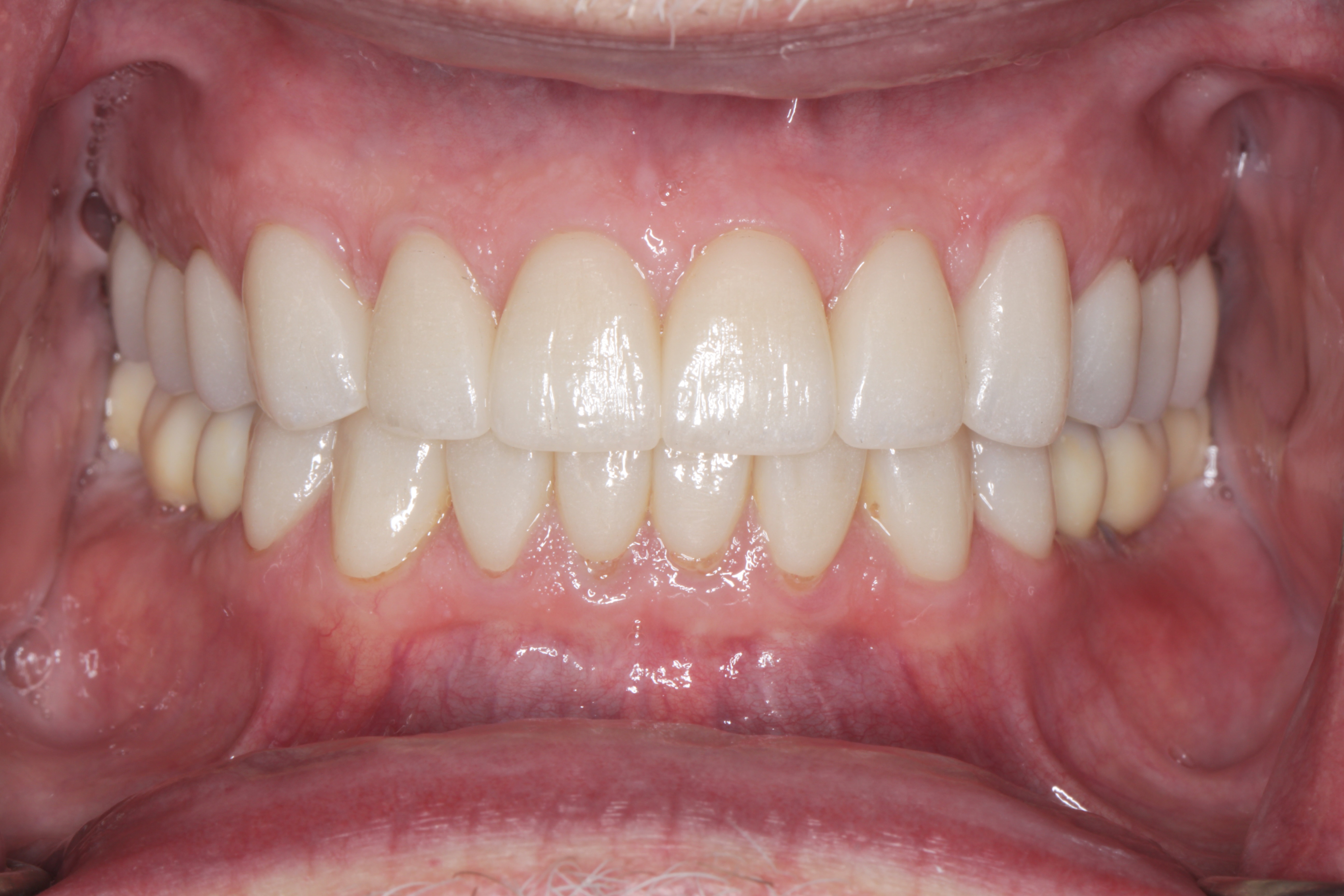
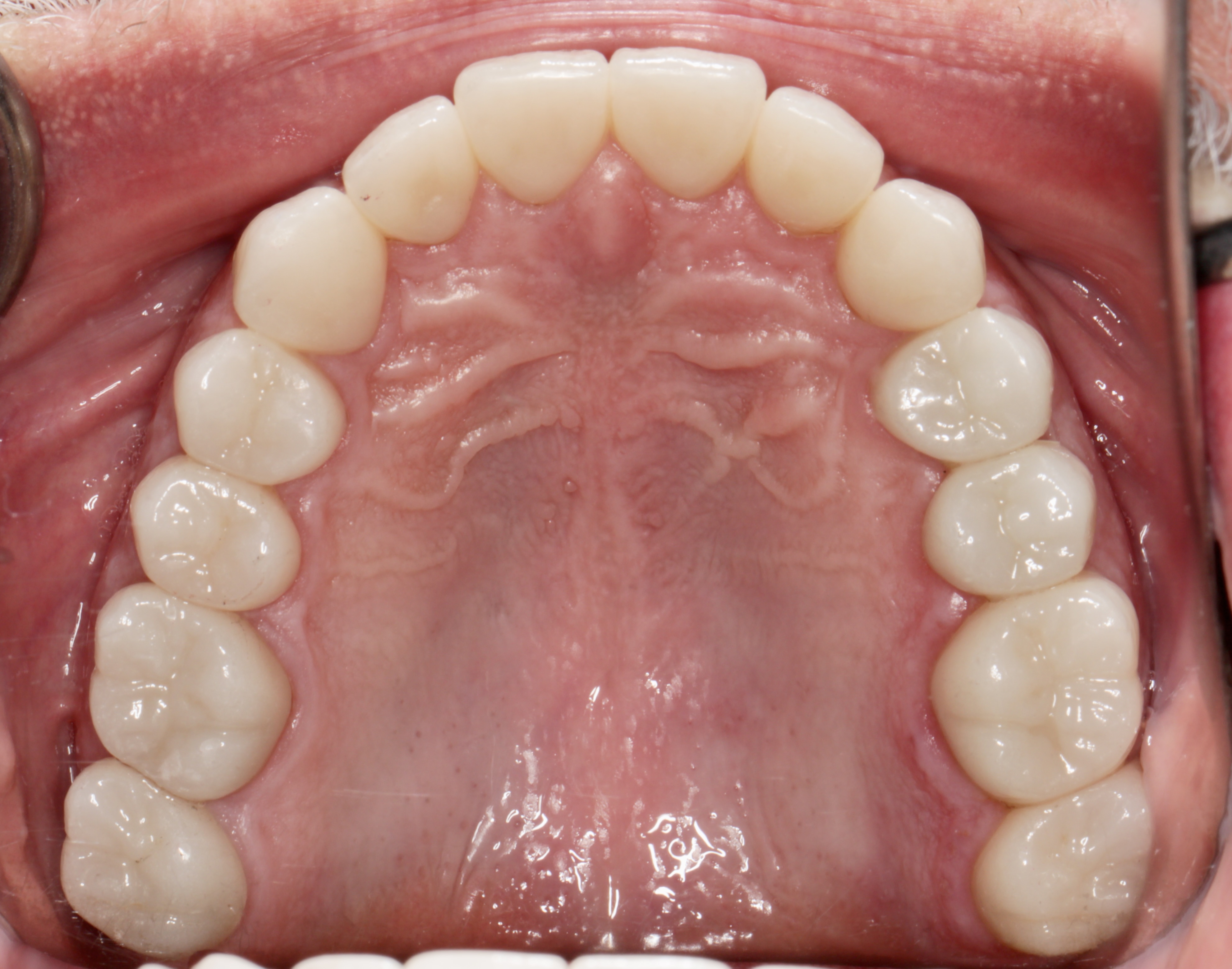
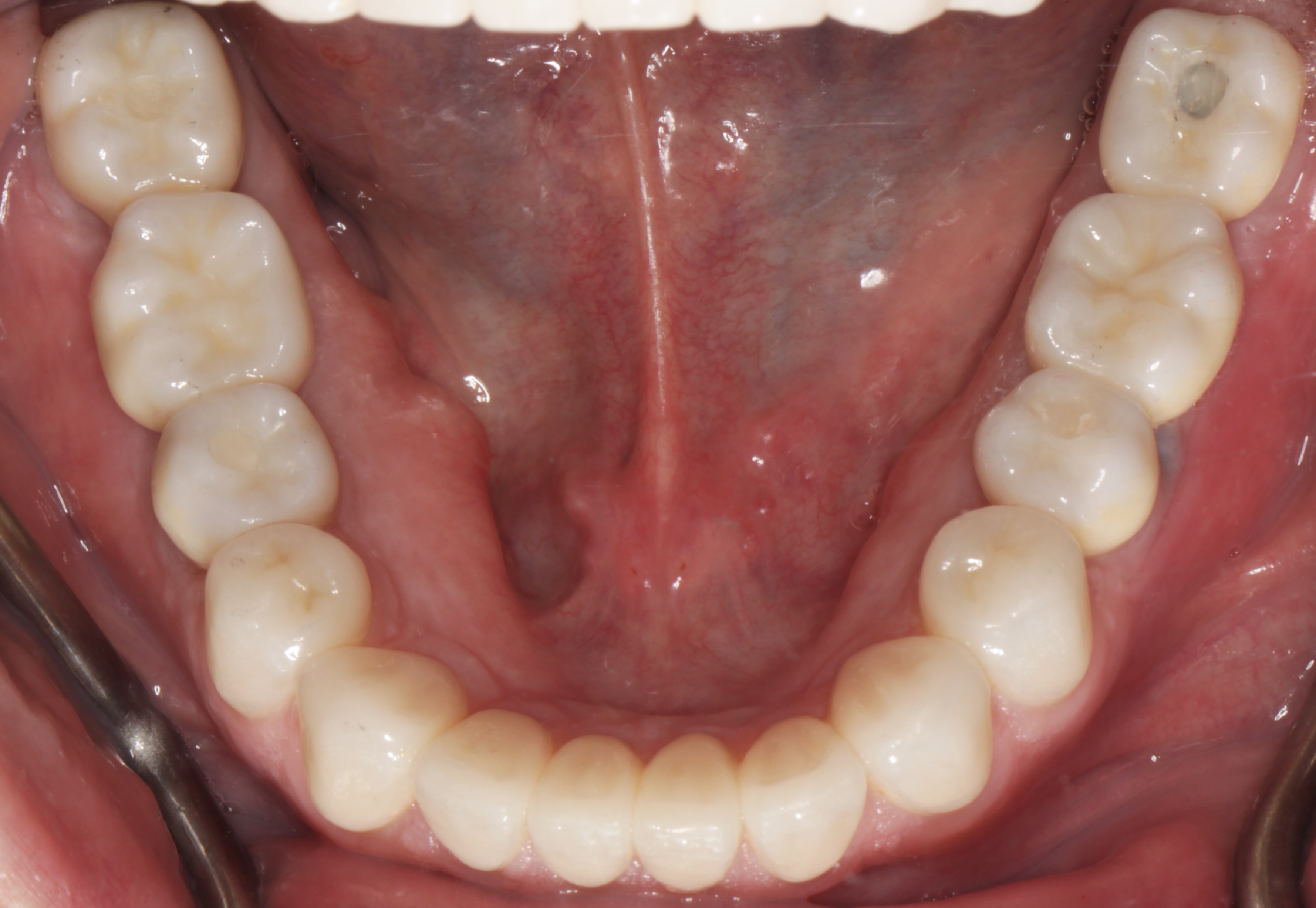
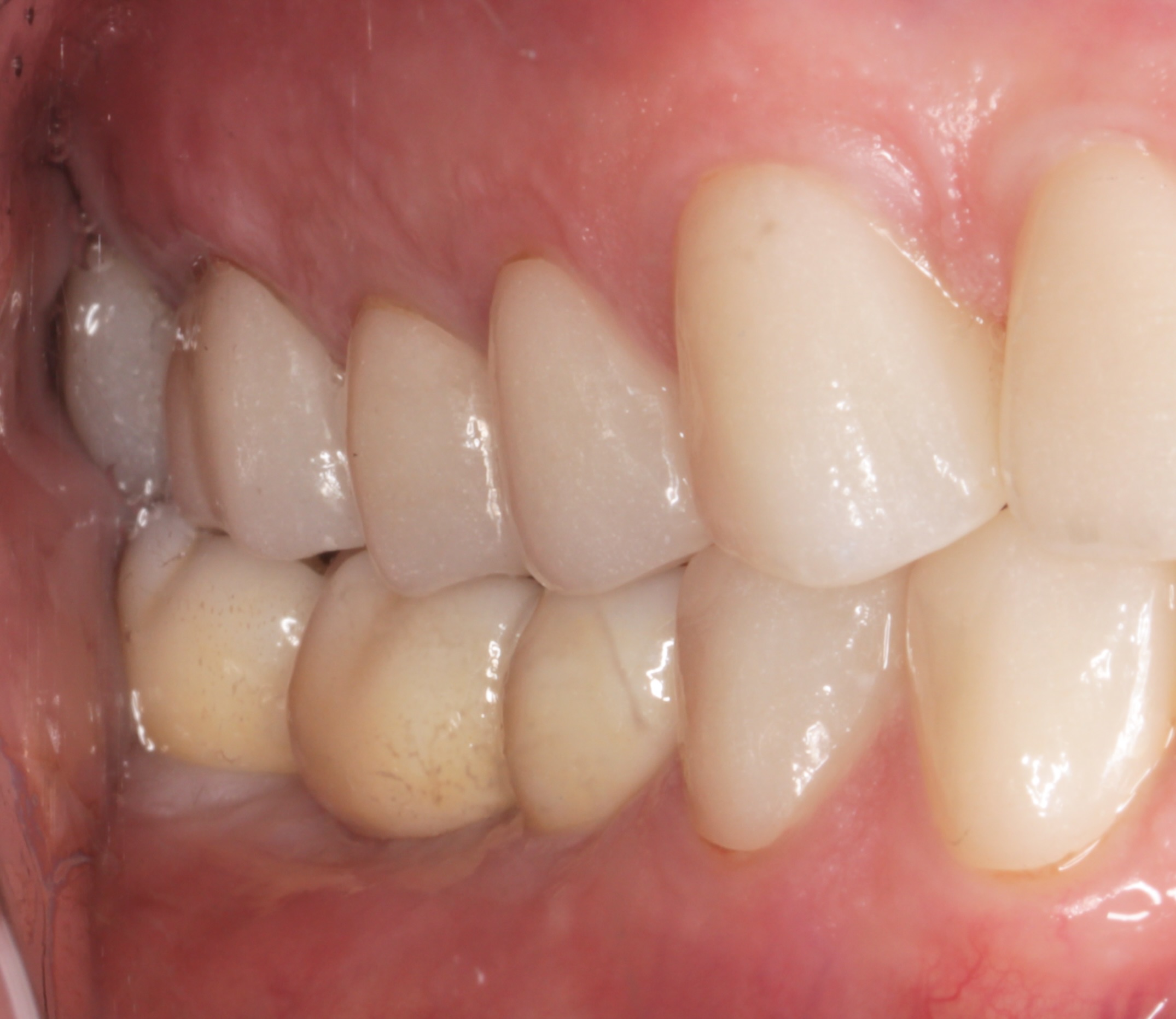
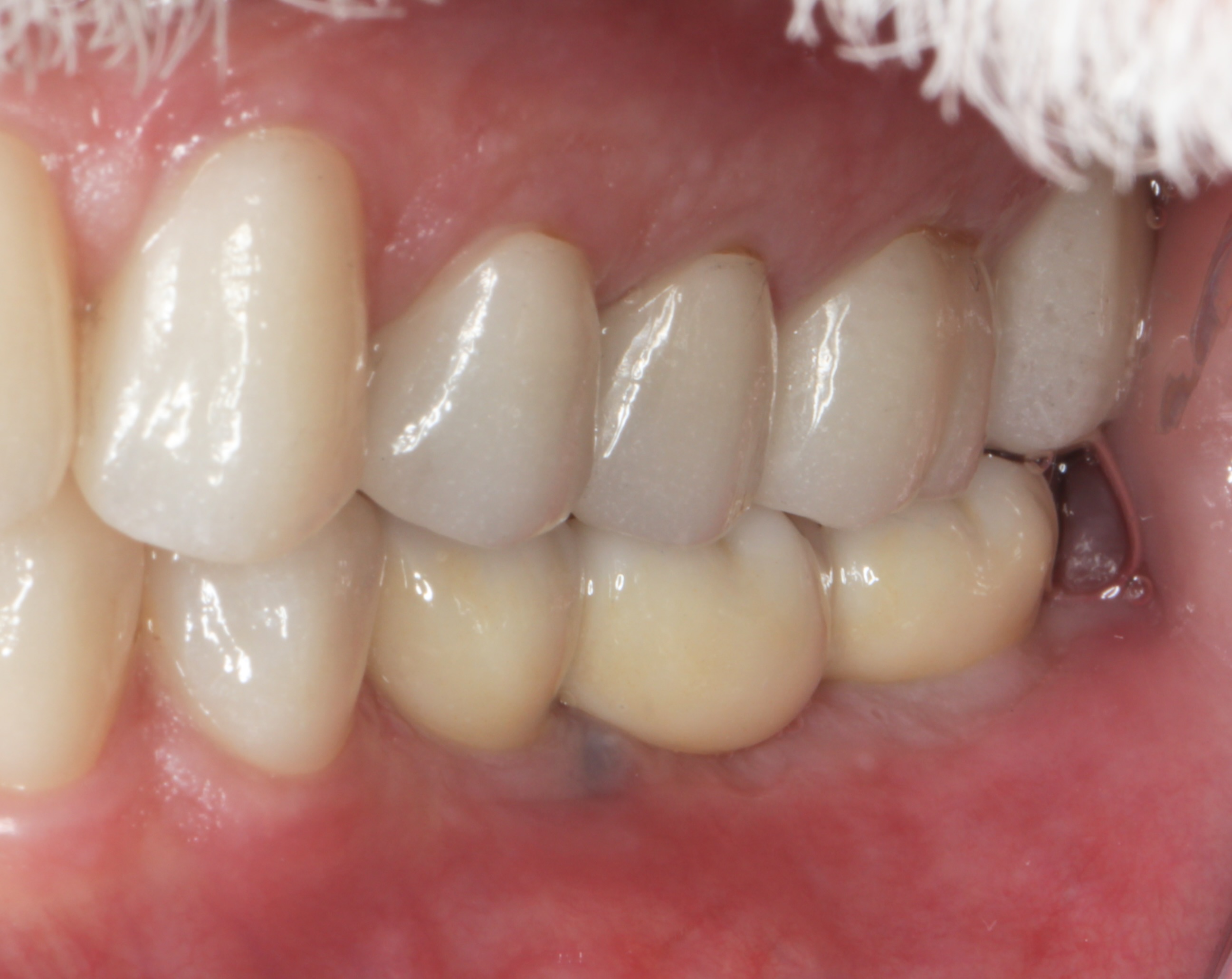
Like anyone with a full mouth reconstruction, he needs daily care, regular maintenance, and periodic evaluation of the bite, the teeth, and the implants.
When back teeth keep breaking down, the cause is often the bite rather than the teeth themselves. Full-arch implants are the right answer for many patients. When teeth can be restored, a rebuilt bite can preserve them and use implants only where they are needed. Which path fits depends on how much healthy tooth structure remains, the condition of the bite, and long-term goals. If you have been offered full-arch treatment and still have teeth, that is a reason to be evaluated before the decision is made. I explain more in why rebuilding the bite matters.
Results and treatment needs vary from patient to patient. Photographs are of a patient treated at our practice and are shown with permission, without retouching. This page is educational and does not replace an individual examination, diagnosis, or treatment recommendation.